If you plan to submit a UK university degree certificate for academic recognition in Greece, you must usually complete a formal legalisation process. Without the correct document format, Greek authorities may reject your application or request additional verification.
The authority responsible for recognising foreign academic qualifications in Greece is:
D.O.A.T.A.P – Hellenic National Academic Recognition and Information Center (Greece’s official NARIC academic recognition authority).
In most cases, D.O.A.T.A.P requires:
- A properly certified copy of your UK degree certificate
- A UK Apostille issued by the Foreign, Commonwealth & Development Office (FCDO)
This guide explains the correct legalisation steps, verification routes, timelines, and common rejection risks.

What D.O.A.T.A.P Requires for UK Degrees
D.O.A.T.A.P reviews foreign academic qualifications and decides whether they match Greek academic standards. Applicants submit documents through the e-DOATAP system. However, requirements vary depending on degree level and recognition pathway.
Most applications require:
- Degree certificate
- Academic transcript
- University verification or confirmation forms
- Apostille authentication
In addition, D.O.A.T.A.P may require universities to send transcripts or confirmation documents directly. Therefore, applicants should always check their personal e-DOATAP checklist before starting legalisation.
What a UK Apostille Confirms
A UK Apostille issued by the FCDO confirms that a UK signature, stamp, or seal is genuine.
However, the Apostille does NOT confirm:
- Academic performance
- Degree classification
- Course content
Instead, it confirms that the certification attached to the document is officially recognised.
Standard UK to Greece Legalisation Process
Applicants normally complete three stages before submitting documents to D.O.A.T.A.P.
Step 1 — Academic Verification (When Required)
Some D.O.A.T.A.P applications require independent confirmation that the degree award is genuine.
Several verification routes exist.
Digital Academic Verification Platforms
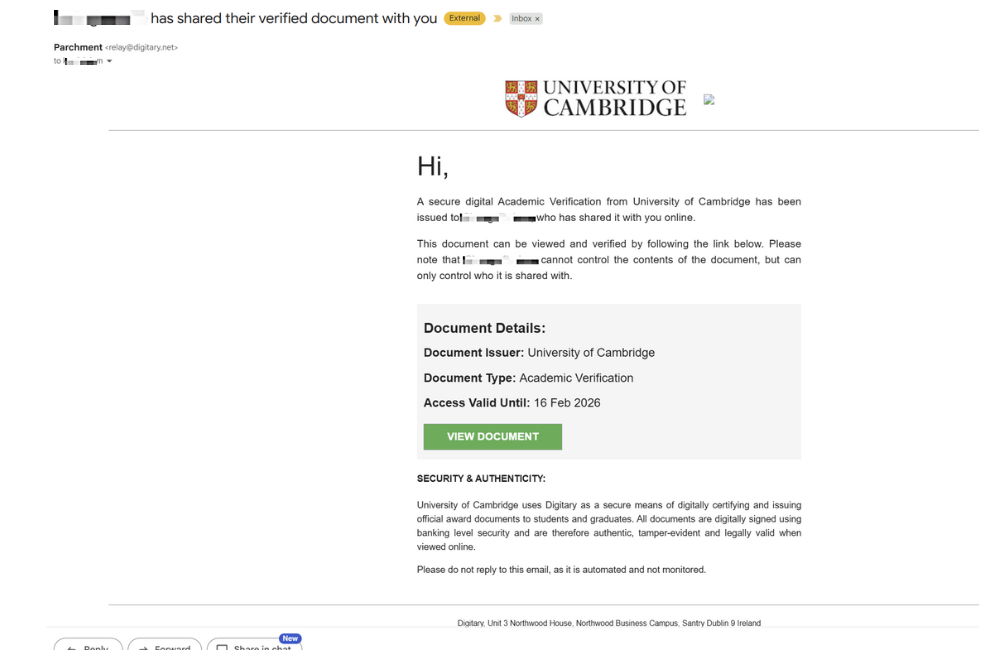
Some UK universities issue secure verification records through Digitary or Parchment platforms. These platforms create tamper-resistant digital verification links, which many authorities accept as reliable proof.
HEDD (Higher Education Degree Datacheck)
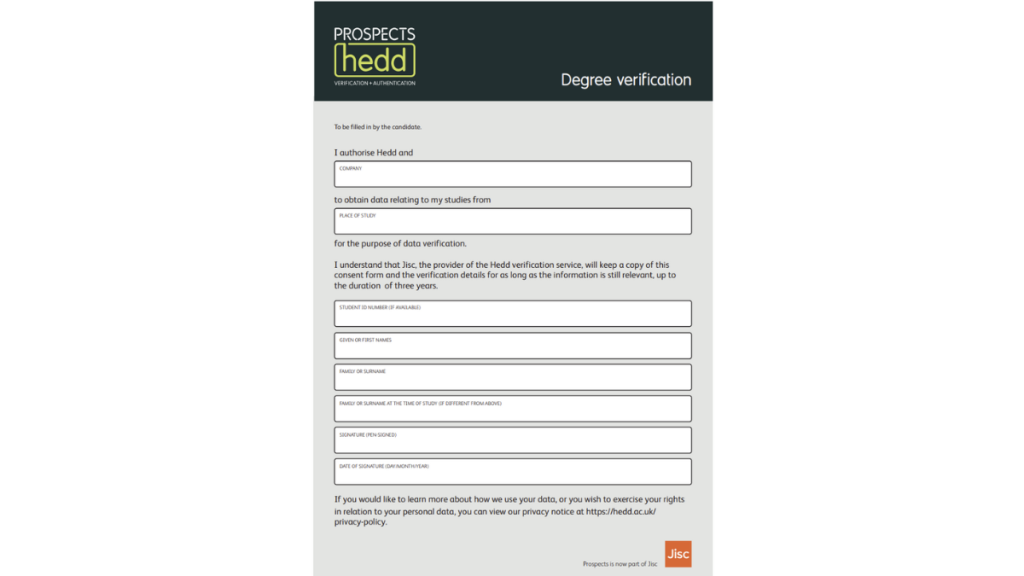
Many UK universities participate in HEDD verification, which allows authorised third parties to confirm academic awards directly with universities.
Direct University Verification
If HEDD does not apply, applicants may request verification directly from the university registry. Because each university sets its own rules, applicants should confirm procedures early.
Step 2 — UK Solicitor Certification
After verification (if required), a UK practising solicitor certifies the degree certificate.
Two certification levels are commonly used.
Standard Certification (Original Sighted)
The solicitor examines the original certificate and certifies that the copy matches it.
Typical wording:
“I hereby certify that this document is a true copy of the original document which was shown to me.”
This confirms document authenticity, but it does not confirm academic verification.
Enhanced Certification (Verification Supported)
Alternatively, enhanced certification confirms both:
- The copy matches the original document
- The academic award has been independently verified
Typical wording:
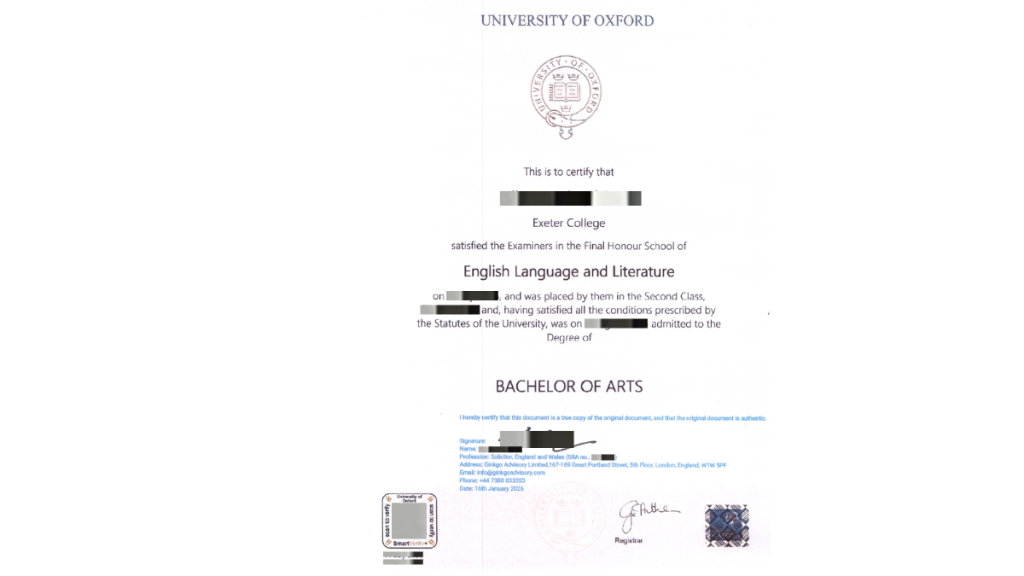
“I hereby certify that this document is a true copy of the original document, and that the original document is authentic.”
Some authorities prefer enhanced certification where strict verification rules apply.
Step 3 — UK FCDO Apostille
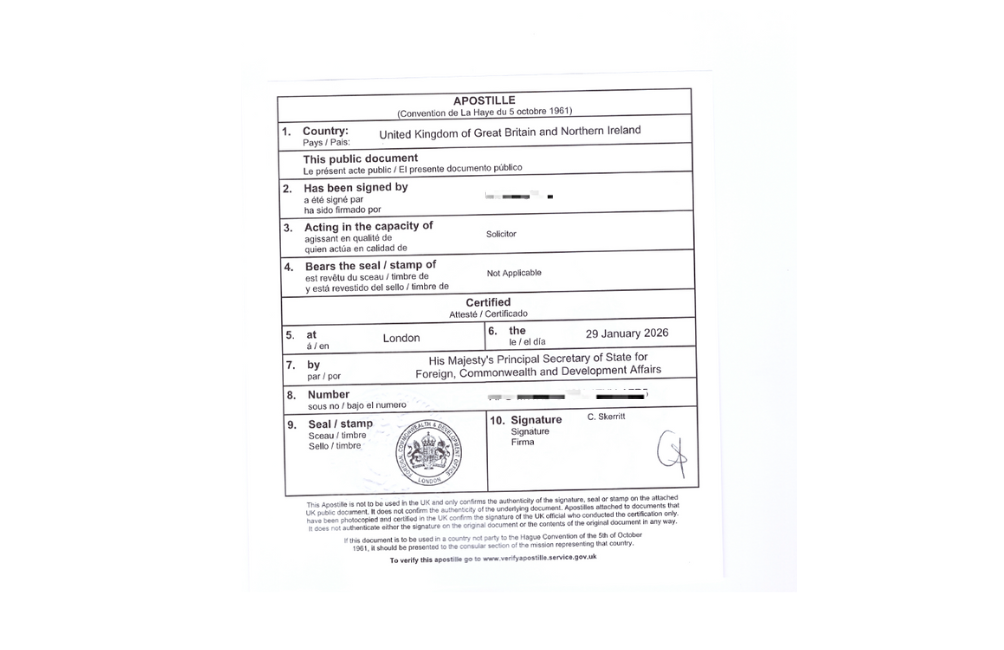
Applicants then submit solicitor-certified documents to the UK Legalisation Office. The FCDO issues the Apostille certificate.
Because the Apostille verifies the solicitor’s signature and seal, the document becomes recognised internationally under the Hague Apostille Convention.
Two Practical Processing Options
Applicants usually choose between two approaches.
Option 1 — Original Certificate Courier Route
Applicants who hold the original degree certificate often choose this option because it provides a straightforward certification method.
Required Documents
- Original degree certificate
- Passport copy
Estimated Timeline
- Courier Greece → UK: 3–4 working days
- Certification + Apostille: about 3 working days
- Courier UK → Greece: 3–4 working days
Option 2 — HEDD Verification Route
Applicants who require stronger authenticity confirmation often select this route.
Required Documents
- Degree certificate scan
- Passport scan showing date of birth
- Signed consent form
Estimated Timeline
- HEDD verification: Immediate (automatic match) or several working days (manual review)
- Certification + Apostille: about 3 working days
- Courier UK → Greece: 3–4 working days
Common Reasons D.O.A.T.A.P Applications Are Rejected
Certification Based Only on Scanned Documents
Authorities often reject certifications completed without original sighting or verification support.
Incorrect Legalisation Order
Applicants must complete solicitor certification BEFORE Apostille submission.
Misunderstanding Apostille Scope
The Apostille confirms certification authenticity only. It does not verify academic results.
Applicant Checklist
Before submitting documents, applicants should:
- Confirm document requirements inside e-DOATAP
- Choose the correct verification route
- Prepare passport and academic documents
- Complete UK solicitor certification
- Apply for UK Apostille
- Arrange university direct submissions if required
How Ginkgo Advisory Helps
Ginkgo Advisory coordinates remote workflows for UK academic documents used in overseas recognition applications.
Support typically includes:
- Reviewing recognition authority checklists
- Advising on suitable verification routes (Digitary, Parchment, HEDD, or university confirmation)
- Coordinating UK solicitor certification
- Managing UK Apostille submission
- Arranging secure international courier delivery
Ginkgo Advisory does not issue academic records. Universities or recognised verification platforms complete all academic verification.
Frequently Asked Questions
Is a UK solicitor-certified degree with Apostille accepted by D.O.A.T.A.P?
In most cases, D.O.A.T.A.P requires certified academic documents supported by Apostille authentication. Applicants must follow their e-DOATAP checklist.
Must applicants send original degree certificates to the UK?
Applicants only need to send originals if they choose original-sighted certification. Verification-supported certification often allows remote processing.
Can graduates request HEDD verification themselves?
HEDD normally accepts requests from third parties rather than graduates directly.
Does Apostille confirm academic results?
No. Apostille confirms signature and certification authenticity only.
Do applicants need Greek translations?
Translation requirements vary by application pathway. Applicants should confirm translation rules inside e-DOATAP.
Contact Us



Address
167-169 Great Portland Street, 5/F, London