
About the Author
Kwok is a practising solicitor based in London, admitted in England & Wales and regulated by the Solicitors Regulation Authority. He is registered with the Foreign, Commonwealth & Development Office and admitted in Hong Kong (non-practising). Kwok has worked as legal counsel and in-house solicitor across leading firms and corporations. He personally oversees every apostille and legalisation case at Ginkgo Advisory, ensuring consistency, accuracy, and end-to-end quality control.
Kwok Lam
Legal Consultant of Ginkgo Advisory
You will require a Cayman Islands Apostille when you present a Cayman Islands Certificate of Incorporation or Certificate of Incorporation on Change of Name overseas for banking, investment, regulatory filings, or cross-border transactions.
Even where the Cayman Islands authorities issue a certificate validly, overseas banks, regulators, and professional counterparties will usually reject the document unless it has been correctly legalised. The correct route depends on where the document will be used.
The Cayman Islands is a member of the Hague Apostille Convention, but this does not mean all overseas use ends at apostille. Requirements differ between Hague and non-Hague destination countries.
This guide focuses specifically on:
- Certificate of Incorporation
- Certificate of Incorporation on Change of Name
and explains the correct legalisation route for both Hague and non-Hague destination countries, with practical examples.
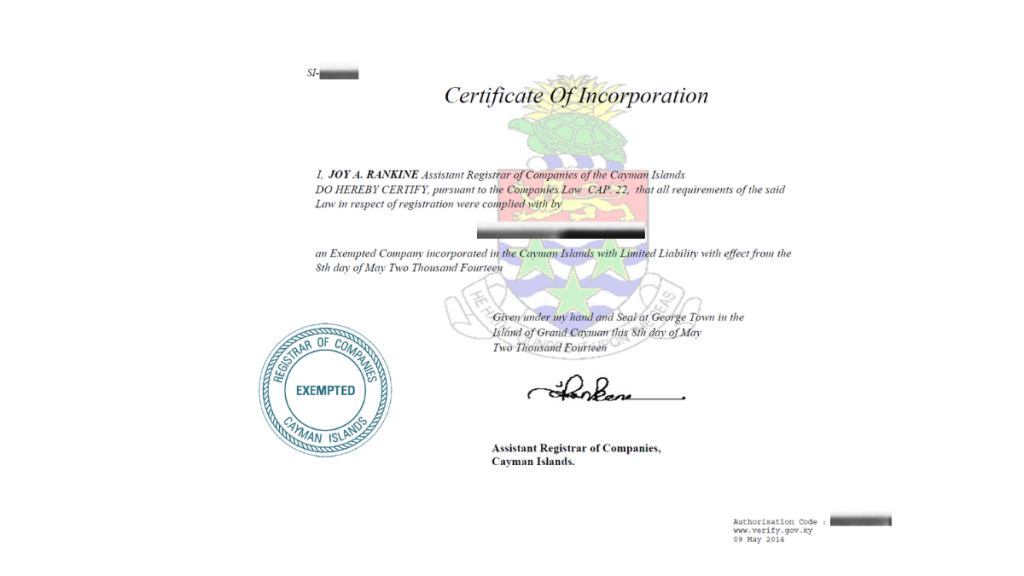
What Is a Cayman Islands Certificate of Incorporation?
A Certificate of Incorporation is an official document issued by the Cayman Islands Registrar confirming that a company:
- legally incorporated in the Cayman Islands
- existing as a recognised legal entity
- incorporated on a specific date
It is commonly required overseas for:
- corporate bank account opening
- investment onboarding and fund documentation
- regulatory or licensing filings
- proof of corporate existence in transactions
What Is a Certificate of Incorporation on Change of Name?
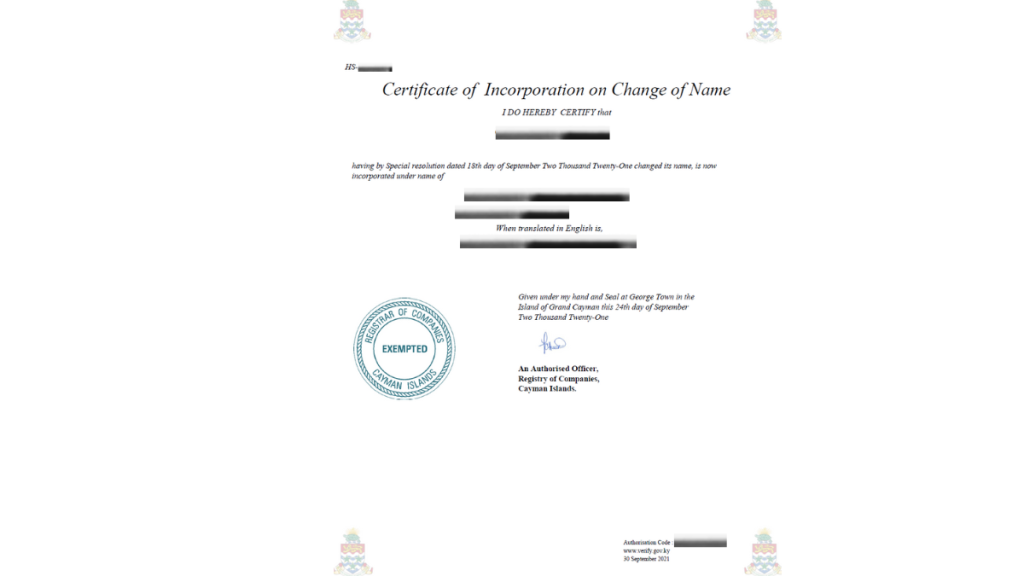
A Certificate of Incorporation on Change of Name confirms that:
- the company has legally changed its registered name, and
- the Cayman Islands authorities formally recorded the change
Overseas institutions often request this certificate together with the original Certificate of Incorporation to verify continuity of the legal entity.
Apostille Issuing Authority in the Cayman Islands
Who Issues Apostilles?
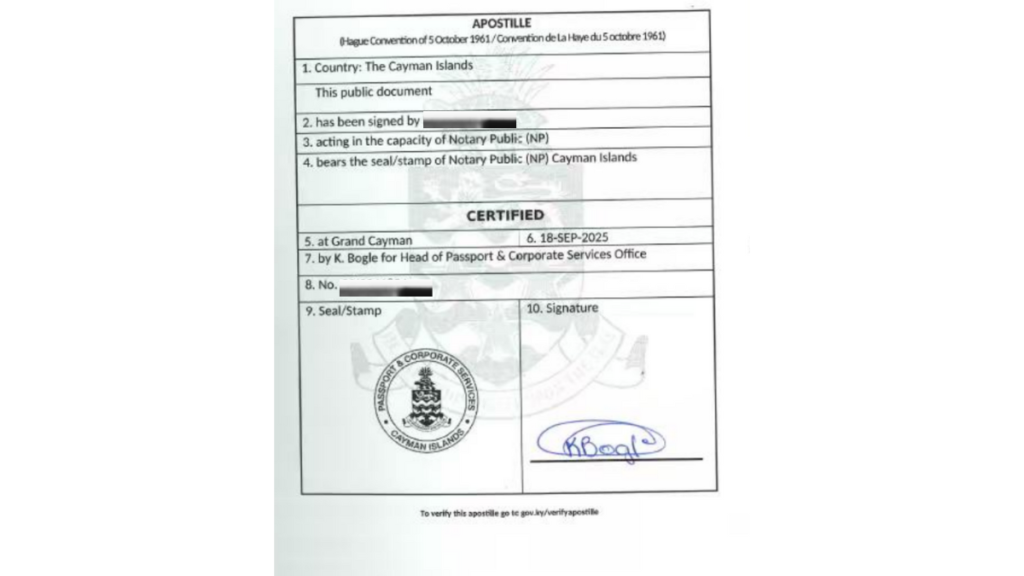
All Cayman Islands apostilles are issued by the Passport & Corporate Services Office (PCSO), which acts as the sole competent authority under the Hague Apostille Convention.
Key points:
- There is one recognised government authority
- Apostilles are internationally standardised
- Acceptance is high among banks and regulators
Before apostille issuance, documents may need to be:
- issued as certified originals by the registry, or
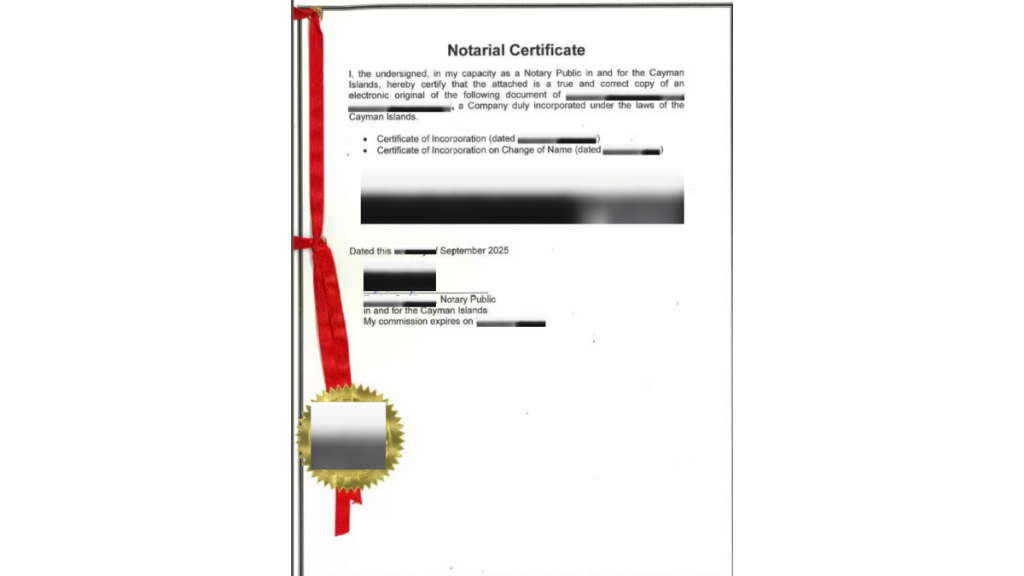
- certified by a Cayman Islands notary public
However, the apostille itself is always applied by the PCSO.
Overseas Use: Choosing the Correct Legalisation Route
The correct route depends on whether the destination country is a Hague Convention country or a non-Hague country.
Use in Hague Apostille Convention Countries
Common Hague Destination Examples
China • Singapore • South Korea • Japan • Hong Kong • most EU countries (e.g. Germany, France, Netherlands)
For Hague Convention countries, apostille is the final legalisation step.
Correct Process (Hague Countries)
- Obtain the Certificate of Incorporation or Certificate of Incorporation on Change of Name
- Complete Cayman Islands notary certification
- Obtain a Cayman Islands Apostille from the Passport & Corporate Services Office
After this:
- use the document directly overseas
- no UK Apostille required
- no embassy legalisation required
- no Ministry of Foreign Affairs (MOFA) attestation required
This route is commonly accepted for:
- bank account opening in Singapore or Hong Kong
- corporate filings in China
- investment onboarding in EU jurisdictions
Use in Non-Hague Countries
Common Non-Hague Destination Examples
United Arab Emirates • Qatar • Vietnam • Thailand • Indonesia • Saudi Arabia
Non-Hague countries do not recognise apostilles as final legalisation, even if the Cayman Islands is a Hague member.
Correct Process (Non-Hague Countries)
- Cayman Islands notary certification
- Cayman Islands Apostille issued by the Passport & Corporate Services Office
- UK Apostille issued by the Foreign, Commonwealth & Development Office (FCDO)
- Embassy legalisation in London (destination country embassy)
- Ministry of Foreign Affairs (MOFA) attestation in the destination country
Each step must follow the correct order. Missing or re-sequencing any step is a common cause of rejection.
You will typically require this full consular route for:
- UAE bank account opening
- regulatory filings in Qatar
- licensing or commercial use in Vietnam or Thailand
Common Causes of Rejection
Even where documents are genuine, overseas authorities may reject them if:
- the wrong legalisation route used
- assuming apostille to be sufficient for non-Hague countries
- certification wording or format is incomplete
- documents not issued or certified correctly before apostille
In practice, banks and regulators assess documents based on risk and authenticity, not convenience.
How Ginkgo Advisory Supports Cayman Islands Legalisation
Legalising Cayman Islands company documents often involves:
- offshore registries
- multiple government authorities
- cross-border courier coordination
Ginkgo Advisory provides end-to-end coordination, including:
- confirming whether the destination is Hague or non-Hague
- verifying document type and issuance requirements
- arranging Cayman Islands certification and apostille
- managing UK Apostille and embassy legalisation where required
- coordinating MOFA attestation for non-Hague countries
Clients receive a fully compliant document set without managing multiple agents across jurisdictions.
Summary: Cayman Islands Certificates of Incorporation
| Destination Type | Example Countries | Final Legalisation Step |
|---|---|---|
| Hague Convention | China, Singapore, EU | Cayman Islands Apostille |
| Non-Hague | UAE, Qatar, Vietnam | MOFA Attestation |
Selecting the correct legalisation route from the outset reduces rejection risk, saves time, and avoids unnecessary cost.
If you are preparing Cayman Islands Certificates of Incorporation or Certificates of Incorporation on Change of Name for overseas use, Ginkgo Advisory can manage the full legalisation process from initial certification to final acceptance.
Contact Us



Address
167-169 Great Portland Street, 5/F, London
 English
  Chinese