
About the Author
Kwok is a practising solicitor based in London, admitted in England & Wales and regulated by the Solicitors Regulation Authority. He is registered with the Foreign, Commonwealth & Development Office and admitted in Hong Kong (non-practising). Kwok has worked as legal counsel and in-house solicitor across leading firms and corporations. He personally oversees every apostille and legalisation case at Ginkgo Advisory, ensuring consistency, accuracy, and end-to-end quality control.
Kwok Lam
Legal Consultant of Ginkgo Advisory
The F-2-7 visa is South Korea’s primary points-based long-term residency visa for highly skilled foreign professionals. Unlike employer-sponsored work visas, the F-2-7 allows qualified applicants to reside in Korea independently and provides a clear pathway to permanent residency.
For UK citizens, the most common source of delay or refusal is not eligibility, but document compliance—particularly the correct preparation and legalisation of criminal background checks and educational certificates.
This article explains the F-2-7 visa framework, eligibility, required documents, and the UK-specific requirements for solicitor certification and FCDO apostille, with practical guidance on avoiding common errors.

What Is the F-2-7 Visa?
The F-2-7 visa is a long-term resident visa granted under a points-based evaluation system. Applicants must score at least 80 points to qualify.
Points are awarded based on:
- Age
- Academic qualifications
- Korean language proficiency (TOPIK or KIIP)
- Income and tax history
- Additional integration factors (volunteering, recommendations, government programmes)
Unlike E-type work visas, the F-2-7 visa is not tied to a single employer, offering long-term stability and flexibility.
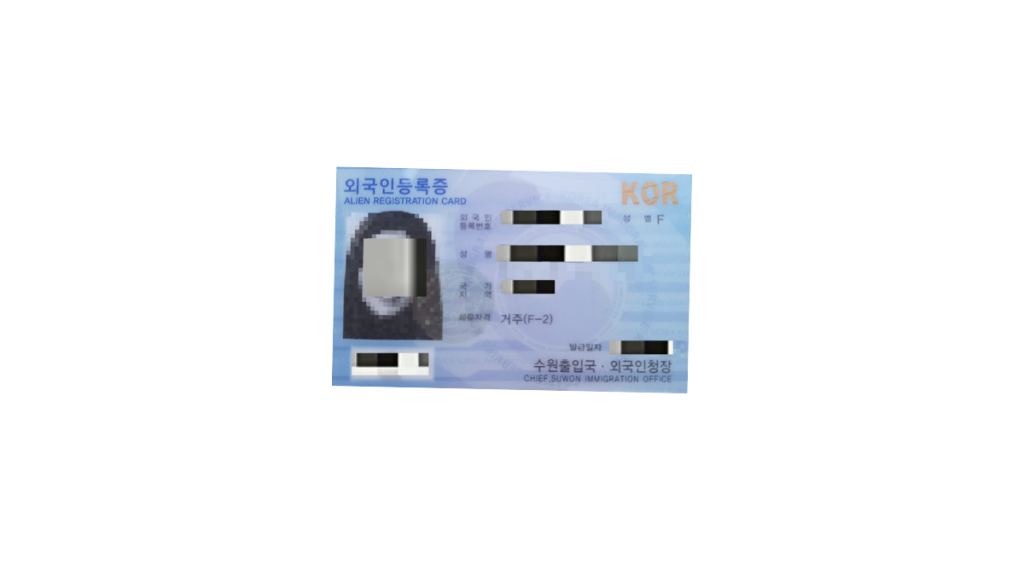
Key Benefits of the F-2-7 Visa
Holders of an F-2-7 visa may:
- Hold residency independent of employer, spouse, or school
- Change jobs or leave employment without losing visa status
- Engage in freelance or multiple economic activities
- Establish and operate a business in Korea
- Enrol in National Health Insurance
- Sponsor spouse and children under F-2 status
- Apply for permanent residency (F-5) after three years
- Remain outside Korea for up to one year without visa cancellation
Who Can Apply for the F-2-7 Visa?
Applicants typically include holders of:
- D-2, D-5, D-6, D-7, D-8, D-10 visas
- E-1 through E-7 visas (excluding certain sub-categories)
- F-6 visas
Common eligibility routes include:
- Continuous residence in Korea for three years under the same visa
- Graduation from a Korean Master’s or PhD programme and eligibility for an E-type visa
- Annual income of KRW 40 million or higher
- Certain Korean Government Scholarship Programme (GKS) graduates
Required Documents for the F-2-7 Visa
Immigration officers may request additional documents depending on individual circumstances. The following are standard requirements, with particular attention to UK-issued documents.
Criminal Background Check (Apostilled)
Mandatory for First-Time F-2 Applicants
All first-time F-2-7 applicants must submit a criminal background check issued by their country of nationality.
For UK citizens, Korean immigration may accept either:
- ACRO Police Certificate, or
- DBS Certificate (acceptance may vary by immigration office)
Both documents must be properly legalised.
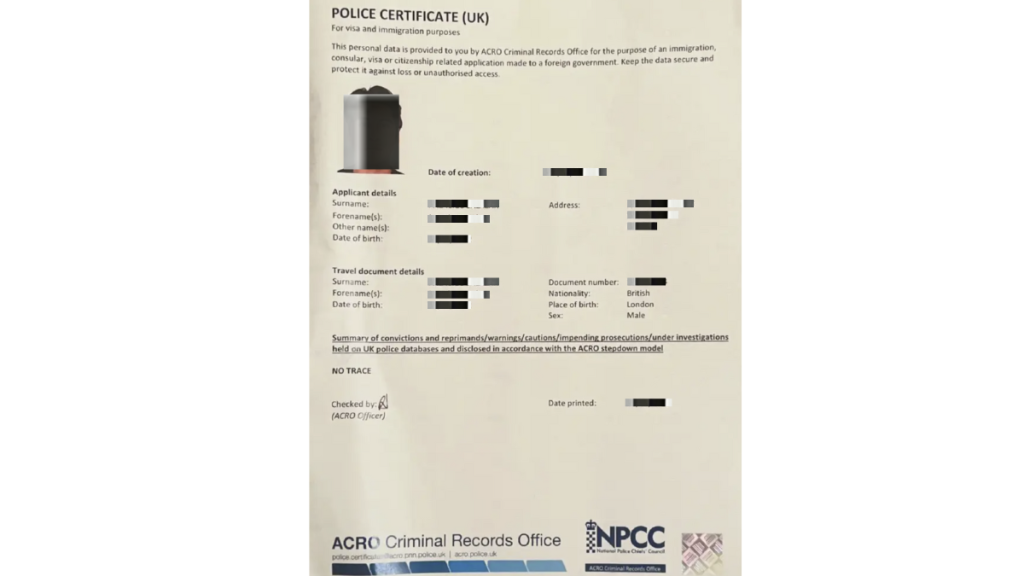
ACRO Police Certificate (UK)
The ACRO Police Certificate is the most widely accepted criminal background document for Korean immigration purposes.
Key requirements:
- Issued by the ACRO Criminal Records Office
- Issued within 90 days of the F-2-7 application
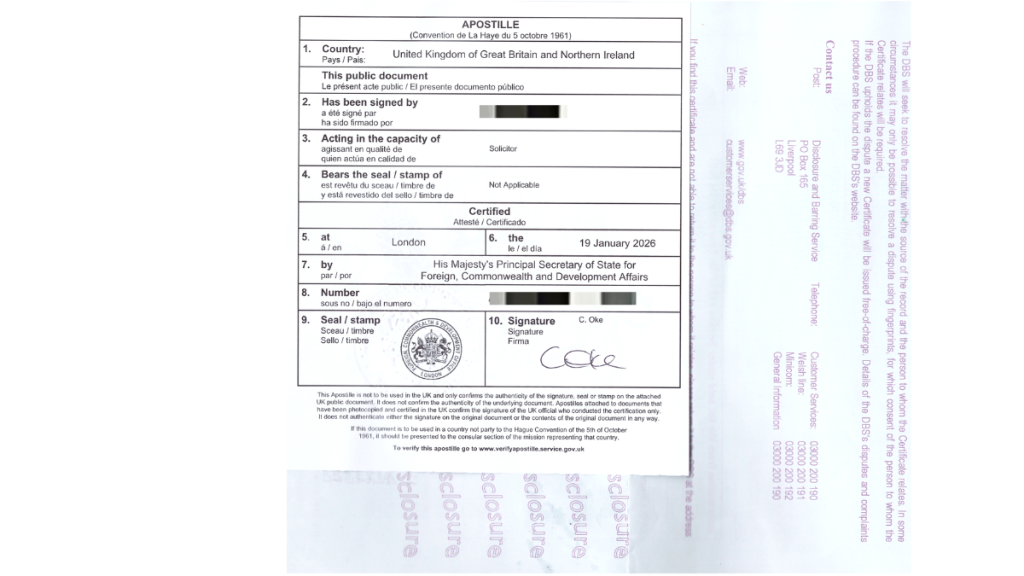
- Apostilled by the UK Foreign, Commonwealth & Development Office (FCDO)
- Original document submitted
A detailed guide on how to obtain an ACRO Police Certificate and complete FCDO apostille is available here:
https://ginkgoadvisory.com/uk-acro-police-certificate-and-uk-apostille/
DBS Certificate (UK)
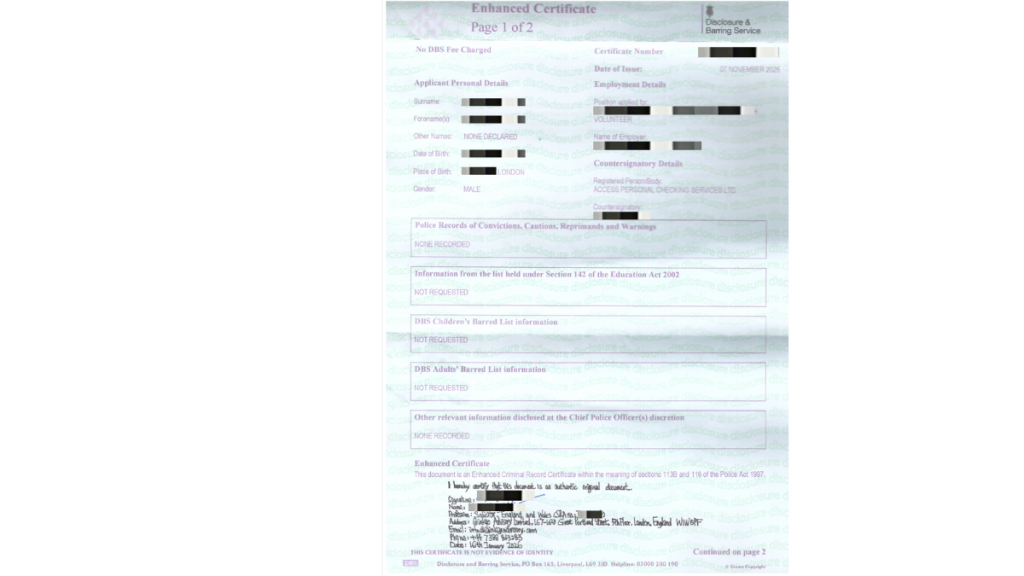
In some cases, DBS certificates may be accepted by Korean immigration officers. Acceptance is discretionary and depends on the immigration office and case officer.
Where a DBS certificate is used, the following are typically required:
- Correct DBS certificate type
- UK solicitor certification
- FCDO apostille applied to the certified document
A step-by-step guide covering DBS application, solicitor certification, and FCDO apostille for overseas use is available here:
https://ginkgoadvisory.com/dbs-certificate-uk-apostille-and-embassy-legalisation-guide/
Validity Notes
- Criminal background checks are generally valid for 90 days
- Previously submitted certificates may sometimes be reused if the applicant has not stayed outside Korea for more than six months, but this is not guaranteed
- Apostille must be applied to the correct version of the document
Proof of Educational Attainment (Apostilled)
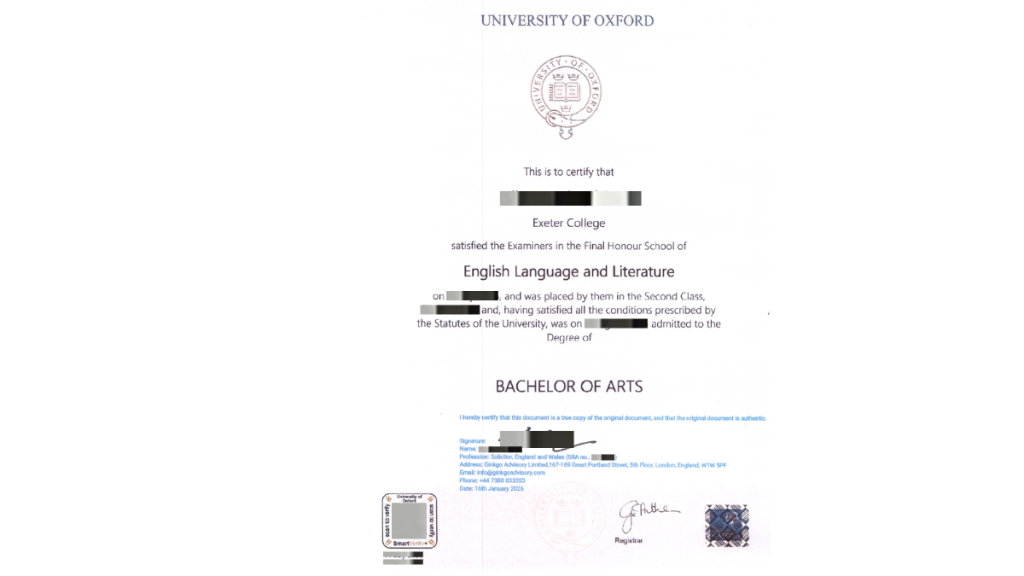
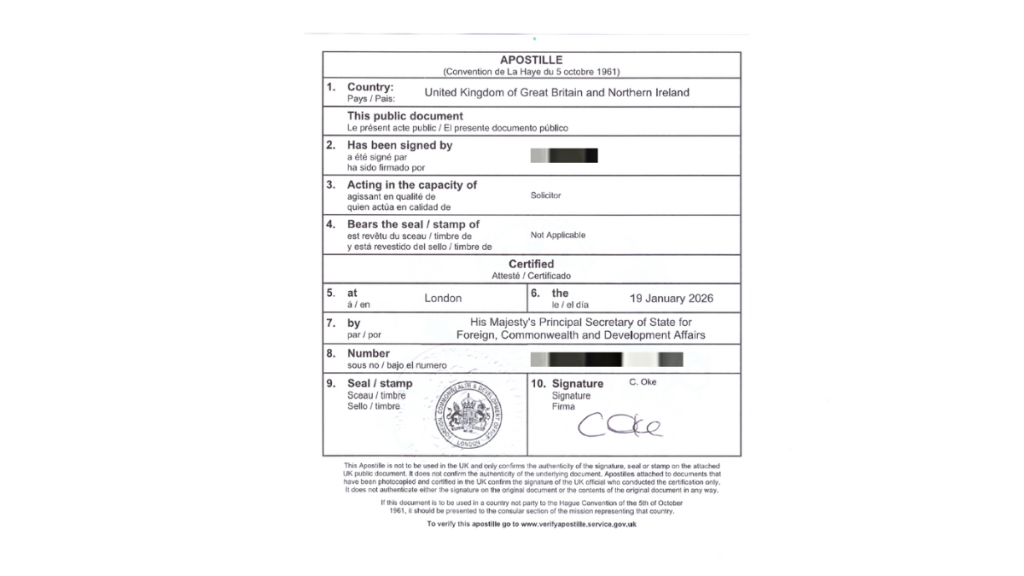
Unless the qualification was issued by a Korean institution, proof of educational attainment must be certified and apostilled.
Accepted documents include:
- Degree Certificate
- Certificate of Graduation
- Academic Transcript
For UK-issued qualifications, the standard process involves:
- UK solicitor certification
- FCDO apostille
A comprehensive guide on UK degree certificate and transcript certification for overseas use, including apostille requirements, is available here:
https://ginkgoadvisory.com/uk-degree-certificate-transcript-certification-overseas/
If the applicant graduated from a Korean university, apostille is not required.
Additional Applicant Documents
- Passport
- Alien Registration Card (ARC)
- Integrated application form
- Proof of address in Korea
- Proof of Korean language proficiency (TOPIK or KIIP)
- Proof of income and tax payment
- F-2-7 points calculation sheet
- Evidence supporting additional points (volunteering, recommendations, rankings)
Employer Documents (If Employed)
- Certificate of business registration
- Proof of employment
- Employment contract
- National tax clearance certificate
- Local tax clearance certificate
Duration of Stay Granted
The length of stay granted depends on points or tax score:
- 130 points or above: up to 5 years
- 120–129 points: up to 3 years
- 110–119 points: up to 2 years
- 80–109 points: 1 year
Common Issues for UK Applicants
UK applicants frequently encounter delays due to:
- Incorrect apostille sequencing
- Apostille applied to uncertified or incorrect document versions
- Expired criminal background checks
- Inconsistencies between degree certificates and transcripts
- Failure to meet Korean immigration evidentiary standards
These are typically technical compliance issues, not eligibility failures.
How Ginkgo Advisory Supports UK Applicants
Ginkgo Advisory provides UK-to-Korea document compliance support, focusing on legal validity rather than visa sponsorship.
Support includes:
- Review of ACRO and DBS certificates for immigration suitability
- UK solicitor certification of documents
- FCDO apostille processing
- Verification of degree certificates and academic transcripts
- Compliance checks against Korean immigration requirements
Services are provided to UK citizens, dual nationals, and professionals transitioning from employment- or study-based visas.
Conclusion
The F-2-7 visa is a structured pathway to long-term residency and eventual permanent settlement in South Korea. For UK applicants, success depends heavily on accurate document preparation, particularly apostilled criminal background checks and educational certificates.
Ensuring documents are correctly certified and apostilled in the UK significantly reduces the risk of delay or refusal during the Korean immigration process.
Contact Us



Address
167-169 Great Portland Street, 5/F, London
 English
  Chinese