Our Solicitor Certifies Your Documents for FCDO e-Apostille
Eligible UK documents digitally signed and prepared for fast electronic legalisation
Our solicitor is registered with the FCDO
1–2 working days
FCDO e-Apostille option
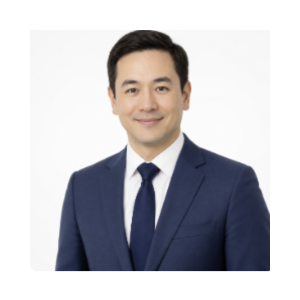
About the Author
KH is a practising solicitor based in London, admitted in England & Wales and regulated by the Solicitors Regulation Authority. He is registered with the Foreign, Commonwealth & Development Office. KH has worked as legal counsel and in-house solicitor across leading firms and corporations. He personally oversees every apostille and legalisation case at Ginkgo Advisory, ensuring consistency, accuracy, and end-to-end quality control.
KH Lam, LLB, LLM
Legal Consultant of Ginkgo Advisory
Do you need to use a UK document in Sweden?
Ginkgo Advisory provides solicitor verification, enhanced solicitor certification and FCDO apostille services for Sweden.
We assist with UK educational, company, court and personal documents. For urgent cases, our express e-Apostille service may take a few hours to one working day.
However, completion depends on document checks, source verification and FCDO processing.
UK Documents for Use in Sweden
Sweden and the United Kingdom are parties to the Hague Apostille Convention.
Therefore, an eligible UK public document can normally use an FCDO apostille instead of the longer diplomatic or consular legalisation process.
Before starting, ask the Swedish recipient whether it needs:
- an original or certified copy
- an FCDO e-Apostille or paper apostille
- a Swedish translation
- separate apostilles for each document
- UHR qualification recognition
- professional authorisation
- direct verification from the issuing organisation
- a document issued within a set period
These checks can prevent delays and unnecessary costs.
Does a UK Document Need Swedish Embassy Legalisation?
Normally, no.
The UK FCDO issues the apostille for an eligible UK document. Once the document carries a valid apostille, it should not require further legalisation by the Swedish Embassy or another Swedish diplomatic mission.
However, the apostille does not replace the recipient’s other requirements.
A Swedish university, employer, regulator, court, bank, migration authority or company register may still request:
- the physical original
- a certified copy
- academic recognition
- professional authorisation
- a certified translation
- a recent police certificate
- a particular company-document format
Therefore, check the complete application requirements before arranging legalisation.
Which UK Documents Can We Prepare?
Our solicitor can review many types of UK documents.
Educational documents
- Degree Certificates
- Academic Transcripts
- Diploma Supplements
- Higher Education Achievement Reports
- university letters
- GCSE and A Level certificates
- vocational qualifications
- professional qualifications
- teacher-training qualifications
Company documents
- Certificates of Incorporation
- Companies House certificates
- Articles of Association
- board resolutions
- shareholder resolutions
- powers of attorney
- registers of directors
- registers of members
- commercial agreements
Court and legal documents
- Final Orders
- Decrees Absolute
- court orders
- judgments
- consent orders
- Grants of Probate
- Letters of Administration
- statutory declarations
Personal documents
- certified passport copies
- proof of address
- employment letters
- consent forms
- medical certificates
- professional certificates
- ACRO Police Certificates
- DBS certificates
The correct route depends on the document and its intended use in Sweden.
What Is Solicitor Certification?
Solicitor certification is a formal statement signed by a UK solicitor.
For example, the solicitor may confirm that a copy matches the original document.
Basic wording often states:
“I certify that this is a true copy of the original document.”
This wording may satisfy a simple certified-copy requirement.
However, it does not confirm that the issuing university, court, company or public body genuinely created the document.
Therefore, a Swedish employer, regulator or authority may request stronger evidence.
What Is Enhanced Solicitor Certification?
Enhanced solicitor certification goes beyond basic true-copy wording.
First, our solicitor checks the document through a reliable source. That source may include a university, Companies House, a court record or an official digital platform.
We can then prepare wording such as:
“I further certify that I have verified the authenticity of this document with the issuing institution.”
As a result, the Swedish recipient receives:
- a certified copy of the document; and
- confirmation that the solicitor checked its issuing source.
This approach may help where the recipient wants more than a visual comparison with the original.
Solicitor Verification and Certification
Verification and certification are separate stages.
Verification means checking the document with its issuing source.
Certification means issuing the formal solicitor statement after completing that check.
For educational documents, we may use:
- direct university confirmation
- HEDD
- Gradintelligence
- Digitary
- Parchment
- an official university portal
- a secure document-sharing service
Company-document checks may involve official Companies House records.
Court-document checks can include:
- the court seal
- the case number
- the issuing email
- the order format
- other official evidence
After completing the appropriate checks, our solicitor prepares and signs the certificate.
What Does the FCDO Apostille Confirm?
The FCDO checks whether the relevant UK signature, stamp or seal matches its official records.
When the document meets the legalisation rules, the FCDO issues an apostille. Qualification certificates, powers of attorney, contracts and certified document copies may qualify after certification by a UK solicitor or notary.
However, an apostille does not verify every statement inside the underlying document.
For that reason, enhanced solicitor certification can create a stronger evidence chain:
Source verification → enhanced solicitor certification → solicitor signature → FCDO apostille
The enhanced certificate records the source check. The apostille then authenticates the relevant solicitor’s signature.
FCDO e-Apostille for Sweden
The FCDO offers paper apostilles and e-Apostilles.
For an e-Apostille, the document must be an eligible PDF electronically signed by a UK solicitor or notary. Once completed, the legalised file can be downloaded and shared digitally.
Our solicitor’s electronic signature is registered with the FCDO for e-Apostille purposes.
Consequently, we can prepare eligible PDFs for electronic legalisation.
Nevertheless, ask the Swedish recipient whether it accepts:
- a UK FCDO e-Apostille
- an electronically signed PDF
- a printed version of the digital document
- a paper apostille attached to an original
- a document uploaded through an electronic portal
Sweden uses extensive digital public services. However, this does not mean every recipient accepts every foreign e-Apostille for every procedure.
A paper apostille may work better where the recipient requires a physical original.
Express e-Apostille Service for Sweden
Straightforward cases may take a few hours to one working day through our express handling when:
- the document is clear and complete
- source verification has finished
- the PDF qualifies for an e-Apostille
- payment has arrived
- the FCDO requires no further checks
The FCDO publishes an e-Apostille processing time of up to two working days. Signature checks or document queries may extend that period.
Therefore, urgent clients should provide the document and the Swedish recipient’s instructions as early as possible.
Educational Documents for Sweden
UK educational documents may support:
- Swedish university admission
- postgraduate study
- employment
- UHR qualification recognition
- professional authorisation
- teacher certification
- salary assessment
- public-sector recruitment
- immigration applications
Common documents include the Degree Certificate and Academic Transcript.
A Degree Certificate confirms the academic award.
An Academic Transcript records information such as:
- subjects studied
- grades achieved
- academic credits
- dates of attendance
- programme duration
- practical placements
- completion of the qualification
However, an apostille does not determine the Swedish academic level or professional effect of the UK qualification.
The applicant may also need:
- an assessment from UHR
- direct assessment by a Swedish university
- professional authorisation
- the complete Academic Transcript
- a Diploma Supplement
- separate apostilles
UHR Recognition of Foreign Qualifications
The Swedish Council for Higher Education is known as UHR.
UHR evaluates foreign qualifications to support people who want to work or continue their studies in Sweden. It is also Sweden’s ENIC-NARIC centre.
UHR evaluates qualifications at:
- upper-secondary level
- post-secondary vocational level
- higher-education level
Its assessments are based on study documents showing that the qualification has been completed.
UHR Qualifications Assessment Tool
UHR’s Qualifications Assessment Tool contains general comparisons for many foreign qualifications.
Users can search by country and qualification type. They can then download a PDF explaining what the qualification normally compares with in Sweden.
The document may help an employer understand the applicant’s overseas education. However, the online comparison is general and does not assess the applicant’s individual documents.
Where the relevant UK qualification does not appear in the tool, the qualification holder may apply for an individual recognition statement.
Individual UHR Recognition Statement
An individual recognition statement is based on the applicant’s own academic documents.
UHR checks matters such as:
- whether the awarding institution is officially recognised
- whether the documents are authentic
- the qualification’s academic or vocational profile
- its level
- its official study duration
- its learning outcomes
- whether it differs substantially from a comparable Swedish qualification
The final statement explains what the foreign qualification corresponds to in the Swedish education system. However, it does not award a Swedish qualification.
Digital Recognition Statement
UHR issues recognition statements as digitally certified electronic documents.
The applicant can send the digital document to an employer or upload it with a job or study application. The electronic signature helps the recipient confirm that UHR issued the statement.
A printed copy does not carry the same digital certification as the electronic original.
Therefore, applicants should normally share the PDF rather than relying only on a printout.
Is UHR Recognition Mandatory?
No.
UHR recognition is generally intended to help employers and applicants understand the Swedish comparison of a foreign qualification.
For most non-regulated jobs, the employer can assess the qualification directly.
However, an individual recognition statement can help where:
- the employer is unfamiliar with the UK qualification
- the qualification title differs from Swedish terminology
- a public-sector employer requests formal clarification
- the applicant needs evidence of the Swedish qualification level
- the education does not appear in UHR’s assessment tool
UHR’s individual recognition application is free.
Recognition for Swedish University Admission
Applicants do not normally need to obtain an individual UHR recognition statement before applying for university study in Sweden.
Foreign qualifications are assessed as part of the university-admissions process. Applicants for higher education should apply through the appropriate Swedish admissions system or directly to the institution.
The university may request:
- the Degree Certificate
- the complete Academic Transcript
- a Diploma Supplement
- evidence of English proficiency
- course descriptions
- direct university verification
- an FCDO apostille
- additional programme-specific documents
Therefore, check the admission instructions before arranging certification or apostilles.
Documents for UHR Assessment
Processing begins when UHR has a complete application.
Common documents include:
- the Degree Certificate or diploma
- the official Academic Transcript
- documents in the original language
- translations where required
- proof of identity
- evidence of a name change, where relevant
UHR may request original documents or contact educational authorities to verify authenticity.
Applicants should therefore provide complete, clear copies of every relevant academic record.
Degree Certificate and Academic Transcript
Applicants should not assume that the Degree Certificate alone will be enough.
The Degree Certificate confirms that the qualification was awarded.
The Academic Transcript can show:
- subjects completed
- grades
- academic credits
- programme duration
- examination results
- placements
- dissertation requirements
- progression through the course
UHR identifies the degree certificate and official transcript as common core documents for its recognition process.
Diploma Supplement and HEAR
A Diploma Supplement can explain:
- the qualification level
- the study structure
- the credit system
- the grading system
- the status of the institution
- the academic rights attached to the qualification
Sweden recognises the Diploma Supplement as a transparency tool designed to support understanding and recognition of qualifications.
A UK Higher Education Achievement Report may also provide useful details. However, the Swedish recipient should confirm whether it accepts a HEAR in place of a conventional Academic Transcript or Diploma Supplement.
Apostille and UHR Recognition Are Different
An FCDO apostille and a UHR recognition statement perform different functions.
The FCDO apostille authenticates the relevant UK signature, stamp or seal.
UHR evaluates what the foreign qualification corresponds to in Sweden.
Neither process automatically replaces the other.
An apostilled UK Degree Certificate does not show its Swedish academic comparison.
Likewise, a UHR recognition statement does not replace an apostille where an employer, authority or professional body separately requires document legalisation.
UK Degree Verification for Sweden
A basic certified copy may not satisfy every Swedish recipient.
For stronger evidence, our solicitor can verify a UK qualification where the university provides a reliable verification route.
The process may include:
- reviewing the Degree Certificate
- checking the Academic Transcript
- accessing an official verification platform
- contacting the issuing university
- confirming the source of the qualification
- preparing enhanced solicitor certification
- electronically signing the PDF
- arranging the FCDO apostille
This process records how we checked the qualification.
However, it does not replace UHR recognition, university admission or professional authorisation where a separate procedure applies.
Recognition of UK School Qualifications
UHR can also evaluate foreign upper-secondary education.
This may include UK documents such as:
- GCSE certificates
- IGCSE certificates
- GCE O Level certificates
- GCE A Level certificates
- school-leaving certificates
- secondary-school transcripts
- vocational qualifications
UHR’s recognition process covers upper-secondary, post-secondary vocational and higher-education qualifications.
For admission to a Swedish Bachelor’s programme, applicants normally apply directly through the Swedish admissions process. Their foreign secondary qualifications are assessed during the application.
Professional Qualifications in Sweden
Sweden regulates a range of professions.
A profession is regulated when Swedish law requires a particular qualification, licence, authorisation or other formal approval before the person can work under that professional title.
Examples include:
- doctors
- dentists
- nurses
- midwives
- pharmacists
- psychologists
- teachers
- preschool teachers
- veterinarians
- auditors
- estate agents
- certain technical and transport professions
UHR maintains a list of regulated professions and identifies the competent Swedish authority for each profession.
Regulated and Non-Regulated Professions
For a non-regulated profession, formal professional recognition is usually unnecessary. The employer can assess the applicant’s education and experience.
For a regulated profession, the applicant must contact the competent authority and obtain permission to practise.
The authority may request:
- the Degree Certificate
- the Academic Transcript
- detailed curriculum information
- practical-training records
- proof of UK registration
- a Certificate of Good Standing
- employment records
- language evidence
- certified copies
- apostilled documents
An FCDO apostille does not itself grant the right to practise a regulated profession in Sweden.
UK Professional Qualifications After Brexit
The treatment of a UK professional qualification depends on:
- the profession
- when the qualification was awarded
- the applicant’s nationality
- whether transitional rules apply
- previous professional recognition
- the responsible Swedish authority
Applicants should not assume that every UK qualification automatically follows the EU or EEA professional-recognition route.
Therefore, obtain written requirements from the competent Swedish authority before arranging several apostilles.
Healthcare Qualifications in Sweden
Sweden regulates 22 healthcare professions through professional licences or protected titles.
The National Board of Health and Welfare, known as Socialstyrelsen, handles licensing for professions such as:
- doctors
- dentists
- nurses
- midwives
- pharmacists
- psychologists
- physiotherapists
- radiographers
- occupational therapists
- other licensed healthcare professionals
A licence confirms that the practitioner meets the professional requirements for the protected occupation.
UK Healthcare Qualifications Before 1 January 2021
Socialstyrelsen applies a specific rule to certain British diplomas.
Where the UK diploma was issued before 1 January 2021, the applicant can apply to have the qualification assessed on the same basis as a qualification from an EU Member State.
The applicant should select the route for education completed within the EU or EEA.
However, the authority still decides whether all licensing requirements are satisfied.
UK Healthcare Qualifications Issued From 1 January 2021
Where the UK diploma was issued on or after 1 January 2021, Socialstyrelsen instructs applicants to use the route for education completed outside the EU and EEA.
This route may involve:
- assessment of the foreign education
- a proficiency test
- a course in Swedish laws and regulations
- clinical or practical training
- a final licence application
The precise stages depend on the profession and applicant’s circumstances.
Swedish Language Requirements for Healthcare Professionals
Licensed healthcare professionals normally need sufficient ability in:
- Swedish
- Danish; or
- Norwegian.
For several licensing routes, Swedish proficiency at approximately CEFR C1 or an equivalent approved educational level may satisfy the language requirement.
Applicants can also be asked to provide:
- the professional diploma
- the Academic Transcript
- detailed training information
- proof of professional registration
- a Certificate of Good Standing
- identity documents
- evidence of clinical practice
- proof of language ability
Certificates of Good Standing
Healthcare applicants may need a recent Certificate of Good Standing or Certificate of Current Professional Status.
Socialstyrelsen states that the certificate should:
- confirm that the person has not been restricted from practising because of professional misconduct or criminal action;
- come from the competent professional authority; and
- usually be issued within three months of the application.
A university is not treated as the competent professional authority for this purpose.
The applicant should check whether the regulator must send the certificate directly.
Translation Rules for Healthcare Applications
Healthcare documents written in:
- Swedish
- Norwegian
- Danish; or
- English
do not normally require translation for the relevant Socialstyrelsen procedures.
Documents written in another language must be translated into Swedish or English by a certified translator.
Therefore, standard UK academic and professional documents written fully in English will usually avoid translation for this specific licensing process.
Teacher and Preschool-Teacher Certification
Teachers and preschool teachers may need professional certification from the Swedish National Agency for Education, known as Skolverket.
An applicant with a foreign qualification may apply for certification without already living in Sweden or holding a Swedish personal identity number.
The application normally requires:
- the teaching or preschool-teaching degree
- all pages of the qualification
- a list of completed courses and grades
- teaching-experience certificates, where applicable
- proof of a name change, where relevant
- additional evidence requested by Skolverket
Requirements for Teacher Certification
A foreign-qualified teacher must normally show:
- a recognised teaching qualification
- sufficient subject knowledge
- suitable studies in pedagogy and didactics
- appropriate teaching practice
- knowledge relevant to the Swedish school system
- sufficient Swedish-language ability
Skolverket states that foreign-qualified teachers generally need Swedish proficiency corresponding to CEFR C1.
Work experience or additional study may sometimes compensate for differences between the foreign teacher training and a Swedish teaching degree.
UK PGCE and QTS Documents
A UK-trained teacher may need to provide separate evidence of:
- the underlying Bachelor’s Degree
- the PGCE or other teacher-training qualification
- Qualified Teacher Status
- the complete Academic Transcript
- teaching-practice placements
- subject specialism
- professional experience
- professional standing
QTS alone may not explain the full academic content of the teacher-training programme.
Therefore, Skolverket may need the Degree Certificate, PGCE, course list, teaching-practice records and employment evidence together.
Company Documents for Sweden
UK company documents may support:
- registering a Swedish branch
- establishing a Swedish subsidiary
- opening a corporate bank account
- obtaining a Swedish organisation number
- tax and VAT registration
- commercial contracts
- proving directors or shareholders
- appointing a Swedish representative
Official Companies House certificates may qualify for direct FCDO legalisation where they carry an eligible public-official signature.
Company-created documents usually need an appropriate signature or solicitor certification before the FCDO can issue an apostille.
Examples include:
- board resolutions
- shareholder resolutions
- company powers of attorney
- registers of directors
- registers of members
- authorised signatory letters
- commercial agreements
Registering a Foreign-Company Branch in Sweden
A branch is the Swedish local office of a foreign company.
Foreign companies generally conduct Swedish business through:
- a registered branch;
- a Swedish subsidiary; or
- an authorised agency structure.
Swedish guidance states that foreign companies conducting business in Sweden generally need a branch unless their activities take place through a Swedish subsidiary or agency.
A branch is not a separate legal entity from the UK parent company.
Branch Registration Documents
The Swedish Companies Registration Office, known as Bolagsverket, may require documents such as:
- a registration certificate for the foreign company
- the company’s constitutional documents
- information about the foreign company
- details of the Swedish branch
- the branch’s business activities
- details of the managing director
- a special power of attorney
- information about authorised signatories
Bolagsverket’s guidance states that a registration certificate for the foreign company must be attached. The branch must also appoint a managing director with appropriate authority.
Managing Director and Power of Attorney
The foreign company must appoint a managing director for the Swedish branch.
The managing director may need a special power of attorney allowing them to:
- act on behalf of the branch
- receive legal documents
- represent the foreign company in matters concerning its Swedish activities
- bind the branch within the limits of the authority
The Swedish lawyer or filing adviser should provide the required wording before the power of attorney is signed.
Depending on the filing, the document may require:
- solicitor certification
- notarisation
- an FCDO apostille
- a Swedish translation
- a physical original
Documents for a UK Company Branch
A UK company may be asked to provide:
- a Certificate of Incorporation
- a Companies House company certificate
- a Certificate of Good Standing
- the Articles of Association
- a board resolution approving the Swedish branch
- evidence of current directors
- evidence of signature rights
- a power of attorney
- beneficial-ownership information
- certified passport copies
The filing adviser should confirm whether each document needs:
- an official Companies House copy
- UK solicitor certification
- notarisation
- an FCDO apostille
- a recent issue date
- a separate apostille
Branch Annual Reports
A Swedish branch may need to file annual reports or accounting documents for both:
- the branch; and
- the foreign parent company.
Bolagsverket states that annual reports and other accounting documents filed for the branch and foreign company must be written in Swedish or translated into Swedish.
Therefore, even where English registration documents are accepted at the incorporation stage, later accounting filings may require Swedish translations.
Powers of Attorney for Sweden
A UK power of attorney may support:
- branch registration
- company formation
- banking
- property matters
- court proceedings
- inheritance
- tax matters
- representation before a Swedish authority
The Swedish lawyer, bank or recipient should provide the required wording before the document is signed.
Depending on the transaction, the power may require:
- execution before a solicitor or notary
- identity verification
- witness details
- an FCDO apostille
- a Swedish translation
- a physical original
Some transactions may require notarisation rather than ordinary solicitor certification.
Therefore, do not rely on a general power-of-attorney template without checking the Swedish requirements.
Court Documents for Sweden
UK court documents may need legalisation for:
- divorce matters
- probate
- inheritance
- family proceedings
- civil claims
- debt enforcement
- commercial disputes
Examples include:
- Final Orders
- Decrees Absolute
- court judgments
- consent orders
- Grants of Probate
- Letters of Administration
A UK court document carrying a recognised wet-ink court seal may qualify for direct FCDO legalisation.
By contrast, an electronic court document may first need solicitor verification and certification.
The Swedish court, lawyer or public authority may also request:
- the physical original
- a paper apostille
- a certified copy
- evidence that the judgment is final
- a Swedish translation
- separate recognition proceedings
Confirm the required format before selecting the e-Apostille route.
Recognition of a UK Divorce in Sweden
An apostilled UK Final Order or Decree Absolute confirms the authenticity of the relevant UK court signature or seal.
However, the apostille does not automatically update Swedish population or civil-status records. It also does not determine the foreign divorce’s legal effect in every Swedish procedure.
Depending on the circumstances, the applicant may need:
- the complete final court order
- evidence that the order is final
- an FCDO apostille
- registration with the Swedish Tax Agency
- a certified translation
- further legal recognition
The Swedish authority or family lawyer should confirm the correct route.
Does Sweden Require a Translation?
Many Swedish authorities accept documents written in Swedish or English.
For example, the Swedish Migration Agency states that submitted documents should be in Swedish or English. Where a translation is required, it must be certified and submitted together with a copy of the original-language document.
Therefore, ordinary UK documents written fully in English will not normally require translation for many migration applications.
However, another Swedish recipient may still require Swedish.
Before arranging translation, ask:
- whether the recipient accepts English
- whether it requires Swedish
- whether an authorised translator must prepare the translation
- whether the apostille also needs translation
- whether every page and annex needs translation
- whether the translation must be attached to the original
- whether an electronic translation is accepted
Authorised Swedish Translators
Kammarkollegiet is the Swedish Legal, Financial and Administrative Services Agency.
It authorises translators and maintains Sweden’s official searchable register of authorised translators.
The register includes translators working between Swedish and English, as well as many other language combinations.
An authorised translator may prepare certified translations of documents such as:
- qualification certificates
- Academic Transcripts
- court judgments
- police certificates
- contracts
- powers of attorney
- company records
The receiving authority should confirm whether it specifically requires a Kammarkollegiet-authorised translator.
Should Translation Take Place Before or After the Apostille?
In many cases, the safer sequence is:
UK document → FCDO apostille → authorised translation
This allows the translator to translate the complete legalised package, including:
- the underlying document
- the solicitor certificate
- the apostille
- stamps and seals
- schedules and annexes
However, a Swedish recipient may accept the English document and apostille without translation.
Confirm the required order before arranging translation.
Immigration and Residence Documents
UK documents may support Swedish applications involving:
- employment
- self-employment
- study
- family reunification
- long-term residence
- permanent residence
- proof of qualifications
- proof of family relationships
Possible supporting documents include:
- Degree Certificates
- Academic Transcripts
- professional-authorisation certificates
- birth certificates
- marriage certificates
- police certificates
- employment letters
- company documents
- powers of attorney
The Swedish Migration Agency generally accepts documents in Swedish or English. Certified translations are needed where the original document uses another language.
The exact document list depends on the permit category.
Skilled Employment and Regulated Professions
A Swedish work-permit application may require evidence of:
- the employment offer
- salary and insurance terms
- professional qualifications
- education
- relevant experience
- professional authorisation where the occupation is regulated
An apostilled Degree Certificate may support the evidence package.
However, the Migration Agency, employer or professional authority may also request:
- the Academic Transcript
- a UHR statement
- proof of experience
- a professional licence
- direct verification
- a Certificate of Good Standing
An apostille does not itself grant immigration or employment permission.
Police Certificates for Sweden
A UK ACRO Police Certificate may support:
- professional licensing
- employment
- residence or family procedures
- adoption
- teaching applications
- background screening
The FCDO does not issue e-Apostilles for ACRO Police Certificates.
Therefore, an ACRO certificate must use the paper apostille route.
The Swedish recipient may also require:
- the original certificate
- a recent issue date
- a paper apostille
- police certificates from other countries
- direct delivery
- a certified translation
Check the validity requirement before ordering the certificate.
Birth, Marriage and Civil-Status Documents
UK civil-status documents may support:
- birth registration
- marriage registration
- divorce matters
- citizenship
- family immigration
- parental responsibility
- inheritance
Common documents include:
- birth certificates
- marriage certificates
- death certificates
- civil partnership certificates
- adoption certificates
- divorce orders
The Swedish recipient may require:
- the original paper certificate
- an FCDO paper apostille
- a long-form certificate
- a recently issued copy
- supporting identity documents
- registration with the relevant Swedish authority
Documents written fully in English may not require translation in some procedures. However, the recipient should confirm its requirements.
Documents That Need a Paper Apostille
The FCDO does not issue an e-Apostille for certain document types.
These include:
- UK birth certificates
- marriage certificates
- death certificates
- civil partnership certificates
- adoption certificates
- other General Register Office documents
- ACRO Police Certificates
- DBS certificates
- Scottish and Northern Irish disclosure certificates
- fingerprint certificates
- ACCA membership certificates
These documents normally require a paper apostille.
A Swedish recipient may also require a physical document even where the document type technically qualifies for an e-Apostille.
Separate or Combined Apostilles?
Several related documents can sometimes form one solicitor-certified PDF.
However, this approach does not suit every Swedish application.
Separate apostilles may work better when:
- the Degree Certificate and Transcript serve different purposes
- UHR or a professional regulator expects separate academic records
- each document will go to a different authority
- a healthcare authority requires individual documents
- a Bolagsverket filing involves independent company records
- the documents come from different issuing bodies
The FCDO advises applicants to ask whether the recipient needs one apostille for a group of documents or a separate apostille for each document.
Our Process
Step 1: Send the Document
Send us a clear PDF of the UK document.
Step 2: Provide the Swedish Requirements
Include any instructions from the Swedish:
- authority
- employer
- university
- professional regulator
- Migration Agency
- court
- bank
- lawyer
- Bolagsverket filing adviser
Step 3: Check Whether Legalisation Is Needed
We first determine whether the recipient requires an apostille.
Step 4: Select the Correct Route
We check whether the document needs:
- an e-Apostille
- a paper apostille
- solicitor certification
- enhanced source verification
- notarisation
- separate legalisation
Step 5: Verify the Document
Where possible, our solicitor checks the document with its issuing source.
Step 6: Prepare Enhanced Certification
We draft the appropriate certification wording and apply the solicitor’s electronic or wet-ink signature.
Step 7: Arrange the FCDO Apostille
Our team submits the document through the suitable FCDO route.
Step 8: Send the Completed Document
Finally, we provide the completed electronic file or arrange return delivery of the paper documents.
A Swedish recipient can verify a UK paper or electronic apostille using its issue date and apostille number.
Need an Apostille for Sweden?
Send Ginkgo Advisory:
- a copy of the UK document
- its intended use in Sweden
- the name of the recipient
- any written document requirements
- whether UHR recognition is required
- whether professional authorisation is involved
- whether the recipient accepts English
- your required completion date
We will check whether an apostille is necessary and confirm the appropriate verification, certification and legalisation route.
Eligible express e-Apostille cases may take a few hours to one working day, subject to document checks and FCDO processing.
Frequently Asked Questions
Does Sweden accept an FCDO apostille?
Yes. Sweden and the United Kingdom are parties to the Hague Apostille Convention. An eligible UK document carrying an FCDO apostille should not need further Swedish consular legalisation.
Does an apostilled UK document need Swedish Embassy legalisation?
Normally, no. The FCDO apostille replaces the longer diplomatic or consular legalisation process for eligible UK documents.
Does Sweden accept an FCDO e-Apostille?
A UK e-Apostille may suit a digital application. However, the receiving Swedish organisation should confirm that its procedure accepts an electronically signed PDF.
Is true-copy certification enough?
It depends on the purpose. Some Swedish recipients may also want confirmation that the solicitor verified the document with the issuing university, company or public body.
Can you verify a UK Degree Certificate?
Yes, where the issuing university provides a reliable verification route.
What is UHR?
UHR is the Swedish Council for Higher Education. It evaluates foreign qualifications and operates Sweden’s ENIC-NARIC recognition centre.
Does an apostille recognise a UK degree in Sweden?
No. An apostille authenticates the relevant UK signature or seal. UHR, a Swedish university or another authority separately assesses the qualification.
Is UHR recognition mandatory?
Not generally. It is mainly used to help employers and applicants understand what a foreign qualification corresponds to in Sweden.
What is the UHR Qualifications Assessment Tool?
It is an online service showing general Swedish comparisons for many foreign qualifications. The user can download a PDF and send it to an employer.
What is an individual UHR recognition statement?
An individual UHR recognition statementis a document based on the applicant’s own educational records. It explains what the completed foreign qualification is equivalent to in Sweden. It does not award a Swedish qualification.
Is the UHR recognition statement electronic?
Yes. UHR issues a digitally certified PDF that can be shared electronically with employers and other recipients.
Does UHR need the Academic Transcript?
Yes. UHR identifies the Degree Certificate and official Academic Transcript as common core documents for the recognition process.
Do I need UHR recognition before applying to a Swedish university?
Normally, no. Foreign qualifications are assessed during the university-admission process.
Does UHR recognise GCSE and A Level qualifications?
UHR evaluates foreign qualifications at upper-secondary level. However, applicants for Swedish university admission normally have their school records assessed as part of the admission process.
Does UHR recognition grant a professional licence?
No. A regulated profession requires separate authorisation from the competent Swedish authority.
Who regulates healthcare professionals in Sweden?
Socialstyrelsen, the National Board of Health and Welfare, handles licences and protected professional titles for regulated healthcare professions.
How are UK healthcare qualifications treated after Brexit?
A UK diploma issued before 1 January 2021 can be assessed through the EU or EEA route. A diploma issued on or after that date normally follows the outside-EU/EEA route.
Do healthcare professionals need Swedish?
Yes. Licensed healthcare professionals generally need suitable knowledge of Swedish, Danish or Norwegian. Several routes use a standard comparable to Swedish C1.
Do UK healthcare documents need translation?
Not normally when they are written in English. Socialstyrelsen accepts documents in Swedish, Norwegian, Danish or English without translation.
Who certifies teachers in Sweden?
Skolverket, the Swedish National Agency for Education, handles teacher and preschool-teacher certification.
Do foreign teachers need Swedish?
Yes. Foreign-qualified teachers generally need Swedish-language ability corresponding to CEFR C1, together with appropriate pedagogy, subject knowledge and teaching practice.
Can a UK company register a branch in Sweden?
Yes. A UK company can register a Swedish branch through Bolagsverket. Foreign companies conducting business in Sweden generally need a branch unless they operate through a Swedish subsidiary or agency.
What documents does a Swedish branch need?
The application can require a foreign-company registration certificate, constitutional documents, branch details, a managing director and a special power of attorney.
Do Swedish branch accounts need translation?
Annual reports and other accounting documents filed for the branch and its foreign parent company must be in Swedish or translated into Swedish.
Do English UK documents need translation for Sweden?
Often not. The Swedish Migration Agency generally accepts documents in Swedish or English. Other recipients may apply different rules.
Who can prepare an authorised Swedish translation?
Kammarkollegiet maintains Sweden’s official register of authorised translators working between Swedish and other languages, including English.
Can you apostille an Academic Transcript?
Yes. We can review, verify and certify an eligible Academic Transcript before arranging the FCDO apostille.
Can an ACRO Police Certificate receive an e-Apostille?
No. An ACRO Police Certificate must use the FCDO paper apostille route.
Do UK birth and marriage certificates need a paper apostille?
Where an apostille is required, General Register Office certificates must use the paper route because they cannot receive an e-Apostille.
Can several documents share one apostille?
Sometimes. However, UHR, a professional regulator, healthcare authority, court, employer or Bolagsverket filing may require a separate apostille for each document.
Contact Us



Address
Suite 161, 30 Red Lion Street, London, TW9 1RB, England