Can Can you apply for the Global Korea Scholarship (GKS) if you hold UK citizenship, even though the UK is not listed under the GKS University Track quota?
In many cases, yes.
However, the answer depends on nationality, not on where you were born, educated, or currently living. Under official GKS rules, UK citizenship alone does not disqualify an applicant. Instead, eligibility depends on which nationality you apply under and whether your documents meet GKS legalisation requirements.
This guide explains, step by step, how dual UK citizens can apply for GKS, which nationalities remain eligible, what documents require apostille, and how to avoid common application risks.

1. The Key GKS Rule: Nationality Comes First
First of all, GKS evaluates eligibility based on citizenship, not background.
According to the official rules:
- Applicants must hold citizenship of a GKS partner country
- Applicants must not hold Korean citizenship
- Dual citizenship is only prohibited if one nationality is Korean
Importantly, GKS does not ban dual nationality itself.
As a result:
Holding UK citizenship does not automatically disqualify a GKS application.
Instead, what matters is which nationality you use when applying.
2. Why UK Citizenship Does Not Automatically Block GKS
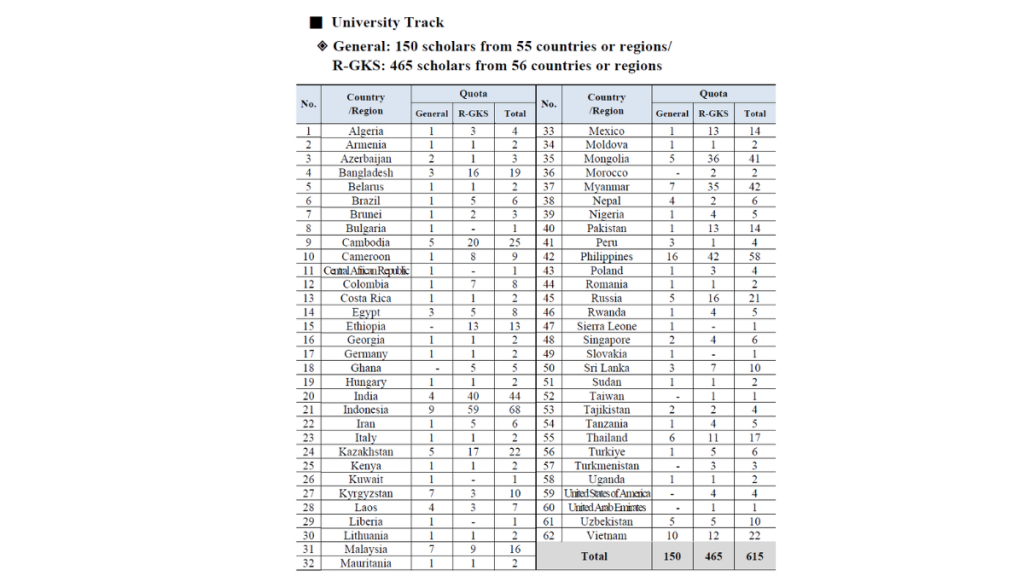
It is true that the United Kingdom is not listed under the GKS University Track quota.
However, this fact alone does not prevent an application.
In practice, many applicants hold UK citizenship alongside another nationality. As long as the other nationality appears on the GKS partner list, the applicant may apply under that eligible nationality.
Therefore, dual UK citizens remain eligible if they apply correctly.
3. GKS-Eligible Nationalities Commonly Held by Dual UK Citizens
Based on the official quota list, dual UK citizenship holders may qualify if their second nationality is one of the following (non-exhaustive):
- Bangladesh
- India
- Pakistan
- Philippines
- Malaysia
- Russia
- Singapore
- Thailand
- Indonesia
- Vietnam
If you hold UK citizenship plus one of the above, you may apply for GKS using the eligible nationality, even if:
- You were born and raised in the UK
- All your education took place in the UK
- All documents were issued by UK institutions
4. Applying with UK-Issued Documents Is Allowed
Many applicants worry that UK documents might not be accepted. In reality, GKS does not require documents to be issued by the same country as your nationality.
Instead, GKS focuses on proper certification and legalisation.
As a result, applicants often:
- Apply under a GKS-eligible nationality
- Submit UK-issued degrees, transcripts, and civil records
- Legalise those documents correctly before submission
As long as your nationality declaration remains consistent, UK documents are acceptable.
5. The Only Dual Citizenship Scenario That Is Not Allowed
GKS clearly prohibits only one situation:
- Korean citizenship + another nationality
If either the applicant or the applicant’s parents hold Korean citizenship, the applicant becomes ineligible, unless official Korean citizenship renunciation documents are submitted.
All non-Korean dual citizenship combinations, including UK + another country, are not prohibited under GKS rules.
6. Documents That Must Be Apostilled for GKS
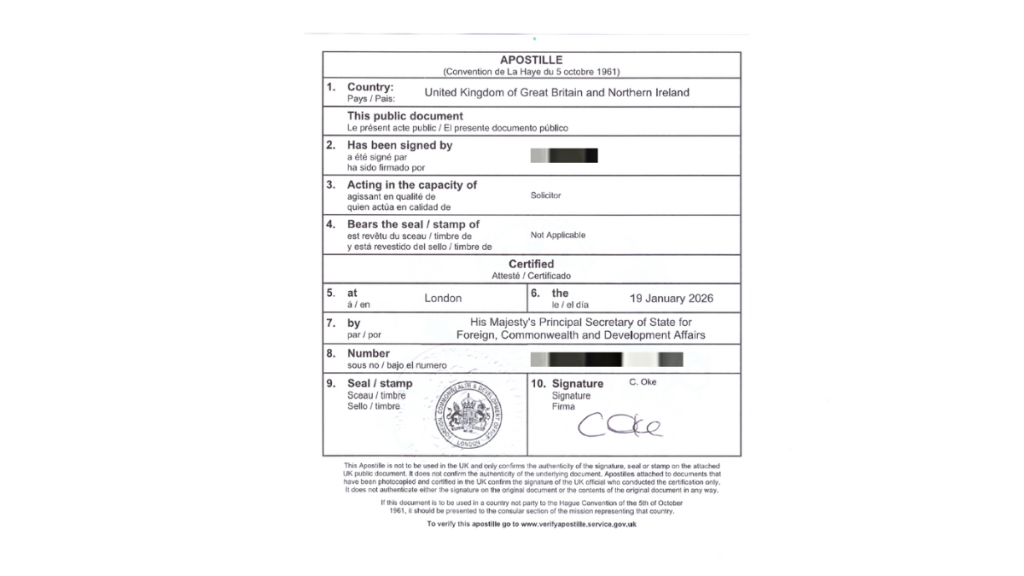
GKS requires that all required certificates submitted to Korean National Institute for International Education (NIIED) are apostilled or consular-confirmed.
For UK-issued documents, this means UK FCDO apostille.
Common documents that require apostille include:
Educational Records
- High School Graduation Certificate (or certificate of expected graduation) (if applying for GKS Undergraduate Degrees)
- Academic transcript of high school curriculum (if applying for GKS Undergraduate Degrees)
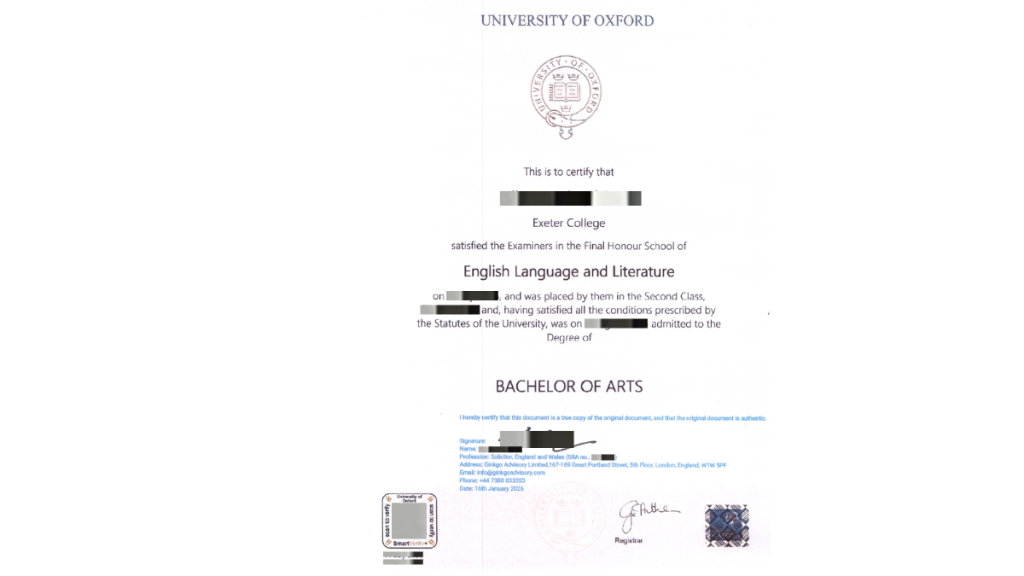
- Bachelor’s Graduation Certificate (or Diploma) (if applying for GKS Graduate Degrees)
- Bachelor’s Degree Transcript (if applying for GKS Graduate Degrees)
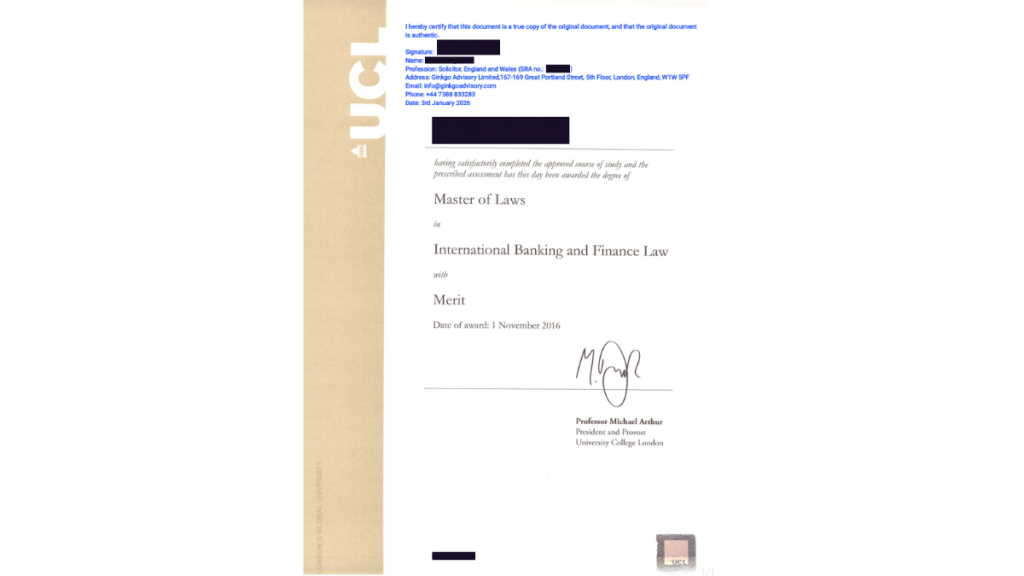
- Master’s Graduation Certificate (or Diploma) (if applying for GKS Graduate Degrees)
- Master’s Degree Transcript (if applying for GKS Graduate Degrees)
- Doctoral Graduation Certificate (or Diploma) (if applying for GKS Graduate Degrees)
- Doctoral Degree Transcript (if applying for GKS Graduate Degrees)
Proof of citizenship (applicant)
- Birth certificate / passport
- Applicant’s passport
- Additional government-issued ID (if required)
Proof of citizenship (parents) and proof of family relationship
- Parents’ citizenship documents
- Proof of family relationship (e.g. birth certificate)
Important:
GKS does not return submitted documents.
Applicants should plan carefully before submitting originals.
7. Solicitor Certification and Apostille: Correct Order Matters
For UK-issued documents, applicants often need two steps:
- Solicitor certification (when required)
- FCDO apostille
Some documents, especially Educational Records, cannot be apostilled directly. In those cases, solicitor certification becomes essential.
Incorrect sequencing frequently leads to document rejection, even when eligibility is otherwise clear.
8. Common Risk Areas for Dual UK Applicants
In practice, most rejections occur due to procedural issues, not academic ones.
The most common risks include:
- Inconsistent nationality declaration
- Missing or unclear parents’ citizenship proof
- Apostille applied to the wrong document version
- Submission of photocopies instead of certified documents
- Loss of original documents that cannot be re-issued
Each of these issues is avoidable with proper planning.
9. How Ginkgo Advisory Supports GKS Applicants
Ginkgo Advisory assists GKS applicants who must manage dual nationality, UK documentation, and apostille compliance.
Our support includes:
- Reviewing eligibility positioning for dual UK citizens
- Identifying which documents require solicitor certification
- Managing UK FCDO apostille accurately and on time
- Reducing the risk of irreversible submission errors
Our focus is procedural accuracy, regulatory compliance, and risk control.
10. Final Summary
If you hold dual UK citizenship, your GKS eligibility depends on three questions:
- Do you hold citizenship of a GKS-listed country?
- Do you not hold Korean citizenship?
- Are your documents correctly certified and apostilled?
If the answer to all three is yes, UK citizenship alone does not prevent you from applying for GKS, even though the UK is not listed under the University Track quota.
Contact Us



Address
167-169 Great Portland Street, 5/F, London
 English
  Chinese