
About the Author
Kwok is a practising solicitor based in London, admitted in England & Wales and regulated by the Solicitors Regulation Authority. He is registered with the Foreign, Commonwealth & Development Office and admitted in Hong Kong (non-practising). Kwok has worked as legal counsel and in-house solicitor across leading firms and corporations. He personally oversees every apostille and legalisation case at Ginkgo Advisory, ensuring consistency, accuracy, and end-to-end quality control.
Kwok Lam
Legal Consultant of Ginkgo Advisory
If you are a UK citizen or UK-based professional taking up employment in Qatar, your application will not succeed unless your documents are prepared in the exact legal sequence required by the Qatari authorities.
Qatar is not a Hague Apostille country.
A UK apostille alone is never sufficient.
Every document must pass four distinct stages — and any deviation results in rejection, regardless of intent.
This guide explains, step by step, how UK documents must be prepared for a Qatar work visa and work residence permit in 2026, based on the official rules of the Embassy of the State of Qatar in London.
Who This Guide Is For
This guide applies if you are:
- A UK citizen or UK resident taking up employment in Qatar
- Relocating to Doha for work under company sponsorship
- Working in education, healthcare, engineering, energy, aviation, finance, construction, or government projects
- Required to submit UK-issued personal or educational documents for a Qatar work visa or residence permit
Do UK Citizens Need a Visa to Work in Qatar?
Yes.
To work legally in Qatar, you must obtain a Qatar Work Visa, and a Qatar Work Residence Permit after arrival.
Working on a visitor visa, visa-free entry, or business visit status is illegal.
How UK Documents Fit into the Qatar Work Visa Process
Before a Qatar work visa or residence permit can be approved, UK documents must be legally recognised by Qatar.
This recognition requires four mandatory stages, completed in the correct order, for each document individually.
Mandatory Legalisation Sequence for Qatar (UK Documents)
There are no shortcuts. No bundling. No substitutions.
Each document must follow this sequence:
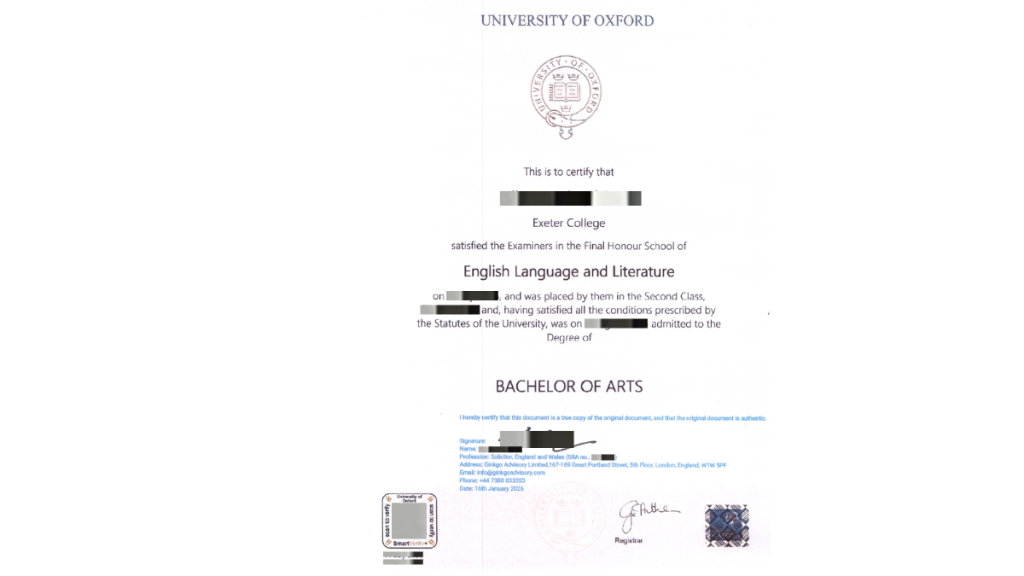
Step 1 — UK Solicitor Certification (Individual Certification)
Every document must first be certified individually by a UK-accredited solicitor.
- Documents may be originals or certified true copies
- Each document must carry its own solicitor certification
- Bundled certifications are not accepted
Incorrect wording, non-UK solicitors, or generic certifications are common rejection points.
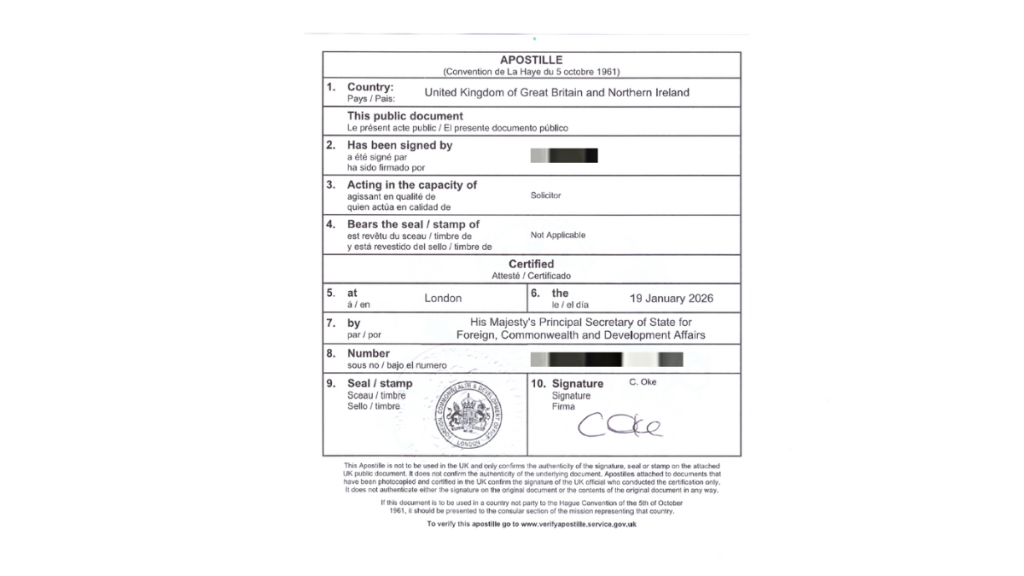
Step 2 — UK Apostille (FCDO Apostille)
Once solicitor-certified, each document must be apostilled individually by the Foreign, Commonwealth & Development Office.
Key rules:
- Every document must receive its own apostille
- Bundled or batch apostilles are explicitly rejected
- Apostille must follow solicitor certification — never before
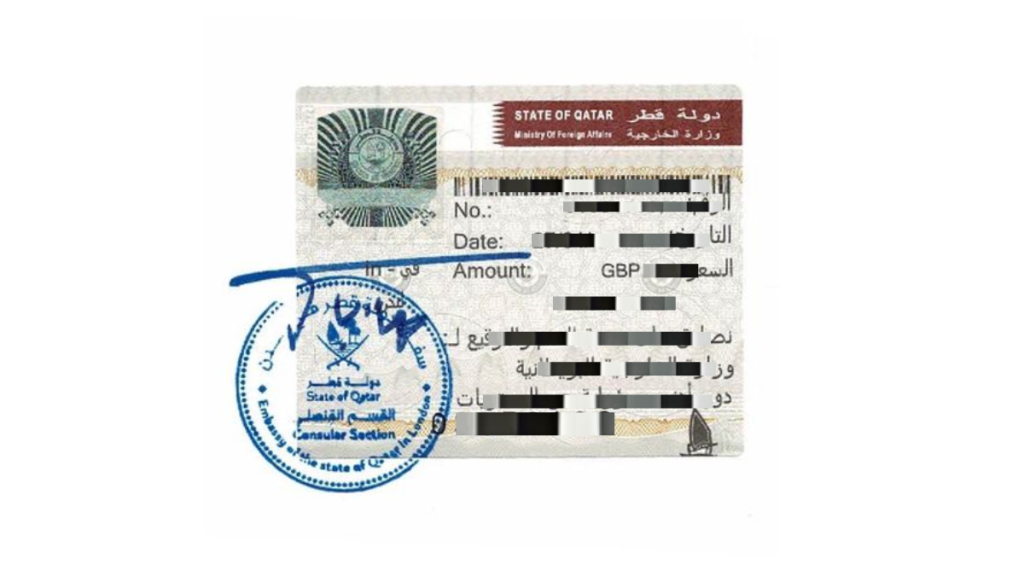
Step 3 — Qatar Embassy Attestation (London)
Only after solicitor certification and individual UK apostille can documents be submitted to the Qatar Embassy legalisation department in London.
Documents that fail any prior step are automatically denied, without appeal.
Step 4 — Submission to Qatar Authorities
Once embassy-attested, documents may be used for:
- Qatar work visa processing
- Qatar work residence permit (RP)
- Ministry of Interior (MOI) and Ministry of Labour procedures
Critical Rule: No Bundled Documents — Ever
The Embassy of the State of Qatar in London does not accept:
- Documents certified as a bundle
- Documents apostilled as a bundle
- Documents sharing one apostille
Each document must be certified and apostilled separately.
This is one of the most common causes of rejection.
Personal Documents Accepted by the Qatar Embassy (UK-Issued)
The following UK-issued personal documents can be legalised after individual solicitor certification and FCDO apostille:
- Police Clearance / Criminal Record Certificate
- Fingerprints
- Passport copy
- Driving licence
- Medical report
- Birth certificate
- Marriage certificate
- Divorce document
- Court orders
- Inheritance wills
- Change of name documents
- Personal power of attorney
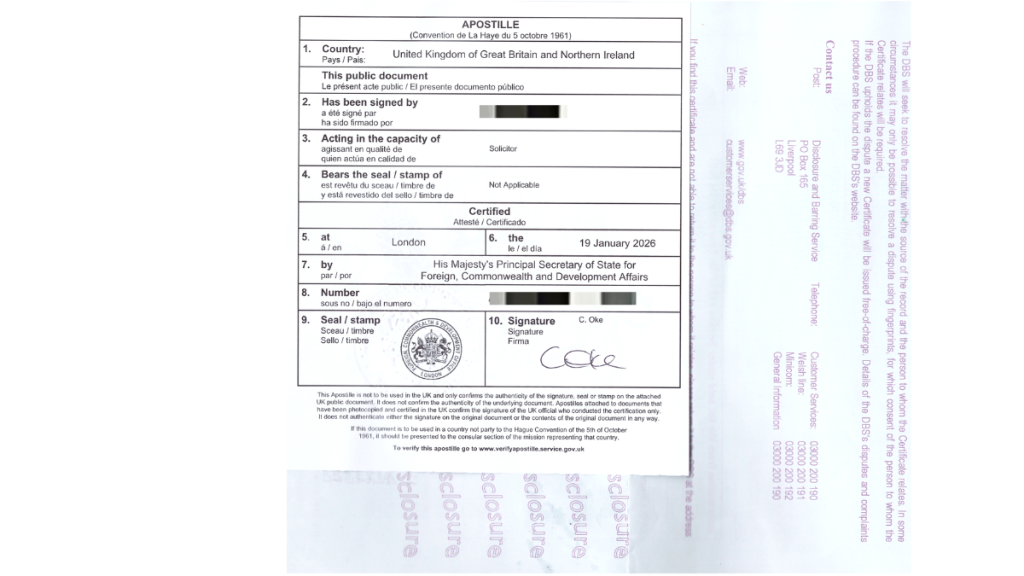
Educational Documents — Stricter Requirements Apply
Educational documents are the highest-risk category for Qatar.
Accepted Educational Documents
- Postgraduate degrees (MSc, PhD)
- Bachelor degrees
- College diplomas
- A-Level, BTEC, NVQ, HNC, HND (Levels 1–3)
- GCSE certificates
- Primary school certificates (for dependent children only)
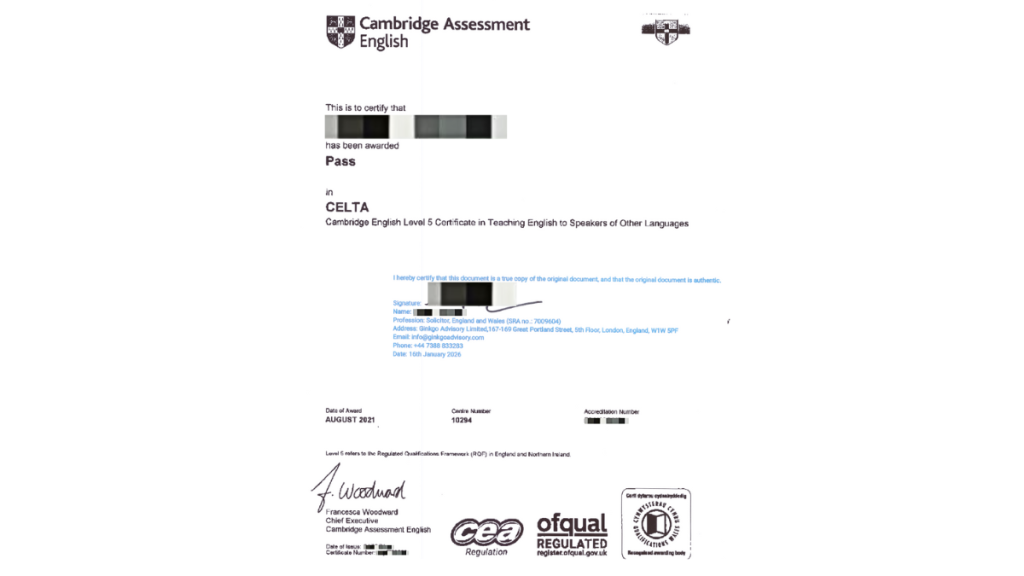
Mandatory Supporting Documents (All Must Be Submitted Together)
For every educational qualification, the Embassy requires three items, all legalised individually:
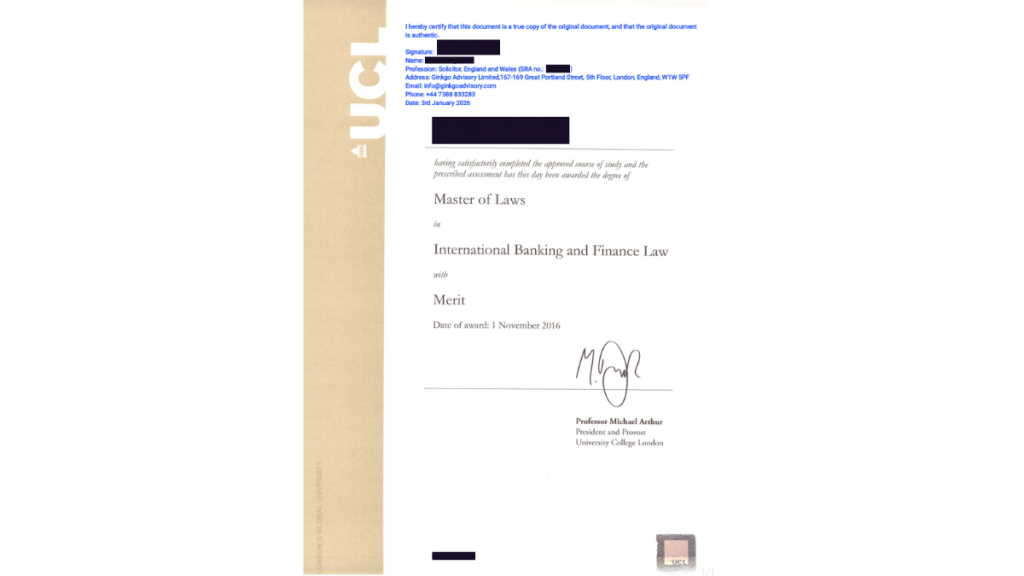
- Degree / Diploma Certificate
- Academic Transcript
- Official Cover Letter from the Educational Institution
Cover Letter Must Confirm ALL of the Following
The letter must be issued by the institution and confirm:
- Location of study
- Location of examinations
- Start and end dates of study
- Mode of study (full-time or part-time)
- Format of study (on-site / face-to-face)
Incomplete letters = automatic rejection.
Academic Transcript Requirements
The transcript must:
- List all modules or subjects per year
- Show grades or marks achieved
- Show credit value and level of each module
- Be stamped or signed by the institution registry
- Be on official letter-headed paper
Additional Requirement for Bachelor Degrees
You must also provide proof of lawful UK study, such as:
- UK Tier 4 / Student visa covering the study period, or
- UK/EU passport (if applicable)
Distance Learning — Strictly Not Accepted
Qatar does not recognise:
- Online learning
- Distance learning
- E-learning qualifications
Exception: Postgraduate MSc or PhD only, subject to approval.
Even if apostilled, distance-learning certificates are rejected.
Qatar Work Residence Permit (RP) — What Happens After Entry
After entering Qatar, your sponsor completes the RP process:
- Medical examination
- Blood tests
- Fingerprinting
- MOI processing
Leaving Qatar during this period may require restarting the process.
How Ginkgo Advisory Helps — End-to-End, No Guesswork
Qatar legalisation is procedural, not discretionary.
Most failures occur due to sequence errors, not eligibility.
Ginkgo Advisory provides:
- UK solicitor certification with Qatar-accepted wording
- FCDO apostille coordination (individual, compliant handling)
- Qatar Embassy attestation (London)
- Educational document structuring (degree + transcript + cover letter)
- Risk review before submission to avoid denial
- End-to-end tracking and coordination
We do not “just submit documents”.
We ensure they survive scrutiny.
Embassy of the State of Qatar in London — Key Information
Address:
1 South Audley Street, London W1K 1NB
Opening hours:
Monday–Friday, 10:00am–1:00pm
Payment method:
Company cheque or postal order only
Contact Us



Address
167-169 Great Portland Street, 5/F, London
 English
  Chinese