
About the Author
Kwok is a practising solicitor based in London, admitted in England & Wales and regulated by the Solicitors Regulation Authority. He is registered with the Foreign, Commonwealth & Development Office and admitted in Hong Kong (non-practising). Kwok has worked as legal counsel and in-house solicitor across leading firms and corporations. He personally oversees every apostille and legalisation case at Ginkgo Advisory, ensuring consistency, accuracy, and end-to-end quality control.
Kwok Lam
Legal Consultant of Ginkgo Advisory
UK citizens who plan to teach or work in Thailand, including teaching English in Thailand, must comply with Thailand’s immigration and employment laws. This requires two separate approvals:
- a Thai Non-Immigrant “B” visa (Non-B visa) for lawful entry and stay, and
- a Thai work permit issued after arrival, authorising employment.
Holding only one of these is not sufficient.
Teaching English in Thailand on a tourist visa, visa exemption, or other non-work status is illegal and may result in visa cancellation, fines, or removal.
This guide explains the official process for UK citizens, with a particular focus on UK document preparation, including solicitor certification, notarisation, FCDO apostille, and Thailand Embassy legalisation. The requirements are based on guidance published by the Royal Thai Embassy London and Thai authorities.
Do UK Citizens Need a Visa to Teach English in Thailand?
Yes.
UK citizens must obtain a Non-Immigrant B visa before entering Thailand for employment purposes, including teaching English.
Neither a tourist visa nor visa-free entry permits teaching, even on a short-term, voluntary, or part-time basis.
Visa vs Work Permit: A Legal Distinction Many Applicants Miss
Thailand separates immigration permission from employment permission:
- Non-Immigrant B (Non-B) Visa
Issued by a Thai embassy outside Thailand.
Allows entry and temporary stay for work-related purposes. - Work Permit
Issued in Thailand by the Ministry of Labour Thailand.
Authorises the holder to work for a specific employer, role, and location.
Both are mandatory.
The visa alone does not authorise teaching or employment.
What Is the Thailand Non-Immigrant B Visa?
According to the Royal Thai Embassy, the Non-Immigrant B visa applies to foreigners who wish to:
- conduct business,
- teach or teach English in Thailand,
- work as academic staff or sports coaches,
- undertake internships,
- work as journalists, reporters, or film producers for a limited period.
For UK citizens, this is the standard visa category for teaching and employment in Thailand.
Teaching English in Thailand: Typical UK Requirements
Most UK citizens teaching English in Thailand are required to submit:
- a UK degree certificate (any discipline, unless specified by the employer),
- a recognised English-teaching qualification such as TEFL, TESOL, or CELTA,
- a UK criminal record certificate (DBS or ACRO, issued within six months),
- a formal employment letter from a Thai school or university.
The issue is rarely eligibility.
The most common failures occur at the document certification and legalisation stage.
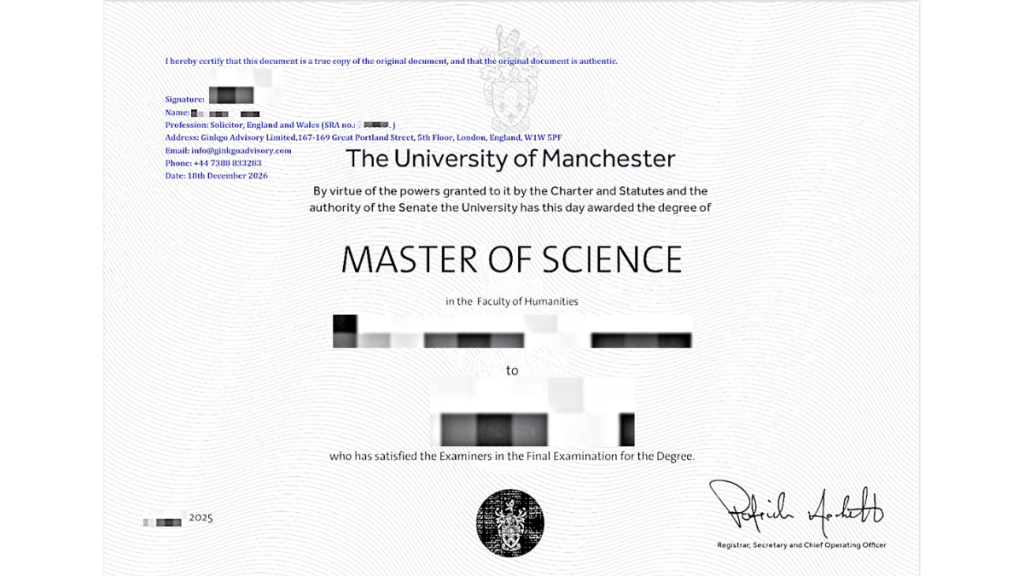
Step-by-Step: Teaching or Working in Thailand from the UK
Step 1: Secure a Teaching or Employment Offer
You must first obtain a formal offer from a Thai school, university, or employer authorised to hire foreign nationals.
This employer will sponsor your work permit after arrival.
Step 2: Prepare UK Documents (Critical Stage)
For teaching English in Thailand, UK-issued documents commonly include:
- passport (minimum six months’ validity, two blank pages),
- degree certificate,
- TEFL / TESOL / CELTA certificate (if applicable),
- DBS or ACRO police certificate (issued within six months),
- employment confirmation letter from the Thai employer,
- proof of legal residence in the UK.
At this stage, documents often require solicitor certification or notarisation before further legalisation.
Errors made here frequently invalidate later steps.
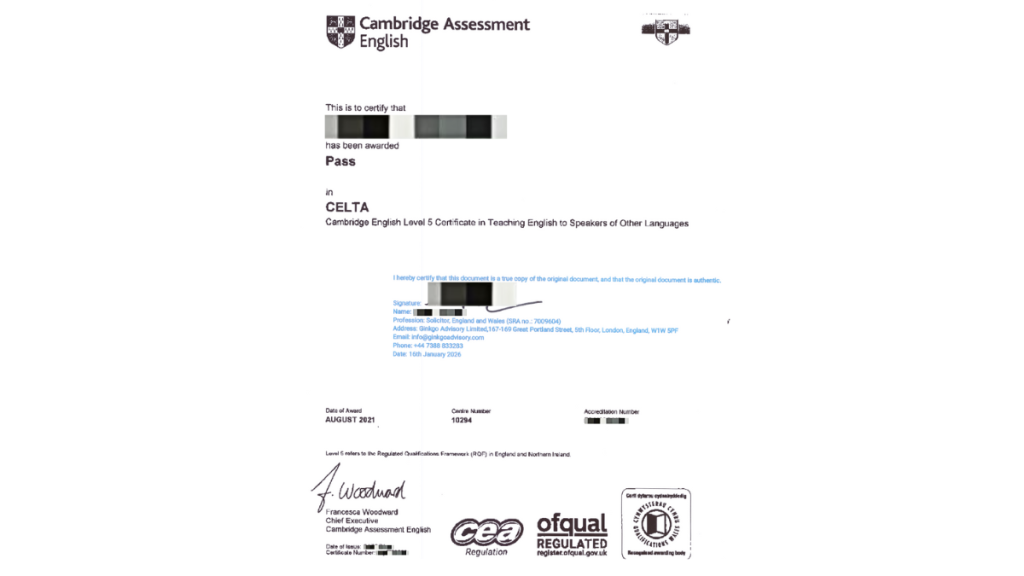
Step 3: Solicitor Certification, Notarisation and FCDO Apostille (UK)
For Thailand visa and work-permit purposes, UK documents may need to be processed as follows:
- Solicitor certification / notarisation
The wording used by the solicitor must be precise. Generic or informal certification language is often rejected. - FCDO Apostille (UK Apostille)
Certified or notarised documents are then submitted to the UK Foreign, Commonwealth & Development Office (FCDO) for an apostille.
Incorrect sequencing — for example, apostilling an improperly certified document — is one of the most common causes of refusal.
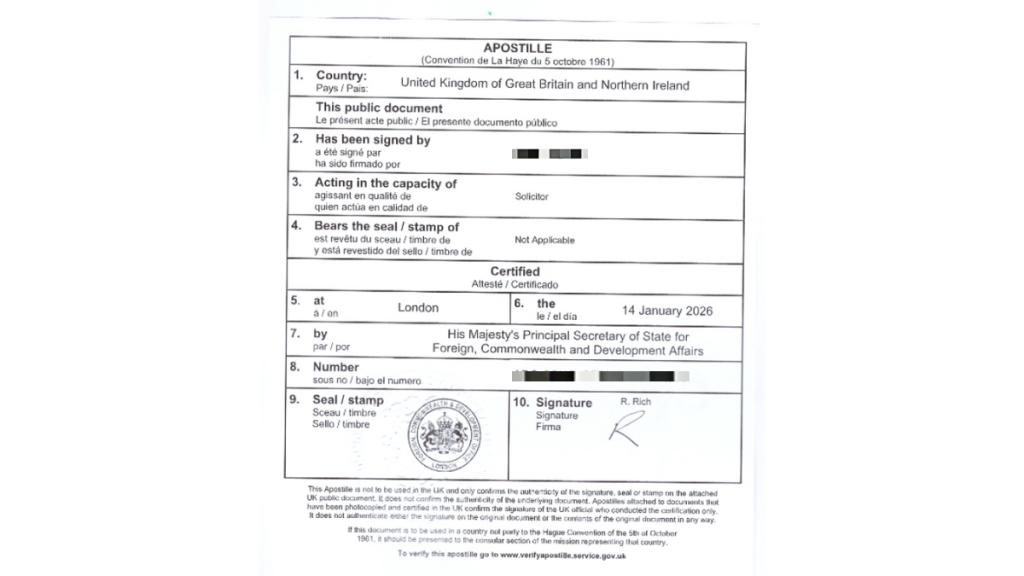
Step 4: Thailand Embassy Legalisation / Attestation
Depending on the document type and intended use, some documents must then undergo:
- Thailand Embassy attestation, or
- Thailand Embassy legalisation
at the Thai Embassy in the UK.
This step is distinct from the FCDO apostille and cannot be substituted or skipped where required.
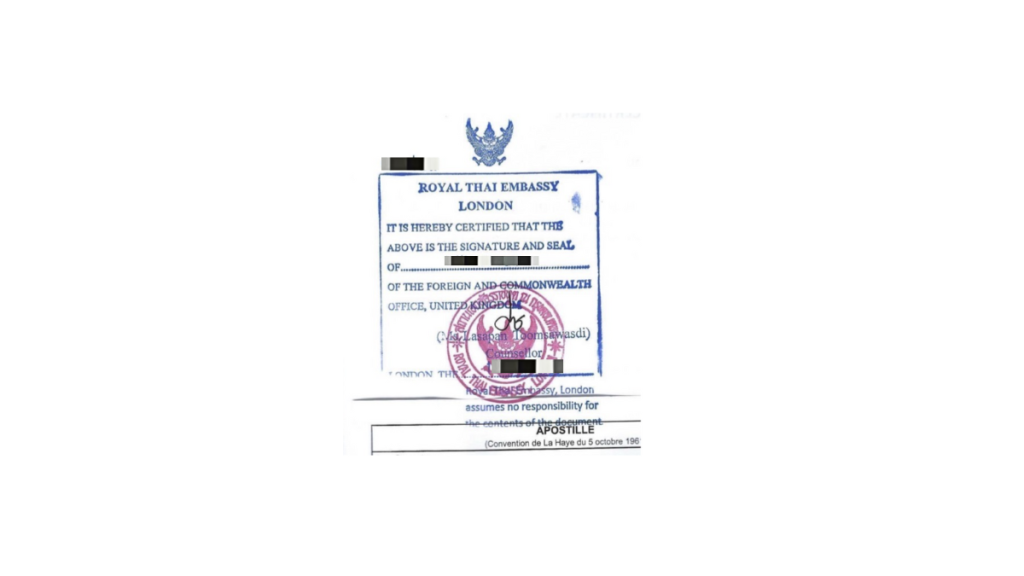
Step 5: Apply for the Non-Immigrant B Visa
UK residents must apply online via Thailand’s official e-Visa system.
Applicants upload all supporting documents, including apostilled and embassy-legalised certificates, and pay the visa fee online.
Processing typically takes 5–15 working days, depending on document completeness.
Step 6: Enter Thailand and Apply for a Work Permit
After arrival:
- the employer submits the work-permit application to the Ministry of Labour,
- the applicant must not begin teaching or working until the permit is issued,
- processing usually takes 7–21 working days.
Step 7: Extend the Visa Based on Employment
Once the work permit is issued, the applicant submits:
- the work permit,
- employment contract,
- employer confirmation,
to Thai Immigration to extend the visa to cover the employment period.
Additional Requirements for Teachers
Teaching and academic staff usually require approval from the Ministry of Education Thailand, as well as:
- school or university registration documents,
- teacher-licence application after arrival,
- updated DBS or ACRO certificate if requested.
Teachers are typically issued an initial single-entry Non-Immigrant B visa valid for 90 days, followed by an extension.
Where Applications Commonly Fail
- Teaching English in Thailand on a tourist or exempt status
- Incorrect solicitor certification wording
- Apostille obtained at the wrong stage
- Missing Thailand Embassy legalisation
- Unofficial or inaccurate translations
- Commencing work before work-permit issuance
How Ginkgo Advisory Helps
Ginkgo Advisory supports UK citizens teaching or working in Thailand by focusing on document structure, sequencing, and compliance, rather than simply processing paperwork.
We assist with:
- determining whether solicitor certification or notarisation is required for each document,
- ensuring certification wording is acceptable for FCDO apostille and Thai authorities,
- managing UK apostille (FCDO) submissions,
- advising on when Thailand Embassy attestation / legalisation is required,
- reviewing degree certificates, TEFL / TESOL / CELTA certificates, and DBS or ACRO checks for Thailand-specific use,
- reducing rejection risk caused by incorrect preparation or sequencing.
Our role is not to replace the embassy or employer, but to ensure that UK documents are prepared correctly the first time, avoiding preventable delays once applications reach Thai authorities.
Conclusion
For UK citizens, teaching English in Thailand is legally straightforward but procedurally strict.
The Non-Immigrant B visa and work-permit system is document-driven, and most failures arise from avoidable errors in solicitor certification, notarisation, apostille, or Thailand Embassy legalisation.
Careful preparation of UK documents — particularly degree certificates, TEFL / TESOL / CELTA qualifications, and DBS or ACRO police checks — is essential for a smooth application.
Contact Us



Address
167-169 Great Portland Street, 5/F, London
 English
  Chinese