
About the Author
Kwok is a practising solicitor based in London, admitted in England & Wales and regulated by the Solicitors Regulation Authority. He is registered with the Foreign, Commonwealth & Development Office and admitted in Hong Kong (non-practising). Kwok has worked as legal counsel and in-house solicitor across leading firms and corporations. He personally oversees every apostille and legalisation case at Ginkgo Advisory, ensuring consistency, accuracy, and end-to-end quality control.
Kwok Lam
Legal Consultant of Ginkgo Advisory
This Turkey Apostille Guide explains how Turkish documents must be apostilled or legalised before they can be used overseas.
Before a document issued in Turkey can be accepted abroad, it must complete the correct apostille or legalisation process, depending on the destination country. Without proper attestation, overseas authorities will reject Turkish documents, regardless of their original validity.
In practice, this applies to personal documents, educational certificates, and corporate records. Therefore, understanding the correct route from the outset is essential.
This guide explains:
- how the Turkey apostille process works
- when apostille alone is sufficient
- when full embassy legalisation is required
Is Turkey a Hague Apostille Country?
Yes. Turkey is a member of the Hague Apostille Convention.
As a result, Turkish public documents can receive an apostille, which certifies their authenticity for use in other Hague Convention countries. Once apostilled, these documents can be used directly in the destination country without further embassy involvement.
However, apostille does not apply to non-Hague countries. For those destinations, including the UAE and most Gulf states, documents must go through full consular legalisation instead.
Turkish Documents Commonly Legalised for Overseas Use
Personal documents
- Birth certificates
- Marriage certificates
- Divorce decrees
- Death certificates
- Criminal record certificates (Adli Sicil Kaydı)
Educational documents
- University degree certificates
- Diplomas and transcripts
- Professional qualifications
Corporate documents
- Company registration documents
- Articles of association
- Board resolutions
- Powers of attorney
Translation Requirements for Turkish Documents
Turkish authorities issue documents in Turkish. However, foreign embassies and overseas authorities often require English or Arabic.
When translation is required
- When the destination authority does not accept Turkish
- When embassy legalisation applies
- When documents will be used in the UAE or other Gulf countries
Translation rules
- Translation must be completed by a sworn (certified) translator in Turkey
- The translator must issue a signed declaration confirming accuracy
- Translation is not required if the document is already issued as a dual-language Turkish–English or Turkish–Arabic document
Importantly, translation must be completed before notarisation. Translating a document after notarisation often leads to rejection.
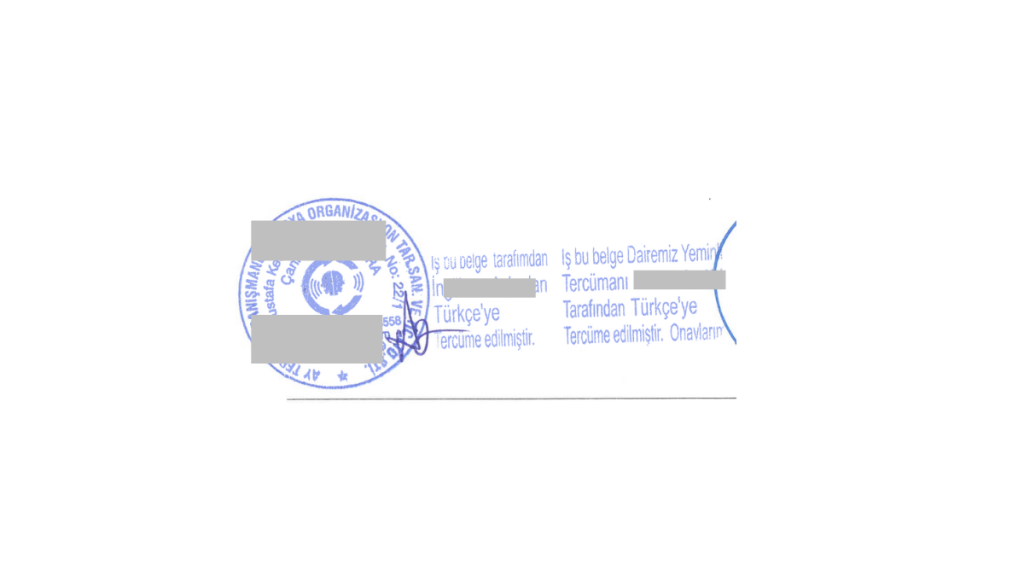
Notarisation by a Turkish Notary Public
After translation (where required), the document must be certified by a Turkish Notary Public (Noter).
At this stage, the notary:
- certifies the translator’s declaration
- confirms the document’s legal form
- applies an official notarial stamp
This notarisation step is mandatory before apostille or further legalisation.
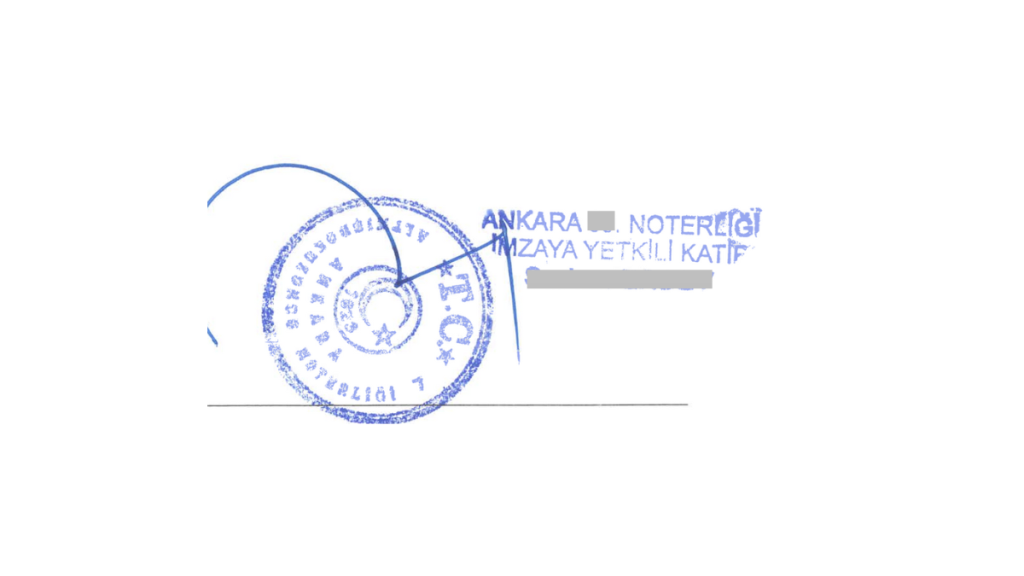
Turkey Apostille Guide: Hague and Non-Hague Legalisation Routes
The correct Turkey apostille route depends entirely on whether the destination country is a member of the Hague Apostille Convention.
Turkey Apostille for Hague Convention Countries
Common Hague destinations include:
- China
- France
- Italy
- Spain
- Netherlands
- Japan
- South Korea
Standard process
- Prepare the Turkish document (and sworn translation if required)
- Complete notarisation by a Turkish Notary Public
- Obtain the apostille from the Turkish Government
Once authorities issue the apostille, no further embassy or Ministry of Foreign Affairs attestation applies. Consequently, the document becomes valid for direct overseas use.

Turkey Legalisation for Non-Hague Countries
Common non-Hague destinations include:
- United Arab Emirates (UAE)
- Qatar
- Kuwait
- Saudi Arabia
- Vietnam
- Thailand
For these countries, apostille alone is not sufficient.
Standard legalisation process
- Prepare the Turkish document
- Complete sworn translation (English or Arabic, where required)
- Obtain Turkish Notary certification
- Secure legalisation from the Turkish Ministry of Foreign Affairs (MoFA)
- Complete embassy legalisation (for example, the UAE Embassy in Turkey)
- Finalise Ministry of Foreign Affairs (MOFA) attestation in the destination country
Authorities enforce this sequence strictly. As a result, documents legalised out of order are routinely rejected.
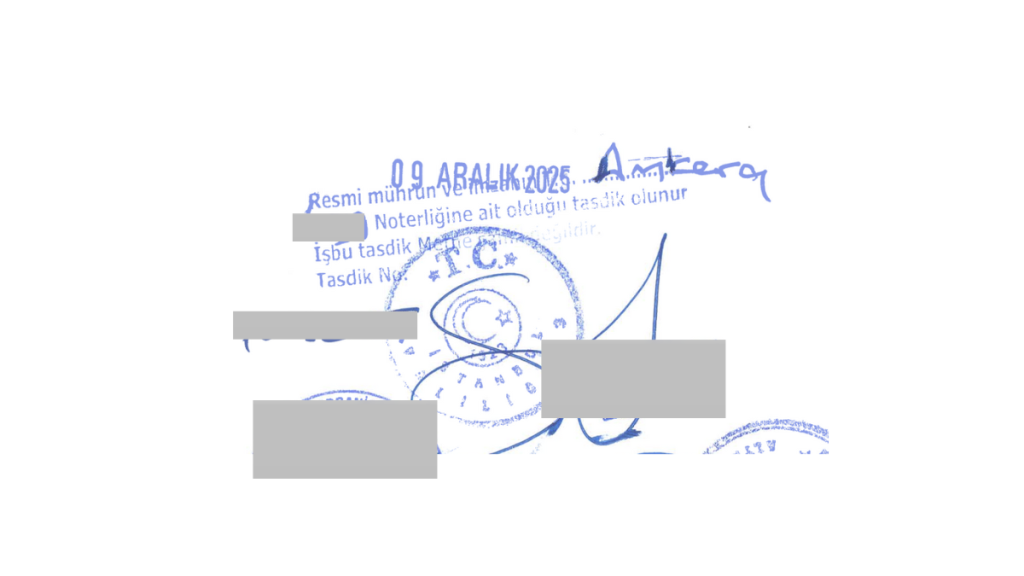
Turkey to UAE Legalisation (Most Common Scenario)
Turkish documents used in the UAE require full consular legalisation.
Typical UAE route
- Turkish Notary certification
- Turkish Ministry of Foreign Affairs authentication
- UAE Embassy attestation in Turkey
- UAE Ministry of Foreign Affairs (MOFA) attestation
Although some UAE employers arrange the final MOFA stage, applicants should always confirm this in advance.
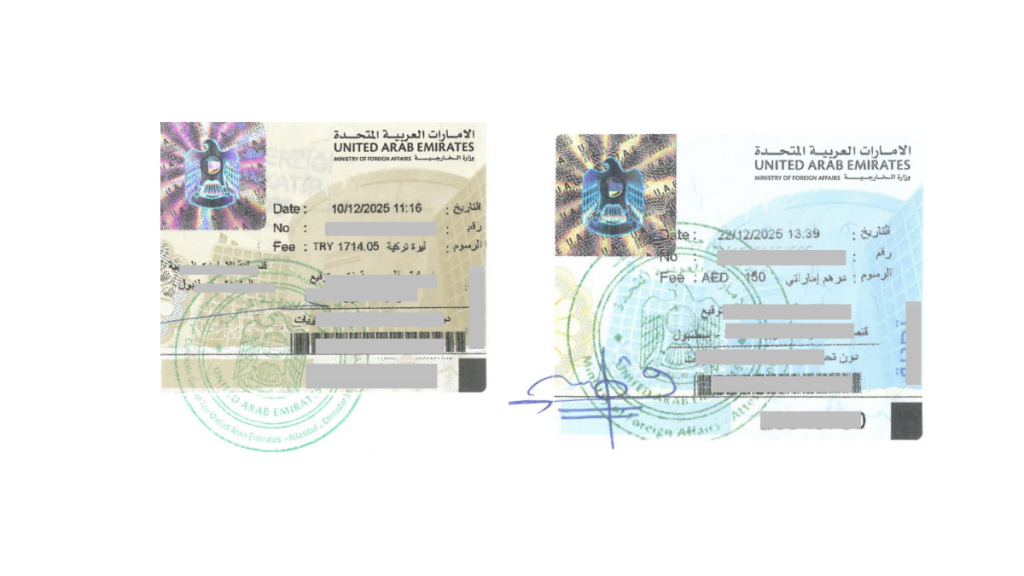
Common Reasons Turkish Documents Are Rejected Overseas
- Using apostille for non-Hague countries
- Translating documents after notarisation
- Using non-sworn translators
- Missing Turkish Ministry of Foreign Affairs authentication
- Incorrect embassy sequencing
- Inconsistent names or document formats
Because legalisation is procedural, authorities rarely accept explanations or exceptions.
Summary: Choosing the Correct Turkey Apostille Route
| Destination Type | Example Countries | Final Step |
|---|---|---|
| Hague Convention | China, Japan | Turkey Apostille |
| Non-Hague | UAE, Qatar | MOFA Attestation |
By choosing the correct route from the outset, applicants avoid delays, rejections, and unnecessary cost.
How Ginkgo Advisory Supports Turkey Apostille and Legalisation
Turkish document legalisation often involves multiple authorities, languages, embassies, and international courier movements.
For that reason, Ginkgo Advisory provides end-to-end coordination, acting as a single point of control throughout the process.
Support includes:
- confirming the correct Turkey apostille or legalisation route
- coordinating sworn translation and Turkish notary certification
- managing Turkish Ministry of Foreign Affairs legalisation
- arranging embassy legalisation for non-Hague countries
- coordinating overseas MOFA attestation where required
- handling secure international courier logistics
As a result, clients receive a fully compliant document set without managing multiple agents or risking procedural errors.
Contact Us



Address
167-169 Great Portland Street, 5/F, London
 English
  Chinese