If you need a UK death certificate for probate / inheritance, banking & KYC, pensions, overseas succession filings, citizenship / immigration, or any cross-border legal process, the fastest “no-guessing” workflow is usually:
- Find the correct GRO index reference (where possible)
- Order a replacement UK death certificate (England & Wales via the GRO)
- Apply for an FCDO Apostille (UK Apostille) so the certificate is accepted overseas
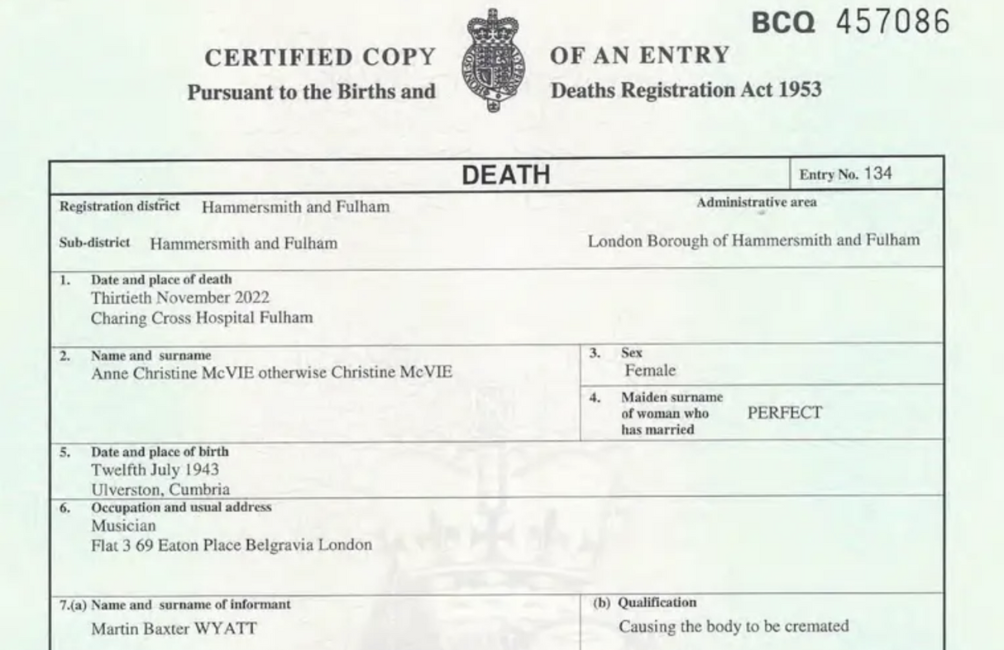
What is the GRO index reference number?
A GRO index reference is the “locator” for a civil registration record. It usually includes:
- Year (and often the quarter for older records: Mar / Jun / Sep / Dec)
- Registration district
- Volume
- Page
Why it matters: if the name is common, the index details help you order the right person faster, reduce wrong-match risk, and avoid extra searches/fees. GOV.UK confirms you can find index reference numbers online and points users to specific sources.
What years can you search online?
These are the commonly used, practical routes (England & Wales):
- GRO Online Index: historic deaths (1837–1957) and deaths from 1984-2024 are searchable on the GRO online index.
- FreeBMD: GOV.UK points users to FreeBMD to view index reference numbers for free from 1837-1999 (useful for many years outside the GRO historic index range).
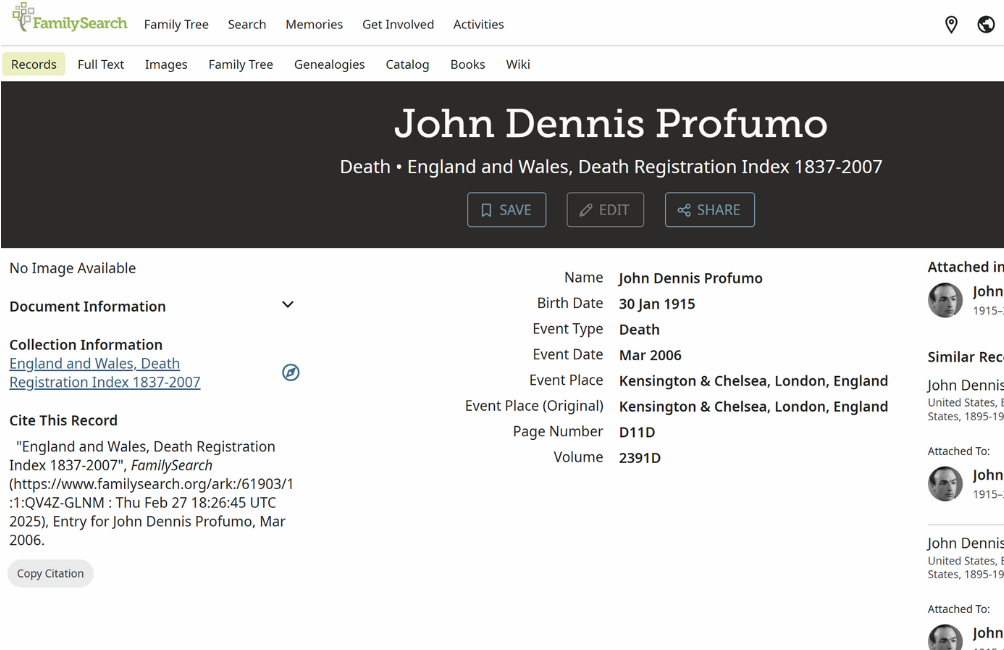
- FamilySearch: England and Wales, Death Registration Index 1837–2007 (quarter/year, district, volume, page).
Practical takeaway: if your death record isn’t easily found via the GRO historic death index, start with FreeBMD or FamilySearch to capture the district + volume/page reference.
Step 1 — Find the GRO Index Reference Number (3 routes)
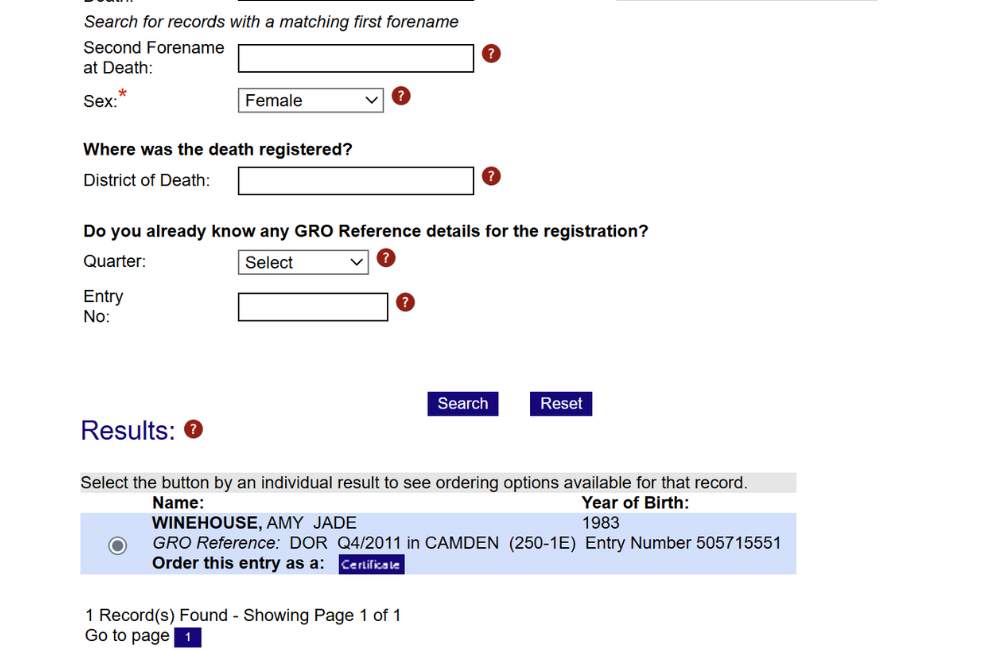
Route A: GRO Online Index (best for historic deaths, 1837–1957 and deaths from 1984-2024)
Use this route when the death was registered within the GRO death index coverage.
You’ll typically search with:
- Surname (mandatory)
- Forename(s) (strongly recommended)
- Estimated year (use a tight range if possible)
- Registration district (if known)
What you’re extracting:
- Year (and quarter if shown)
- District
- Volume + page
Route B: FreeBMD (best free option for many “missing-year” searches)
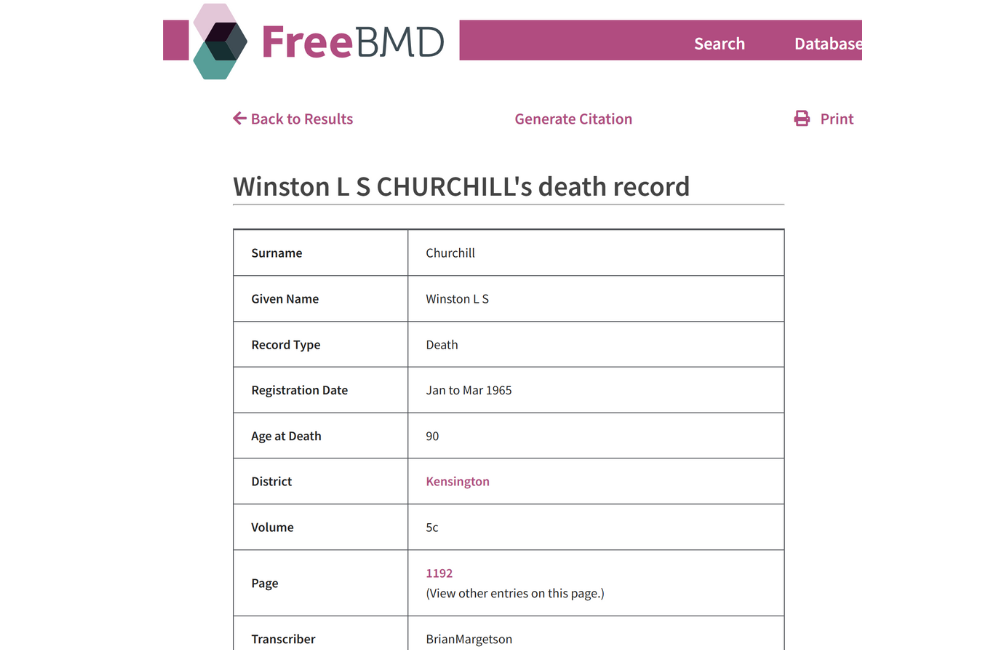
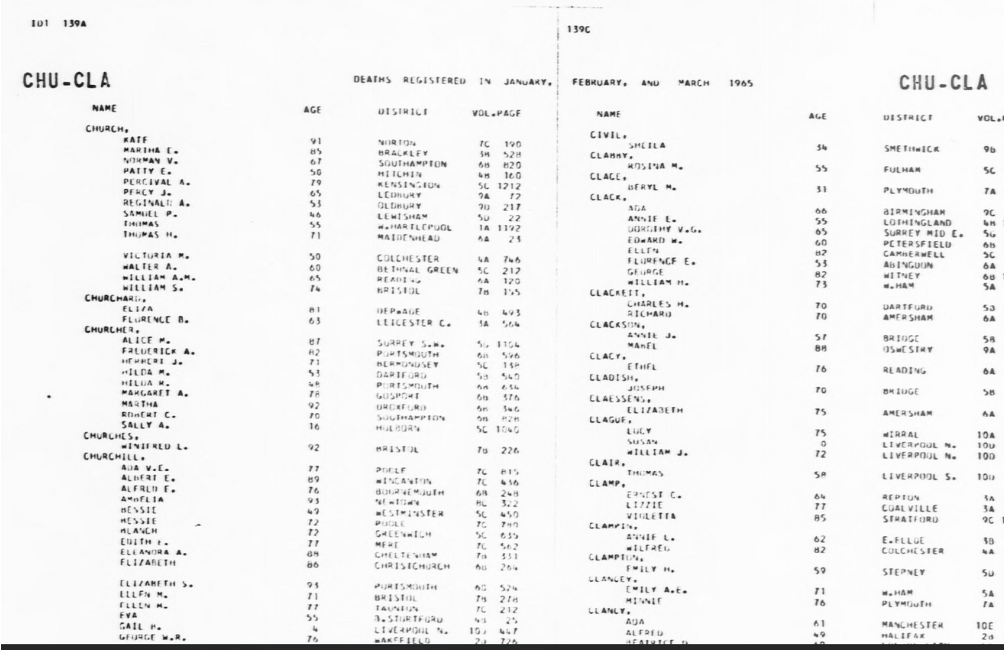
GOV.UK explicitly points users to FreeBMD to view index reference numbers for free from 1837-1999.
What to enter on FreeBMD:
- Surname (try variants if spelling may differ)
- First name(s) (add if possible)
- Year/quarter range
- Record type: Deaths
- Optional: district/county (if known)
What you’re extracting:
- Quarter/year
- District
- Volume + page
Route C: FamilySearch (structured search, broad coverage)
FamilySearch hosts England and Wales, Death Registration Index 1837–2007 and provides the index-style details needed to order certificates.
Search using:
- First name(s)
- Last name
- Estimated year (or range)
- Location (optional)
Then capture:
- Quarter/year, district, volume, page
Step 2 — Order a replacement UK death certificate (England & Wales via GRO)
GOV.UK sets out pricing and timelines clearly (England & Wales):
Standard service
- £12.50 per certificate
- Dispatched 4 days after you apply (when you provide the GRO index reference)
If you don’t have the GRO index reference
- + £3.50 for each GRO search
- Dispatched 15 working days after you apply (standard route)
Priority service
- £38.50
- Dispatched next working day if you order by 4pm
Small but important tip:
If the deceased has a common name, do the index lookup first (FreeBMD / FamilySearch) to reduce wrong-match risk and delays.
Step 3 — Get an FCDO Apostille (UK Apostille)
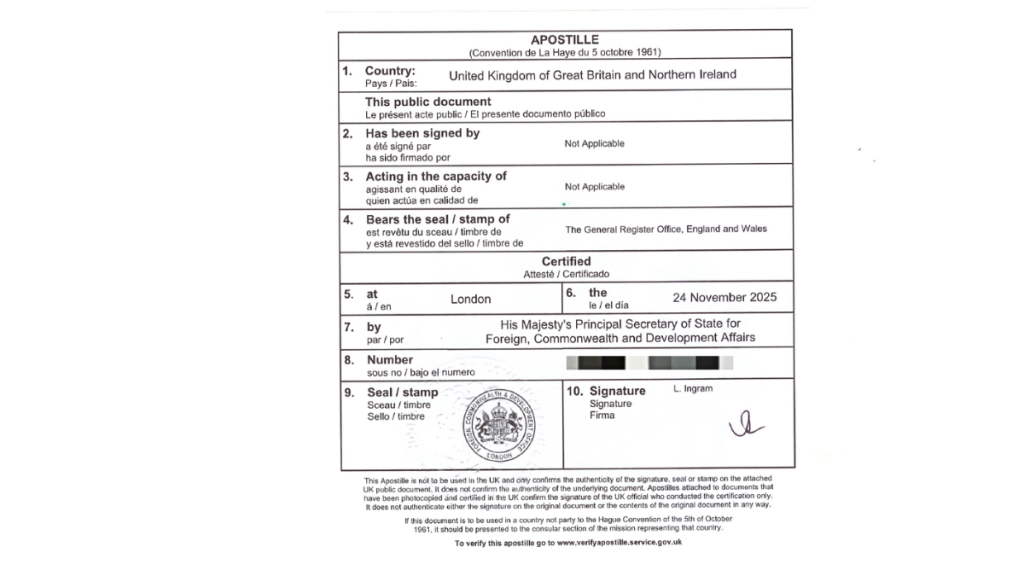
An Apostille is issued by the UK Legalisation Office (FCDO) and is the standard UK authentication used for overseas recognition.
Costs (official)
- Standard (paper-based): £45 per document, plus courier/postage costs.
Typical timeline (official)
- Standard (paper-based): usually up to 15 working days, plus courier/postage time.
If the receiving authority also requires embassy legalisation/attestation after apostille, follow that country’s sequence—apostille can be the first step, not the last.
Common mistakes that cause delays
- Skipping the index lookup for common names
Ordering without index details can be slower and may require extra GRO searches/fees. - Assuming the standard apostille timeline is “fast”
FCDO standard processing can be up to 15 working days plus delivery time—easy to lose 2+ weeks before international courier even starts. - Underestimating the “total chain” deadline
Your real deadline is usually: certificate ordering + apostille + international courier (+ embassy/legalisation if required). Optimise the whole chain, not just the first step.
How Ginkgo Advisory can help (end-to-end, especially if you’re overseas)
If you’re outside the UK, working to a deadline, or want one point of control for the entire chain, we can support:
- Index lookup strategy (GRO Online / FreeBMD / FamilySearch) for hard cases and common names
- Correct GRO ordering (so you don’t pay twice or wait twice)
- Receiving the certificate in London on your behalf
- Fast FCDO Apostille turnaround via professional handling (where suitable) in 3 working days
- Embassy attestation / legalisation (where required by destination)
- Courier logistics (return to you overseas, or send to a nominated law firm / bank / authority)
- Country-specific sequencing guidance (requirements differ by destination and institution)
Contact Us



Address
167-169 Great Portland Street, 5/F, London
 English
  Chinese