Our solicitor can verify, certify, apostille & legalise
All UK recognised degree-awarding universities or colleges
471
recognised UK
institutions


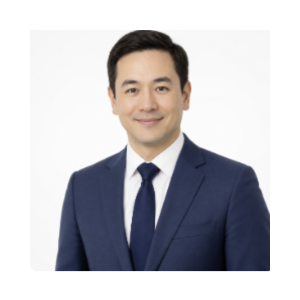
About the Author
KH is a practising solicitor based in London, admitted in England & Wales and regulated by the Solicitors Regulation Authority. He is registered with the Foreign, Commonwealth & Development Office. KH has worked as legal counsel and in-house solicitor across leading firms and corporations. He personally oversees every case at Ginkgo Advisory, ensuring consistency, accuracy, and end-to-end quality control.
KH Lam, LLB, LLM
Legal Consultant of Ginkgo Advisory
Ginkgo Advisory provides University College of Osteopathy degree verification and apostille services for graduates who need to use their academic documents overseas.
Our solicitor-led service can include:
- direct university degree verification;
- awarding-body checks;
- enhanced solicitor certification;
- authenticity confirmation;
- certified true copies;
- FCDO apostille;
- a 2-working-day express apostille option;
- embassy or consular legalisation; and
- international return delivery.
The University College of Osteopathy, commonly known as UCO, joined Health Sciences University on 1 August 2024.
Today, it operates as the UCO School of Osteopathy at Health Sciences University. Therefore, current verification results and replacement documents may refer to Health Sciences University rather than the former independent UCO name.
Quick answers
Who verifies a University College of Osteopathy degree?
Health Sciences University now manages academic records connected with the former University College of Osteopathy.
UCO qualifications cannot currently be verified through HEDD. Instead, the graduate or authorised third party must contact the institution directly by email and provide the graduate’s consent.
Is University College of Osteopathy still an independent university?
No.
UCO merged into Health Sciences University on 1 August 2024. It now operates as the UCO School of Osteopathy within the wider University.
Can a UCO degree certificate receive an FCDO apostille?
Yes.
In most cases, our solicitor can certify a suitable copy before submitting it for an FCDO apostille.
The FCDO can legalise qualification certificates and document copies after a UK public official, such as a solicitor, certifies them correctly.
Can a solicitor confirm the degree’s authenticity?
Yes, where reliable academic evidence supports that conclusion.
For example, our solicitor may rely on:
- direct university verification;
- an official transcript;
- a student confirmation letter;
- a replacement degree certificate;
- the original certificate;
- historic validating-university records; and
- the graduate’s identification.
How quickly can Ginkgo Advisory arrange the apostille?
We offer a 2-working-day express FCDO apostille option for eligible and correctly prepared documents.
However, this period covers the FCDO stage only. It begins after the university verification and solicitor certification are complete.
Do I need embassy legalisation?
You may need embassy or consular legalisation if the destination does not accept an apostille as the final step.
For a non-Hague destination, the process may continue through the destination country’s embassy in London and its Ministry of Foreign Affairs.
University College of Osteopathy and Health Sciences University
The institution began as the British School of Osteopathy in 1917.
It later gained degree-awarding powers and adopted the University College of Osteopathy name in 2017. In 2024, UCO merged into Health Sciences University and became the UCO School of Osteopathy.
As a result, osteopathy documents may refer to:
- British School of Osteopathy;
- BSO;
- University College of Osteopathy;
- UCO;
- UCO School of Osteopathy; or
- Health Sciences University.
These name changes do not automatically affect the validity of an earlier award.
However, an overseas employer, regulator or university may need evidence that connects the former institution with the current record holder.
Direct verification rather than HEDD
The University College of Osteopathy does not provide online degree verification through HEDD.
Instead, the HEDD listing directs third parties to contact the institution directly by email. It states that direct verification can check:
- whether the candidate was a student;
- the award received;
- the grade attained; and
- the attendance dates.
The HEDD record still shows the former UCO contact details.
However, Health Sciences University now manages the institution and its academic administration. The University’s current alumni service directs replacement-document and Registry enquiries to:
The current London campus remains at:
Health Sciences University London Campus
275 Borough High Street
London
SE1 1JE
Telephone: +44 (0)20 7407 0222
Because systems and email addresses may continue to change after the merger, applicants should use the current Health Sciences University Registry route.
Candidate consent
The University requires the graduate’s consent before releasing personal academic information to a third party.
The HEDD entry does not provide a standard consent template. Instead, it states that consent should be provided by email.
A suitable consent form should normally include:
- the graduate’s full name;
- any former name used during study;
- date of birth;
- student number, if known;
- course title;
- qualification title;
- study dates;
- the authorised third party;
- the information that the University may release;
- the purpose of the request;
- the graduate’s signature; and
- the date.
Ginkgo Advisory can prepare the consent and send the request to the appropriate academic-records team.
Information needed for verification
We normally request:
- a clear colour scan of the certificate;
- a scan of the reverse side;
- an academic transcript, if available;
- the graduate’s passport;
- the full name used during study;
- any later name;
- date of birth;
- student number, if known;
- course title;
- qualification title;
- award year;
- classification or grade;
- attendance dates;
- the awarding or validating institution;
- evidence of any name change; and
- signed candidate consent.
Accurate information helps the University locate the correct record.
For example, a missing middle name, old institutional name or incorrect graduation year may delay the search.
Therefore, we copy the details directly from the certificate and transcript wherever possible.
Check the awarding body
The teaching institution and awarding body may not always be the same organisation.
The British School of Osteopathy’s BSc course gained Open University validation in 1993. The School later worked through a University of Bedfordshire partnership and then received its own degree-awarding powers in 2016.
Therefore, depending on the award date, a certificate may refer to:
- the British School of Osteopathy;
- the Open University;
- the University of Bedfordshire;
- the University College of Osteopathy; or
- Health Sciences University.
The awarding or validating institution may control:
- formal award verification;
- replacement certificates;
- academic transcripts;
- official award letters; and
- the correct document for apostille purposes.
For that reason, we review:
- the certificate heading;
- all university logos;
- the award wording;
- signatures and seals;
- the reverse side; and
- any transcript or diploma supplement.
UCO and Health Sciences University documents
Health Sciences University’s alumni service currently offers replacement versions of:
- student confirmation letters;
- transcripts;
- Health Sciences University degree certificates;
- diploma supplements; and
- certain professional certificates.
The current listed charges are:
- Student Confirmation Letter: free;
- Transcript: £10 per academic year;
- Health Sciences University Degree Certificate: £40;
- Diploma Supplement: £10; and
- IRMER Certificate: £25.
The University states that these requests normally take around 10 working days.
However, additional delays may occur during busy periods or before graduation ceremonies.
The correct replacement provider still depends on the institution that awarded the original qualification.
Therefore, a graduate should not order a Health Sciences University replacement before checking the original certificate.
Replacement degree certificates
Health Sciences University only allows one valid degree certificate to remain in circulation.
Where the original certificate has been lost or destroyed, the graduate must provide a declaration confirming the loss. The graduate must also agree to return the original if it is later found.
A replacement document may help where the original certificate has been:
- lost;
- stolen;
- destroyed;
- seriously damaged; or
- made unsuitable for official use.
However, the University may not replace a degree that another university formally awarded.
In that situation, the graduate may need to contact the original validating university.
Degree verification and solicitor certification
They perform different roles.
Degree verification
Health Sciences University or the correct awarding institution checks the academic record.
Solicitor verification
Our solicitor reviews the certificate, university evidence and the graduate’s identification.
Solicitor certification
The solicitor places a formal certification statement on the document or copy.
FCDO apostille
The FCDO authenticates the relevant UK signature, stamp or seal.
Therefore, one stage does not replace another.
Basic solicitor certification
A basic certified true copy confirms that the copy matches the original document shown to the solicitor.
The solicitor normally:
- writes the certification statement;
- signs and dates the copy;
- prints their name;
- states their professional role; and
- provides their professional contact details.
Basic certification answers one main question:
Does this copy match the original document presented?
However, it does not automatically confirm that UCO or another university genuinely issued the original certificate.
Therefore, some overseas authorities may also require independent academic verification.
Enhanced solicitor certification
Ginkgo Advisory offers enhanced solicitor certification where reliable evidence supports it.
First, we identify the correct awarding or validating institution.
Next, we obtain or review independent academic verification.
Our solicitor then compares that evidence with the certificate and the graduate’s identity.
Finally, the solicitor prepares certification wording that reflects the checks completed.
The enhanced process may include:
- direct university verification;
- confirmation of the correct awarding institution;
- review of the original certificate;
- review of a transcript or student confirmation letter;
- comparison of the academic details;
- identity and name checks;
- authenticity confirmation; and
- solicitor certification.
Therefore, enhanced certification connects the academic document with an independent university record.
However, our solicitor will only confirm authenticity when reliable evidence supports that conclusion.
Authenticity confirmation
Authenticity confirmation means that independent evidence supports the academic document.
For example, the evidence may confirm that:
- the University holds a matching student record;
- the graduate received the stated award;
- the classification or result matches;
- the award date matches;
- the attendance dates match;
- the former and current institution names connect correctly; and
- no unexplained material difference appears.
If the available records remain incomplete, we will explain the limitation.
We will not use stronger wording than the evidence supports.
FCDO apostille
A University College of Osteopathy degree certificate can usually receive an FCDO apostille after correct preparation.
Depending on the receiving authority’s requirements, the apostille route may use:
- a solicitor-certified degree certificate;
- a certified academic transcript;
- a student confirmation letter;
- a replacement certificate;
- a document from the validating university; or
- another eligible academic record.
The FCDO can legalise qualification certificates and certified copies when they carry the signature of an eligible UK public official.
Therefore, we first check whether the receiving authority needs:
- the original certificate;
- a certified copy;
- direct university verification;
- an academic transcript;
- an official award letter; or
- a combined evidence pack.
What does the apostille confirm?
An apostille does not check the graduate’s academic record.
Instead, the FCDO checks whether the relevant UK signature, stamp or seal matches its official records.
If the details match, the Legalisation Office attaches the apostille.
For a solicitor-certified copy, the FCDO normally authenticates the solicitor’s signature.
A strong document route may therefore follow this order:
university verification → authenticity review → solicitor certification → FCDO apostille
Each stage provides a different form of assurance.
Two-working-day express FCDO apostille
Ginkgo Advisory offers a 2-working-day express FCDO apostille option for eligible documents.
However, this period covers the FCDO stage only.
It begins after:
- we identify the correct awarding institution;
- academic verification is complete;
- the required document is available;
- our solicitor approves the evidence;
- the certification is ready; and
- the document meets the FCDO requirements.
Therefore, the two-working-day period does not include:
- university record searches;
- validating-university verification;
- transcript production;
- replacement-certificate production;
- solicitor evidence enquiries;
- embassy legalisation; or
- international delivery.
The FCDO offers both paper apostilles and e-Apostilles. However, the receiving authority must accept the chosen format.
Embassy legalisation
Some destinations require embassy or consular legalisation after the FCDO stage.
A typical non-Hague process may involve:
- degree verification;
- solicitor certification;
- FCDO apostille or authentication;
- embassy legalisation; and
- approval by the destination country’s Ministry of Foreign Affairs.
However, every embassy sets its own rules.
For example, it may require:
- the original degree certificate;
- a solicitor-certified copy;
- direct university verification;
- an academic transcript;
- a student confirmation letter;
- a certified translation;
- a passport copy; or
- specific certification wording.
Therefore, we check the destination requirements before preparing the document.
Our process
Step 1: Document review
First, we review the front and back of the certificate.
We identify:
- the teaching institution;
- the awarding or validating institution;
- the qualification;
- the award date;
- the classification;
- the signatures; and
- the seals.
Step 2: Verification-route selection
Next, we decide whether the case requires:
- Health Sciences University;
- the former UCO record;
- the Open University;
- the University of Bedfordshire;
- another validating institution; or
- more than one source.
Step 3: Candidate consent
The graduate signs the required consent form.
Step 4: Academic verification
We submit the request using the exact information shown on the academic documents.
Step 5: Authenticity review
Our solicitor compares the verification evidence with the certificate and identification documents.
Step 6: Solicitor certification
Where the evidence matches, our solicitor prepares the appropriate certification.
Step 7: FCDO apostille
We submit the document for an apostille.
A 2-working-day express option is available for eligible cases.
Step 8: Embassy legalisation
Where required, we arrange the embassy or consular stage.
Step 9: Return delivery
Finally, we provide a completion scan where requested.
We then return the documents through the agreed postal or courier service.
Frequently asked questions
Is a University College of Osteopathy degree still valid?
Yes.
The merger into Health Sciences University does not invalidate qualifications issued under the University College of Osteopathy name.
What is University College of Osteopathy called now?
It now operates as the UCO School of Osteopathy within Health Sciences University. The merger took effect on 1 August 2024.
Who verifies a UCO degree?
Health Sciences University now manages the relevant academic records.
However, another university may hold the final award record where it acted as the validating institution.
Can I verify the degree through HEDD?
No.
HEDD directs applicants to contact the institution directly by email.
Do I need candidate consent?
Yes.
A third-party verification request requires the graduate’s authority.
Which Registry email should I use?
Health Sciences University’s current alumni service directs Registry requests to:
Can I obtain an academic transcript?
Yes, where Health Sciences University holds the relevant record.
The current charge is £10 per academic year.
Can I obtain a student confirmation letter?
Yes.
Health Sciences University currently provides student confirmation letters free of charge.
Can I obtain a replacement certificate?
Possibly.
Health Sciences University currently charges £40 for an eligible replacement degree certificate. However, another university may control the route where it awarded the original qualification.
How long do replacement-document requests take?
Health Sciences University states that requests normally take around 10 working days.
Is university verification the same as solicitor certification?
No.
University verification checks the academic record.
Solicitor certification formally certifies the document or copy.
Does an apostille verify the degree?
No.
The apostille authenticates the relevant UK signature, stamp or seal. It does not check the graduate’s academic record.
Can Ginkgo Advisory arrange a 2-working-day apostille?
Yes, provided that the document is eligible and ready for FCDO submission.
Can I obtain an e-Apostille?
Possibly.
The document must qualify for the electronic route, and the receiving authority must accept it.
Do I need embassy legalisation?
You may need further embassy or consular processing where the destination does not accept an apostille as the final step.
Contact Us



Address
Suite 161, 30 Red Lion Street, London, TW9 1RB, England