British Virgin Islands (BVI) companies remain one of the most widely used offshore structures for international investment, asset holding, private equity, and cross-border corporate transactions.
When BVI companies operate outside their jurisdiction of incorporation, their corporate documents often need to be formally certified and legalised before they can be accepted by foreign regulators, banks, courts, or commercial counterparties.
One of the most common questions asked by offshore company directors, investors, and professional advisors is:
Can BVI corporate documents be certified by a UK practising solicitor and apostilled by the UK Foreign, Commonwealth & Development Office (FCDO) without obtaining a BVI apostille first?
In many real-world commercial scenarios, the UK certification and apostille structure is used successfully. However, acceptance depends on jurisdiction, regulatory purpose, and the expectations of the receiving authority.
This guide explains how both authentication routes operate, when the UK route is commonly used in practice, and how businesses can select the most efficient and compliant approach.
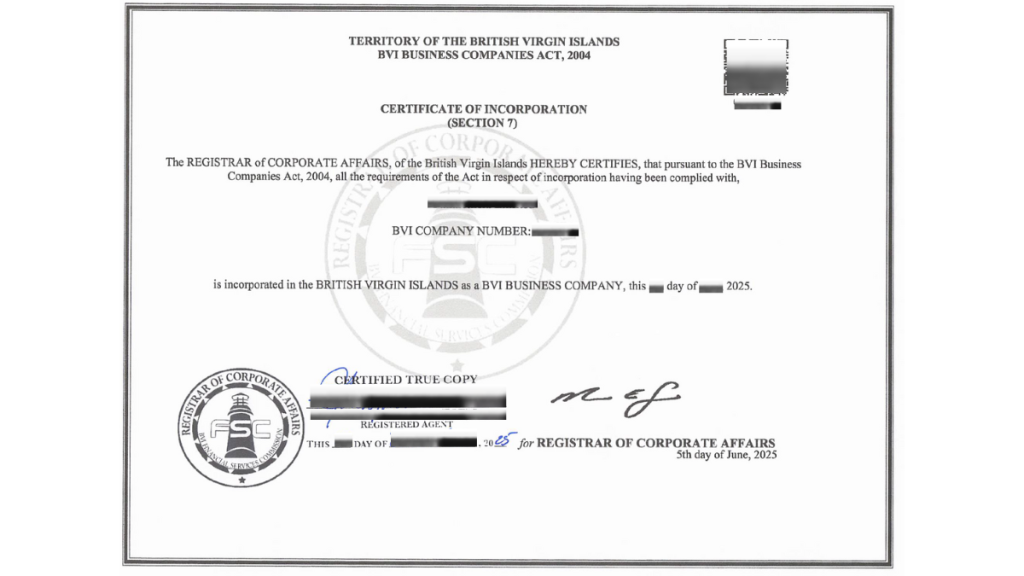
BVI Corporate Documents Frequently Used Internationally
Cross-border filings and commercial transactions involving BVI companies typically require certified corporate documentation such as:
• Certificate of Incorporation
• Certificate of Good Standing
• Register of Directors
• Register of Members
• Certificate of Incumbency
• Directors’ Resolutions
• Members’ Resolutions
• Powers of Attorney
• Memorandum and Articles of Association
• Other constitutional or authority documents
These documents are routinely required for:
• Foreign direct investment filings
• Corporate restructuring
• Bank KYC and compliance reviews
• Shareholder and authority verification
• Transaction closings and financing arrangements
Traditional Authentication Route for BVI Corporate Documents
The traditional and most universally recognised legalisation structure involves authentication within the BVI jurisdiction itself.
Standard BVI Legalisation Workflow
- Obtain original documents from the BVI Corporate Registry or Registered Agent
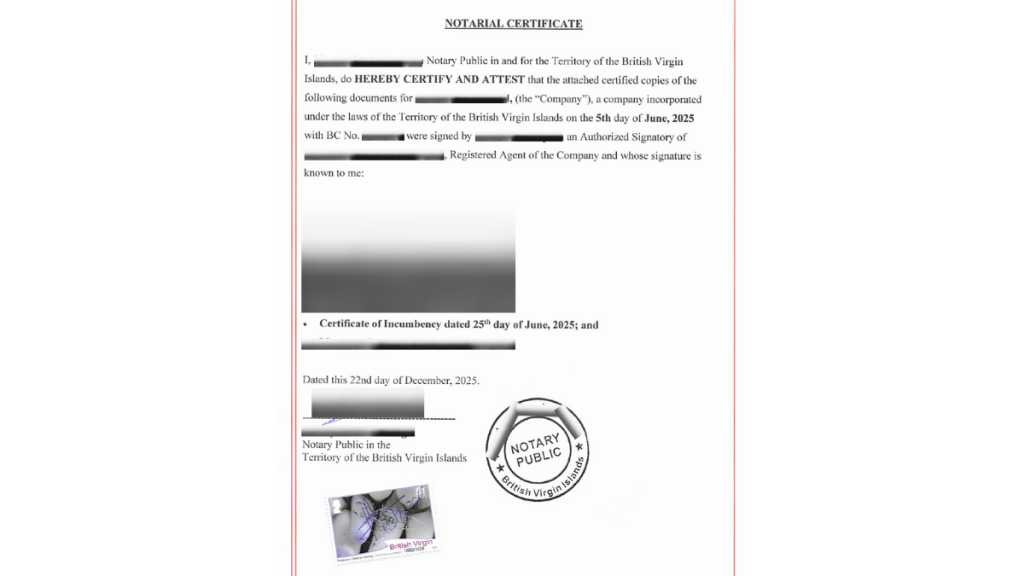
- BVI notary certifies or notarises the document where required
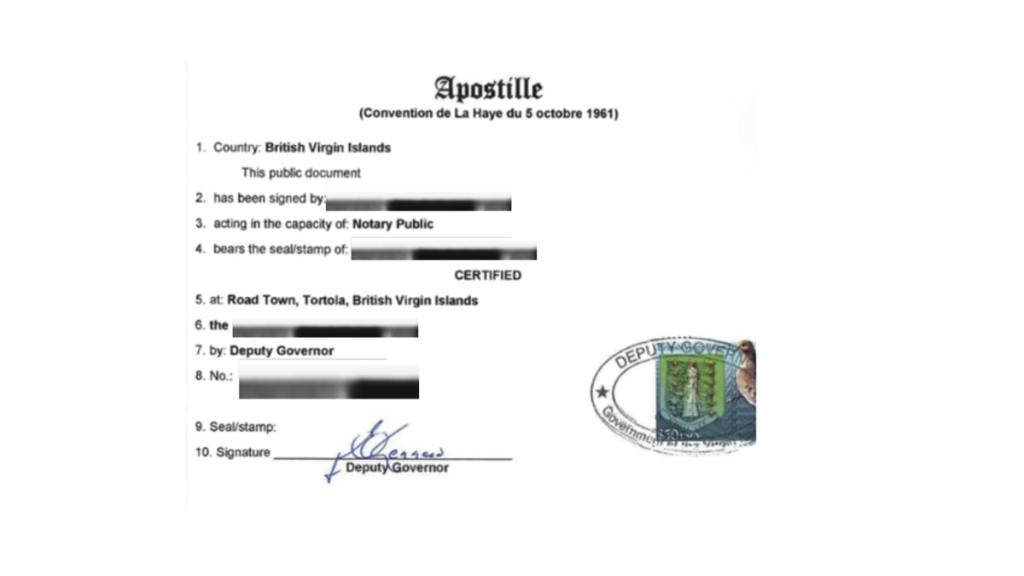
- Obtain a BVI apostille issued by the Deputy Governor of the British Virgin Islands
- Provide certified translation if required by the destination jurisdiction
This route provides authentication directly linked to the jurisdiction of incorporation and is generally accepted globally across Hague Apostille Convention member countries.
Alternative Certification Structure: UK Solicitor Certification and FCDO Apostille
How the UK Certification Route Works
An alternative compliance structure widely used in international transactions involves creating a UK public document through UK practising solicitor certification.
The workflow typically involves:
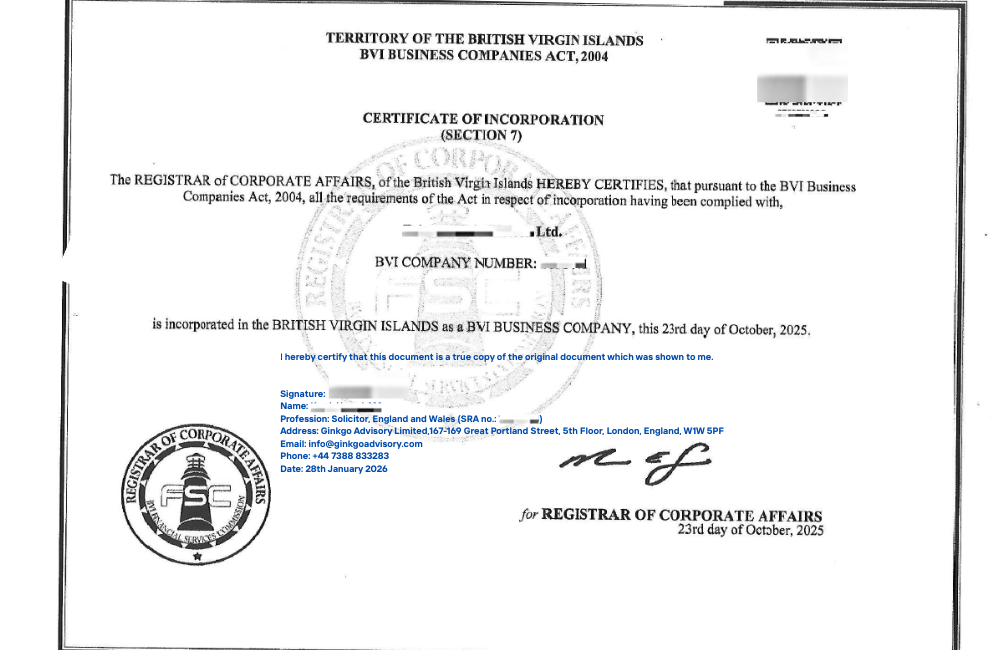
• A practising UK solicitor or notary certifies a copy of the BVI corporate document or certifies a copy of a BVI notarial certificate, producing a certified true copy
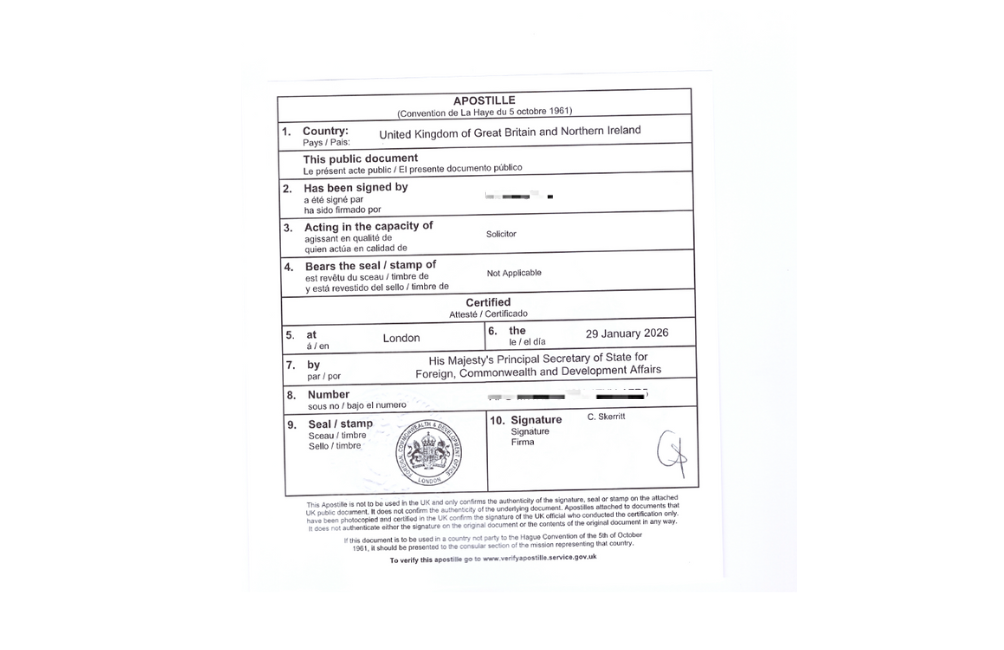
• The UK Foreign, Commonwealth & Development Office issues an UK apostille authenticating the UK solicitor’s certification
• The apostille confirms the authenticity of the UK solicitor’s signature and authority, rather than the signature of the BVI registry or BVI notary
Under Hague Apostille Convention principles, this structure is legally valid because the apostille authenticates the UK public act, namely the solicitor certification.
When the UK Apostille Route Is Used in Practice
In commercial reality, the UK solicitor certification and FCDO apostille route is frequently used in cross-border transactions where the receiving authority or counterparty accepts professionally certified corporate documentation supported by apostille authentication.
Acceptance depends primarily on jurisdiction and transaction type.
Jurisdiction-Dependent Practical Acceptance
Practical experience shows that certain jurisdictions, including China in specific administrative and commercial filing scenarios, have accepted UK solicitor-certified and apostilled BVI corporate document packages where the authority is satisfied with the professional certification chain.
However, acceptance is determined by the reviewing authority and cannot be guaranteed under treaty or statute.
BVI Notarial Certificate Apostille in Practice
In many BVI authentication processes, apostille is applied to a BVI notarised document. This BVI apostille remains widely recognised internationally and continues to provide the highest evidential certainty.
When BVI Apostille Remains Advisable
Although the UK certification route offers significant efficiency advantages, BVI apostille remains recommended in higher-risk or regulatory environments.
Where legal certainty is critical, BVI authentication remains the safest approach.
Comparing Authentication Routes
| Authentication Method | Acceptance Level | Processing Speed | Compliance Certainty | Typical Cost |
|---|---|---|---|---|
| UK Solicitor Certification + UK Apostille | Jurisdiction-Dependent | Faster | Moderate | Lower |
| BVI Notarial Certification + BVI Apostille | Broadest International Acceptance | Slower | Highest | Higher |
Why Many Businesses Prefer the UK Certification Route
For many international transactions, timing is commercially critical. The UK solicitor certification and FCDO apostille route often provides:
• Faster turnaround times
• Lower overall certification costs
• Streamlined document preparation
• Efficient compliance for transactional or administrative filings
This makes the UK route particularly attractive for time-sensitive cross-border corporate activity.
Jurisdiction-Specific Acceptance Remains Critical
Document authentication requirements vary significantly between jurisdictions, regulators, and transaction types.
Even within the same country, different authorities or reviewing officers may adopt different evidential standards. Businesses should always verify document requirements before selecting a legalisation route.
Key Compliance Considerations
An apostille verifies the authenticity of the signature and authority of the certifying professional or public official. It does not guarantee acceptance by the receiving authority.
Before choosing a certification structure, businesses should assess:
• Destination jurisdiction
• Nature of the filing or transaction
• Level of evidential certainty required
• Transaction timing considerations
How Ginkgo Advisory Supports BVI Corporate Document Legalisation
Ginkgo Advisory specialises in cross-border corporate document certification and apostille coordination for BVI companies, international investors, and professional advisors.
UK Solicitor Certification and FCDO Apostille Expertise
Ginkgo Advisory works closely with practising UK solicitors and notaries to deliver fast and compliant UK certification and apostille services for BVI corporate documents. Our UK route service focuses on:
• Certified true copies of BVI corporate documents
• Certification of BVI notarial certificates
• Full FCDO apostille coordination
• Translation coordination where required
• Transaction-driven turnaround scheduling
Our UK certification route is particularly suitable for commercial filings, transactional documentation, and jurisdiction-specific compliance scenarios where efficiency is essential.
BVI Authentication Coordination
Where registry-level authentication is required, Ginkgo Advisory also coordinates full BVI legalisation workflows through established offshore service partners. This includes:
• BVI notarial certification
• BVI apostille processing
• International courier coordination
• Translation and document presentation preparation
While BVI authentication remains the most universally accepted route, our role is to help clients determine when it is necessary and when more efficient alternatives are available.
Choosing the Correct Authentication Strategy
Every cross-border transaction presents different compliance and timing considerations. Selecting the correct certification structure requires balancing regulatory certainty, transaction efficiency, and jurisdiction-specific requirements.
Ginkgo Advisory assists clients by assessing destination jurisdiction requirements, transaction risk level, and document use purpose before recommending the most appropriate legalisation strategy.
Professional Support for BVI Corporate Compliance
Cross-border corporate documentation involving offshore structures requires coordination between corporate registries, legal professionals, and apostille authorities across multiple jurisdictions. Proper sequencing of certification and legalisation significantly reduces rejection risk and transactional delay.
Businesses, law firms, and corporate advisors seeking efficient and compliant legalisation solutions for BVI corporate documentation can benefit from structured, jurisdiction-specific guidance.
Contact Us



Address
167-169 Great Portland Street, 5/F, London