A practical step-by-step guide to find the index reference, order a replacement certificate, and apostille it for overseas use (2026)
If you need a UK birth certificate for immigration, visas, citizenship, overseas marriage, employment checks, banking/KYC, or cross-border legal filings, the workflow is usually:
- Find the correct GRO index reference (if possible)
- Order the replacement UK birth certificate (England & Wales via GRO)
- Apply for an FCDO Apostille (UK Apostille) so it’s accepted overseas
This guide is written for speed, accuracy, and “no-guessing”.
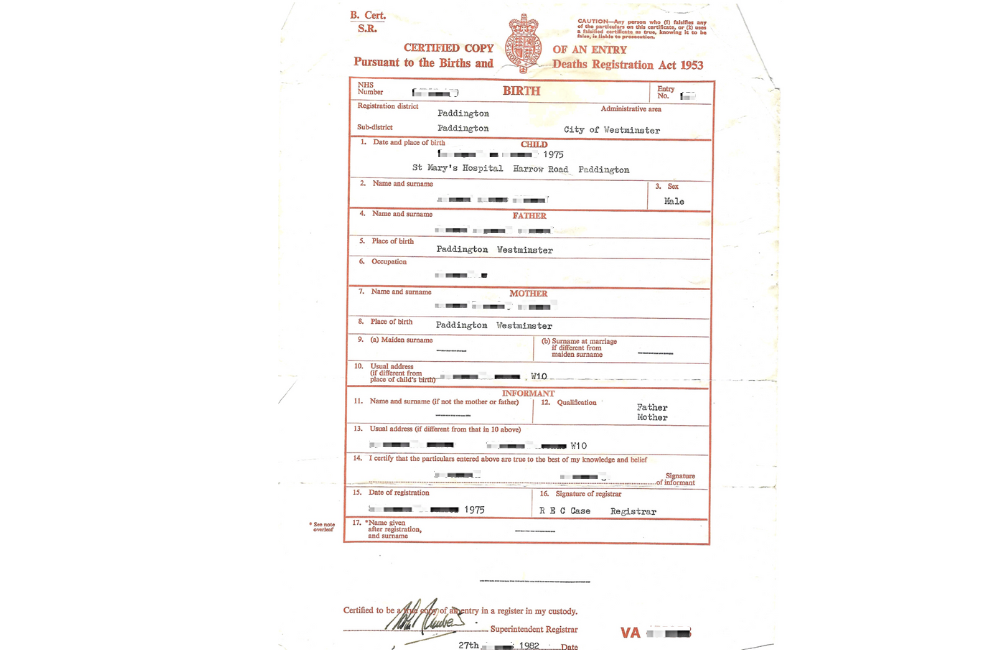
What is the GRO index reference number?
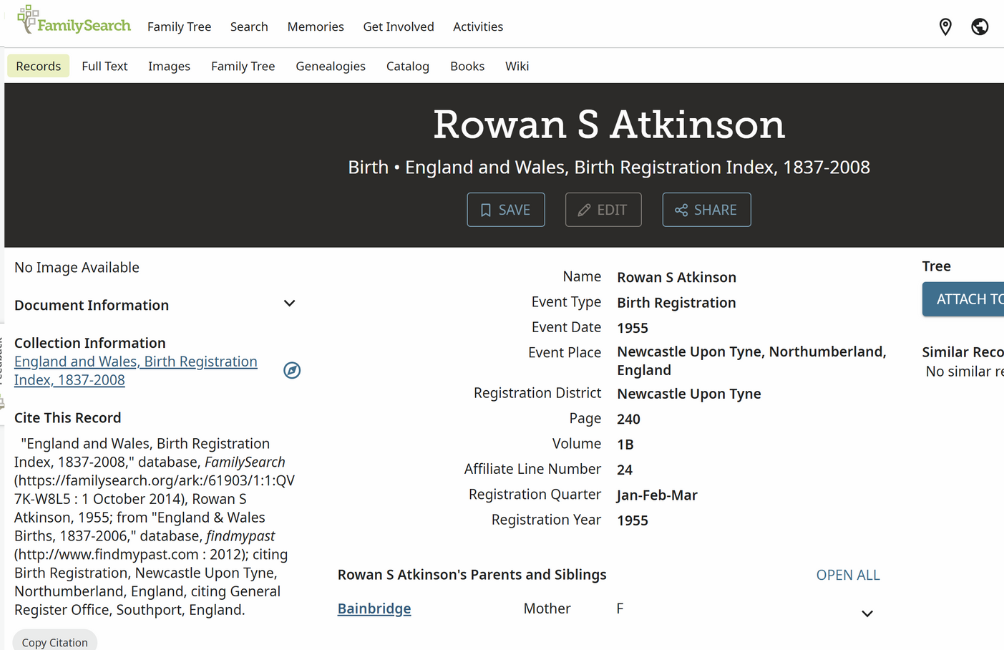
A GRO index reference number is the “locator” for a civil registration record. It usually includes:
- Year
- Quarter (Mar / Jun / Sep / Dec quarter for older records)
- Registration district
- Volume
- Page
It helps you order the right certificate faster (especially for common names).
GOV.UK confirms that all births registered in England or Wales have a GRO index reference number, and that you can find index reference numbers online.
What years can you search online?
Here’s the safe, properly-attributed version:
- GRO Online Index confirms you can search the GRO online index of historic births (1837–1934) + from 1984 onwards.
- Gap: if the birth falls between 1935–1983, you usually need FreeBMD or FamilySearch to get the volume/page reference.
- GOV.UK explicitly points users to FreeBMD for viewing index reference numbers for free.
Practical takeaway: 1935–1983 → start with FreeBMD.
Step 1 — Find the GRO Index Reference Number (3 routes)
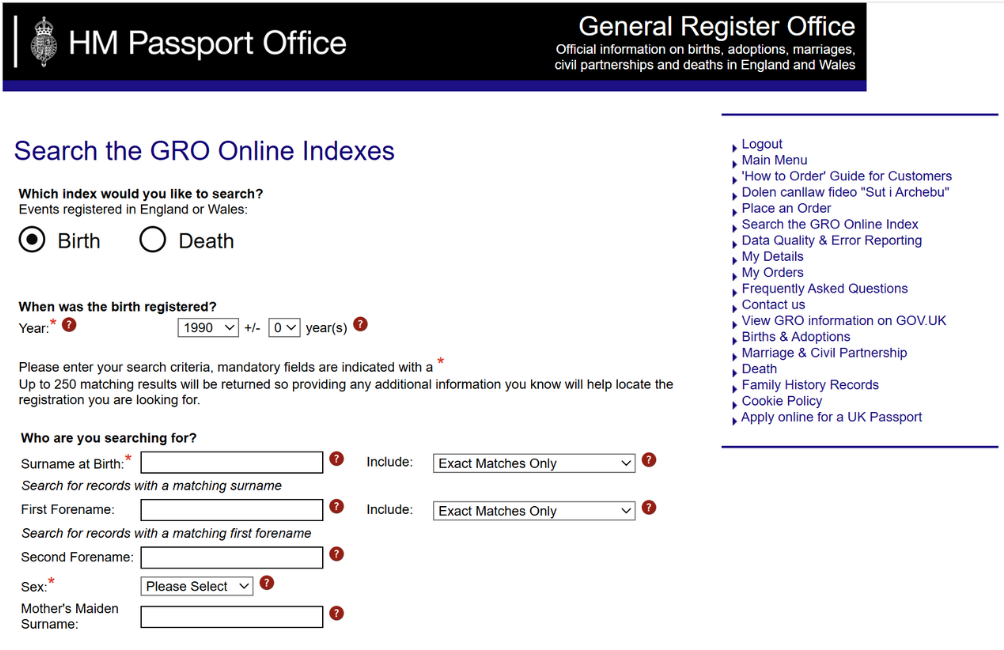
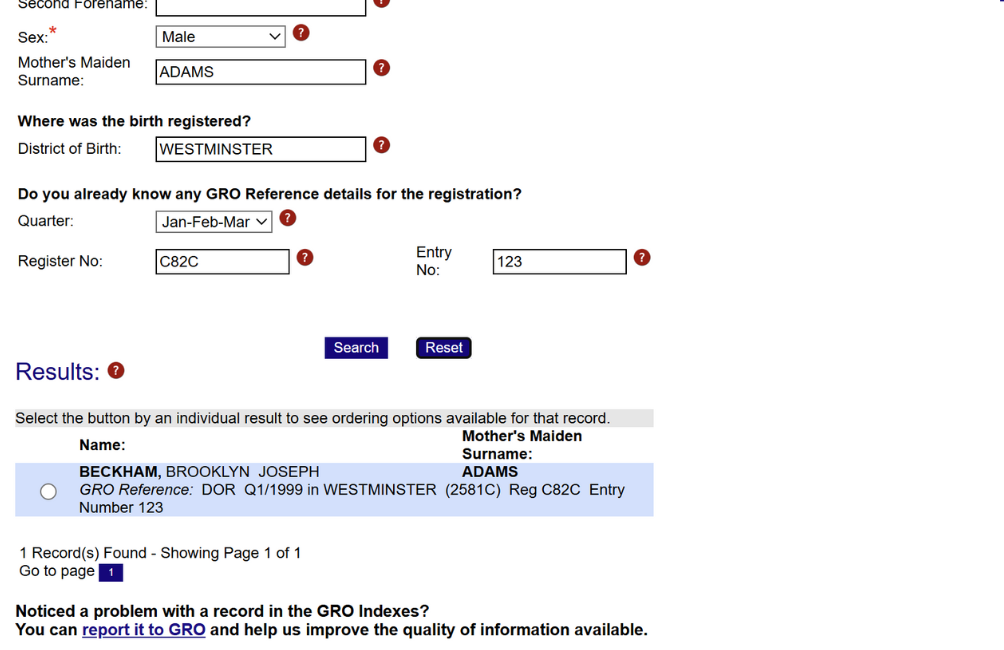
Route A: Use the GRO Online Index (best for 1837–1934 births + from 1984 onwards births)
Use this route when the birth is in the range of 1837-1934 or from 1984 onwards.
You’ll typically search with:
- Surname at birth (mandatory)
- First forename(s) (strongly recommended)
- Sex (if known)
- Mother’s maiden surname (very helpful)
- Registration year (use a tight range if unsure)
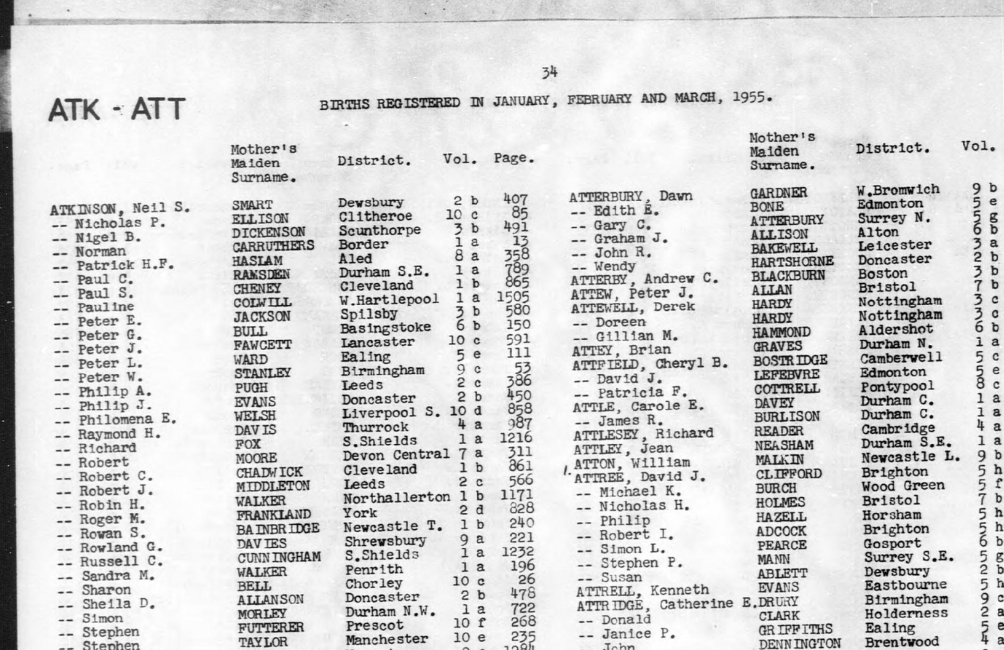
Route B: Use FreeBMD (best free option when GRO Index Reference search won’t cover the year)
This is the fastest route for many “missing years” searches.
GOV.UK specifically says you can view index reference numbers for free on the FreeBMD website.
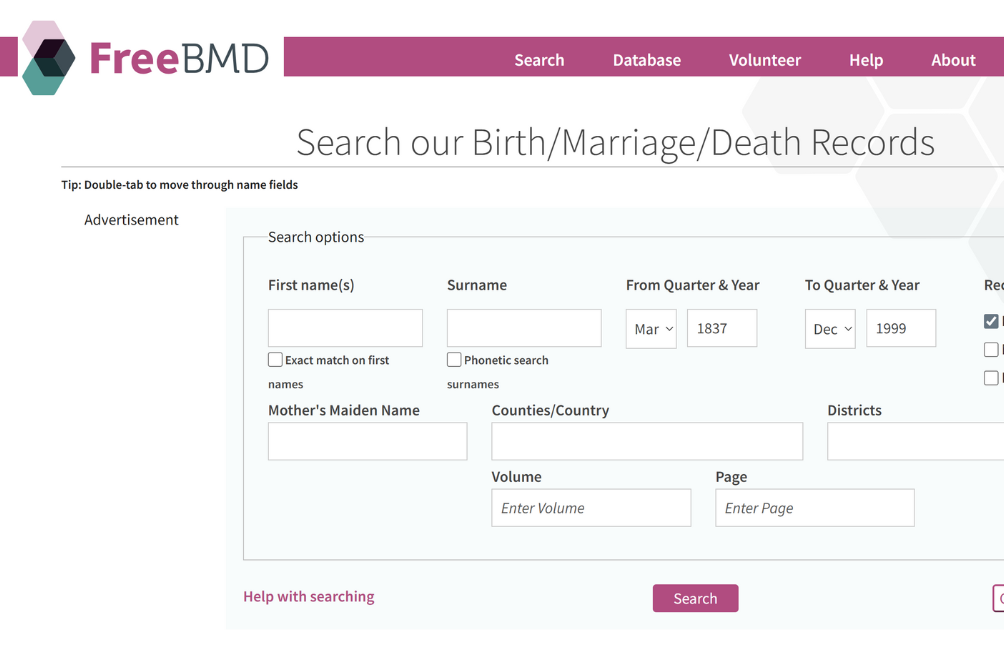
What to enter on FreeBMD
- Surname (try phonetic if spelling varies)
- First name(s) (add if you can)
- Quarter & year range
- Record type: Birth
- Optional: district/county (if known)
What you’re extracting
- Year + quarter
- District
- Volume + page
That becomes the index reference you use to order the certificate.
Route C: Use FamilySearch (broad, structured search)
If you want a “form-based” search experience, FamilySearch hosts an England & Wales birth registration index collection spanning 1837–2008 (collection coverage as described by FamilySearch).
Use:
- First name(s)
- Last name
- Estimated year (or range)
- Location (optional)
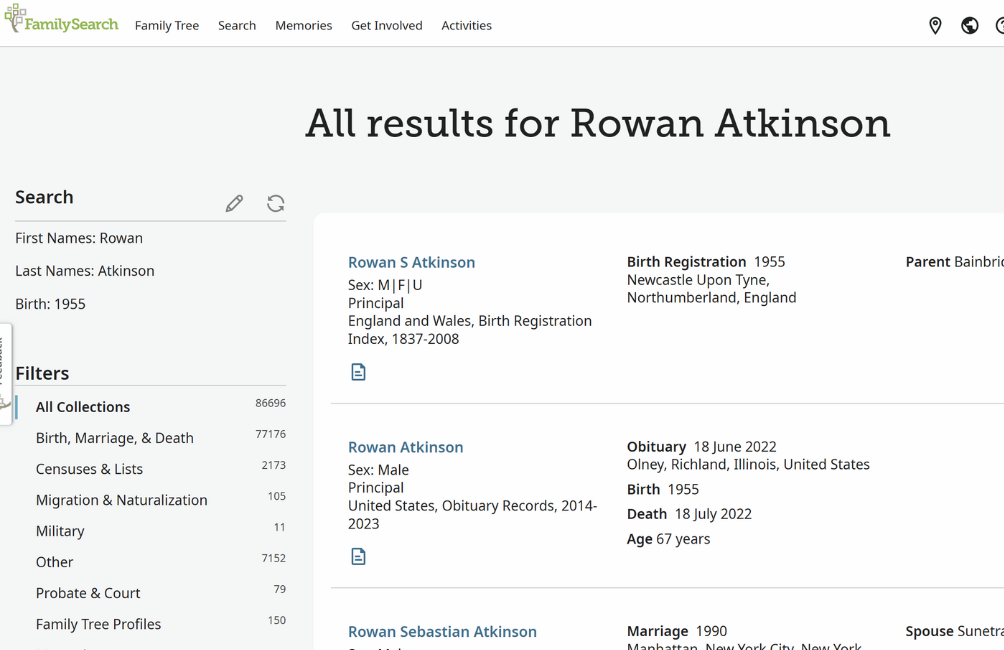
Then capture the index-style result (quarter/year, district, volume, page) to order your certificate.
Step 2 — Order a replacement UK birth certificate (England & Wales)
For England & Wales, GOV.UK sets out the pricing and timelines clearly:
Standard service
- £12.50 per certificate
- Sent 4 days after you apply if you provide the GRO index reference
If you don’t have the GRO index reference
- + £3.50 for each GRO search
- Sent 15 working days after you apply (standard)
Priority service
- £38.50
- Sent the next working day if you order by 4pm
Small but important tip:
If the name is common, do the index lookup first (FreeBMD / FamilySearch) so you don’t risk ordering the wrong person.
Step 3 — Get an FCDO Apostille (UK Apostille)
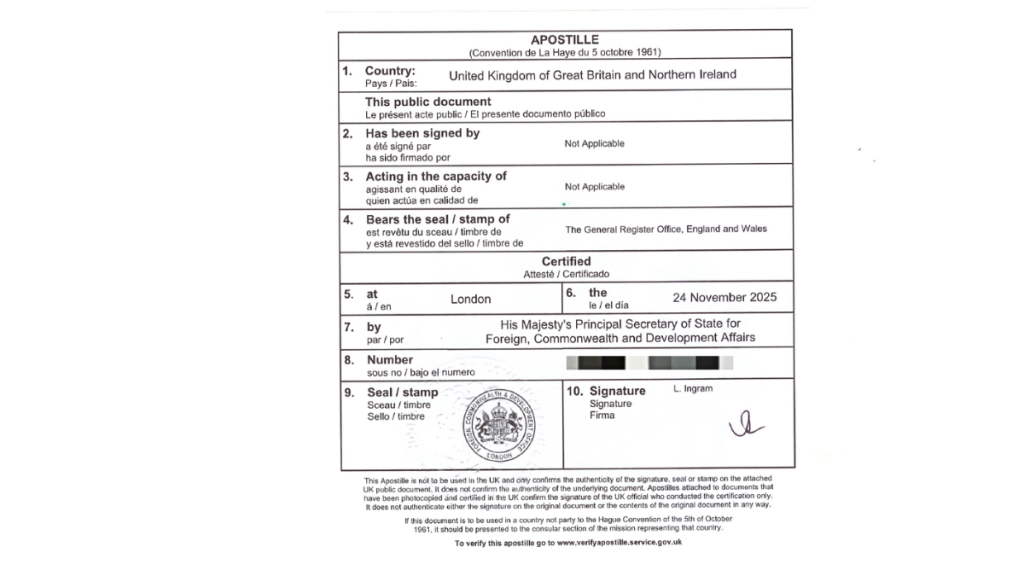
An Apostille is issued by the UK Legalisation Office (part of the FCDO) and is the standard “UK authentication” used for overseas recognition.
What it costs
- Standard (paper-based) legalisation: £45 per document, plus courier/postage costs.
What you do (high level)
- Apply for legalisation via GOV.UK
- Submit the original certified certificate (as required by the process)
- Receive back the apostilled certificate for overseas use
(If the receiving authority also requires embassy legalisation after apostille, you must follow that country’s instructions—apostille is sometimes the first step, not the last.)
How long it takes
- Standard (paper-based) legalisation: 15 working days, plus courier/postage time.
Common mistakes that cause delays
- Searching the wrong place for 1935–1983
Don’t start with the GRO Online Index Reference for these years. GOV.UK explicitly points users to FreeBMD to view index reference numbers for free—so for 1935–1983, start with FreeBMD (or another index source) to get the district/volume/page reference. - Ordering without index details for common names (and then needing a paid GRO search)
Yes, you can order without the GRO reference details, but it’s slower and adds a £3.50 search fee (England & Wales) under the standard ordering route. If the surname is common, finding the index details first usually saves time and avoids wrong-match risk. - Treating “priority certificate ordering” as the default urgent fix
If your real deadline is apostille + international delivery, paying for GRO priority dispatch may not materially help. Often the smarter “urgent” move is: use standard GRO ordering with the index reference (4 working days dispatch) and put your urgency budget/time into the apostille/logistics stage instead. - Assuming the FCDO online apostille route is “fast”
The standard paper-based FCDO legalisation timeline is usually up to 15 working days, plus courier/postage time—so it’s very easy to lose 2+ weeks even before international delivery. If you are genuinely urgent, you should consider using an urgent route via a professional provider rather than assuming the standard route will meet a tight deadline.
How Ginkgo Advisory can help (end-to-end, especially if you’re overseas)
If you’re outside the UK, working to a deadline, or you want one point of control for the whole chain, we can handle:
- GRO Index Reference Number lookup strategy (FreeBMD / FamilySearch search logic for hard cases and common names)
- Correct GRO birth certificate ordering (so you don’t pay twice or wait twice)
- Receiving ordered birth certificate on your behalf in London
- Fast FCDO Apostille within 3 working days
- Embassy Attestation / Legalisation
- Courier logistics (return to you overseas, or send to a nominated law firm / employer / authority where appropriate)
- Country-specific sequencing guidance when the receiving authority asks for extra steps beyond apostille (wording differs by destination)
Contact Us



Address
167-169 Great Portland Street, 5/F, London
 English
  Chinese