
About the Author
Kwok is a practising solicitor based in London, admitted in England & Wales and regulated by the Solicitors Regulation Authority. He is registered with the Foreign, Commonwealth & Development Office and admitted in Hong Kong (non-practising). Kwok has worked as legal counsel and in-house solicitor across leading firms and corporations. He personally oversees every apostille and legalisation case at Ginkgo Advisory, ensuring consistency, accuracy, and end-to-end quality control.
Kwok Lam
Legal Consultant of Ginkgo Advisory
If you need to sign a letter, agreement, confirmation, or form in the UK for overseas use, you may be asked to have your signature witnessed by a solicitor. At the same time, you may also wonder whether you can complete this step remotely.
This situation comes up frequently in international business, immigration, banking, regulatory, and cross-border legal matters. Therefore, understanding the correct process can save time, cost, and frustration.
In this guide, we explain:
- what remote witnessing means in practice,
- which documents it can apply to (non-deed documents),
- when it works well and when it does not, and
- what additional steps, such as apostille or embassy attestation, are usually required.
What Does Witnessing a Signature Mean?
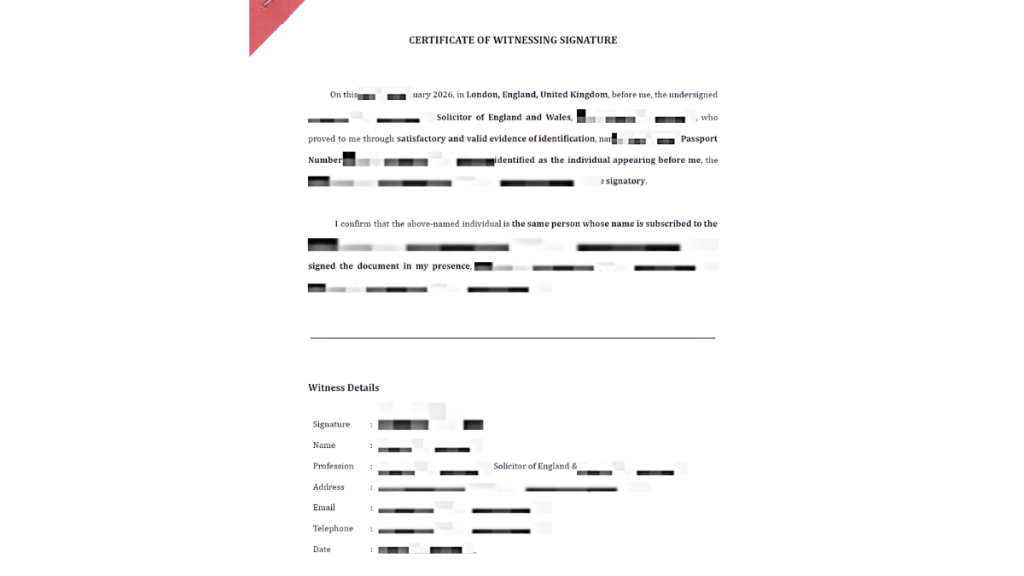
Witnessing a signature means that an independent person watches the signatory sign a document and then signs it themselves. By doing so, the witness confirms that:
- the signing took place, and
- the correct person signed the document.
When a solicitor acts as the witness, the process usually goes further. In most cases, the solicitor will:
- verify the signatory’s identity, and
- add professional details, such as name and capacity.
As a result, many overseas authorities treat solicitor-witnessed documents as more reliable and credible.
The Key Distinction: Deed vs Non-Deed Documents
Before arranging witnessing, you should first identify whether your document is a deed or a non-deed document. This distinction matters.
Deeds (Important Boundary)
Under English law, individuals must sign deeds in the physical presence of a witness. For this reason, remote witnessing does not apply to deeds.
Common examples of deeds include:
- powers of attorney,
- property-related deeds, and
- documents clearly stated to be “executed as a deed”.
This article does not focus on deeds. Instead, it focuses on non-deed documents, where more flexibility exists.
Non-Deed Documents (The Focus of This Guide)
Many documents that require solicitor witnessing for overseas use are not deeds.
Typical non-deed documents include:
- letters of confirmation or declaration,
- agreements or undertakings that are not expressed as deeds,
- application or regulatory forms,
- statements requested by overseas banks or institutions, and
- personal or corporate confirmations for foreign authorities.
For these non-deed documents, UK practice allows greater flexibility. In particular, remote witnessing may be possible, provided the circumstances allow it.
What Is Remote Witnessing?
Remote witnessing means that:
- the signatory signs the document during a live video call, and
- the solicitor witnesses the signing in real time
Importantly, the solicitor must actually see the signing take place. A witness cannot rely on a pre-signed document.
Is Remote Witnessing Valid in the UK?
For non-deed documents, remote witnessing can be acceptable under UK practice. However, this depends on the document type and the way the parties complete the process.
That said, UK law alone does not decide the outcome.
Overseas Acceptance Always Comes First
When a document is signed for overseas use, the key question is not:
“Does UK law allow this?”
Instead, the correct question is:
“Will the receiving authority accept this method of signing and witnessing?”
Foreign authorities, banks, courts, and regulators follow their own rules. Consequently, they may:
- accept remote solicitor witnessing,
- insist on in-person witnessing, or
- impose specific wording or format requirements.
Best Practice
Therefore, you should confirm acceptance requirements with the receiving party before signing, whenever possible.
By doing so, you reduce the risk of rejection, delays, and costly re-signing.
When Remote Witnessing Is Commonly Used
In practice, people most often use remote solicitor witnessing for:
- overseas banking or compliance documents,
- immigration or visa supporting paperwork,
- cross-border corporate confirmations, and
- foreign regulatory or administrative filings.
In addition, remote witnessing works well when:
- the signatory cannot attend in person, or
- time or location makes physical meetings impractical.
Apostille and Embassy Attestation After Witnessing
In most overseas cases, witnessing alone is not enough.
UK Apostille (FCDO)
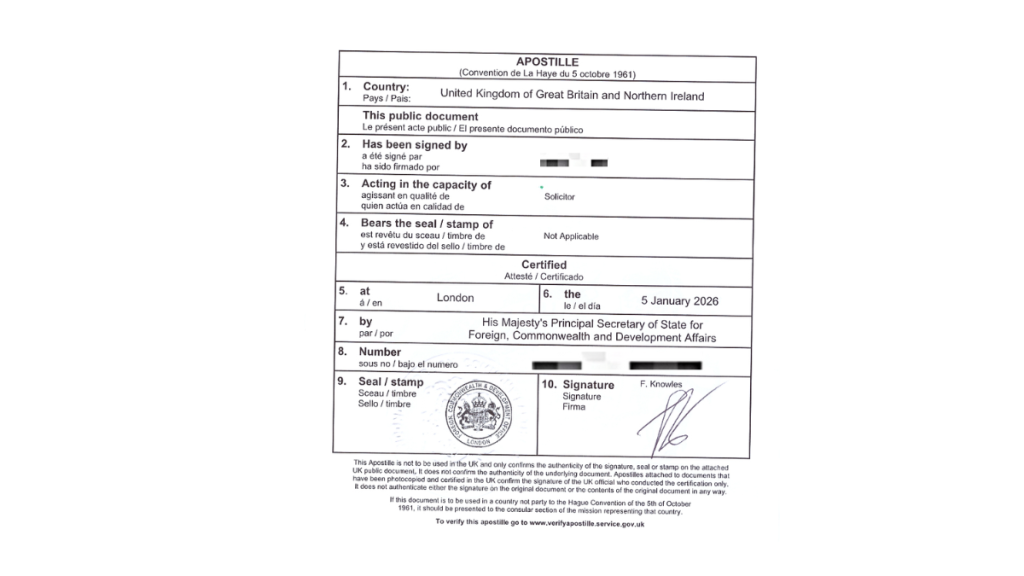
If the document will be used in a Hague Apostille Convention country, it will usually need a UK Apostille from the Foreign, Commonwealth & Development Office (FCDO).
The apostille confirms the authenticity of the solicitor’s signature and professional status.
Embassy or Consular Attestation
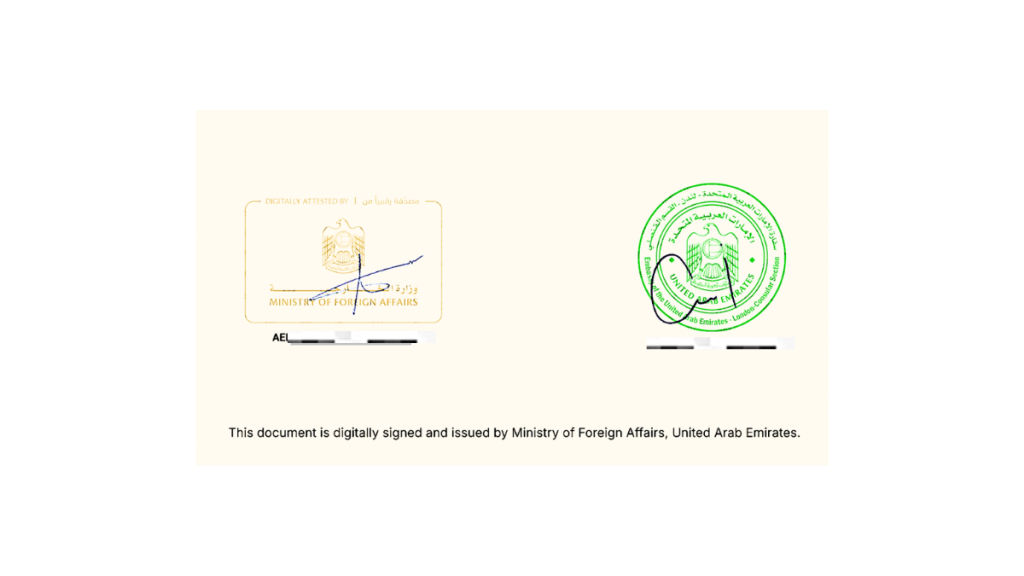
If the destination country is not part of the Hague Convention, the process often continues. In that case, the document may require:
- a UK apostille first, and
- embassy or consular attestation afterwards.
Although these steps are procedural, they are essential for overseas acceptance.
Common Mistakes to Avoid
To avoid problems, do not:
- assume remote witnessing is always acceptable,
- treat deeds and non-deed documents as the same,
- witness a document after it has already been signed,
- skip confirmation with the overseas recipient, or
- forget apostille or embassy requirements.
Each mistake can lead to rejection or delay.
Key Takeaways
- This guide focuses on non-deed documents, not deeds
- Individuals must sign deeds in person, with a physical witness
- Non-deed documents may allow remote witnessing, depending on acceptance
- Overseas acceptance matters more than UK practice alone
- Apostille or embassy attestation often follows witnessing
- Early confirmation prevents delays and re-signing
Need Help With Remote Witnessing or Overseas Use?
We help clients with:
- solicitor witnessing of non-deed documents (in person or remotely, where appropriate),
- confirmation of overseas acceptance requirements,
- UK FCDO apostilles, and
- embassy or consular attestations.
Our focus is simple: get the signing right the first time, so your documents are accepted smoothly overseas.
Contact Us



Address
167-169 Great Portland Street, 5/F, London
 English
  Chinese