If you are a UK-qualified teacher or professional with a job offer in the UAE, your documents matter just as much as your qualifications.
In practice, many delays do not happen because applicants lack experience. Instead, problems arise because documents are prepared in the wrong legal order, certified incorrectly, or submitted with missing steps.
Therefore, understanding the UAE legalisation process before you move can save time, cost, and stress.
This guide explains how UK documents must be prepared for employment in the UAE in 2026. It is especially relevant for teachers relocating to Dubai, Abu Dhabi, Sharjah, Al Ain, and Ras Al Khaimah.
Who this guide is for
This guide applies if you are:
- Teaching English or working in an international school
- Employed by education groups such as Taaleem, GEMS Education, Aldar Education, Cognita, or Nord Anglia
- Moving to the UAE on an employment visa
- Planning to sponsor a spouse or children
- Using UK-issued degrees, certificates, or employment letters
If any of the above applies to you, document legalisation is not optional.
Why UAE document legalisation is required
UAE employers and immigration authorities require legalised documents for several reasons.
First, they use them to issue a valid work visa.
Second, they rely on them for HR onboarding and compliance checks.
In addition, authorities may require them for ADEK / MOE equivalency, depending on your role and emirate.
Finally, family residence visas also depend on correctly legalised documents.
Since 24 February 2025, the UAE Embassy in London and the UAE Ministry of Foreign Affairs (MoFA) have replaced paper stamping with a fully electronic legalisation system. As a result, technical accuracy matters more than ever.
Incorrect submissions are now easier to detect and more likely to be rejected.
Common UK documents required for UAE employment
Each document must usually be processed separately.
Bundling documents together often leads to rejection.
Academic and professional documents
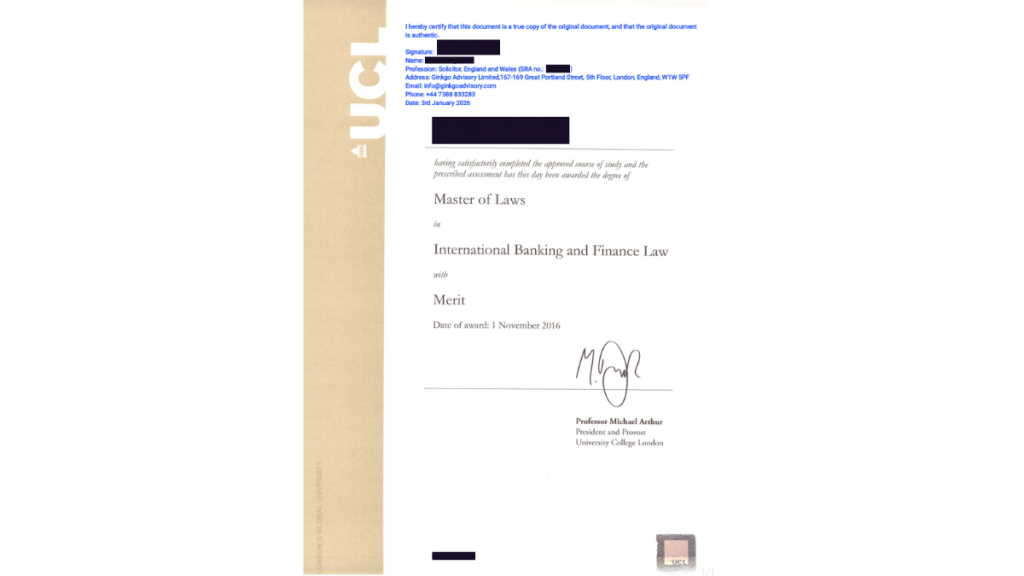
- Degree certificate (Bachelor’s or Master’s)
- Academic transcript (sometimes required for equivalency)
- PGCE or QTS certificate
- TEFL, TOEFL, CELTA, or TESOL (if applicable)
Employment and background documents
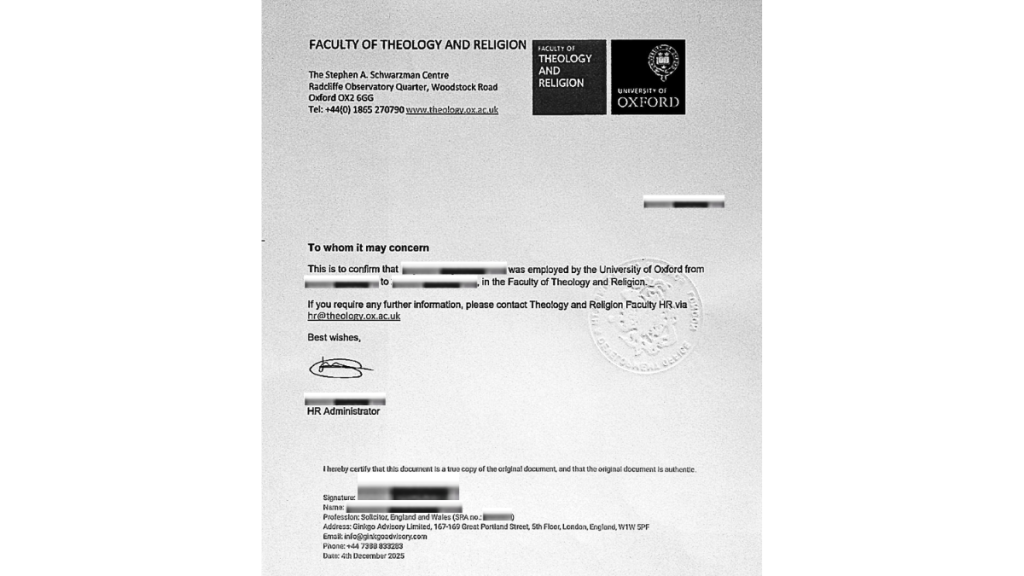
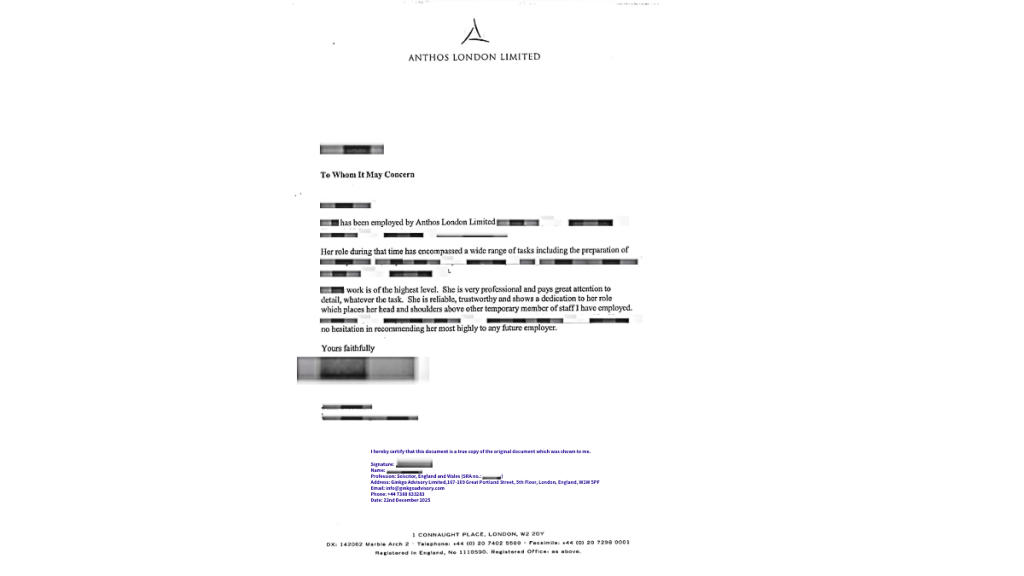
- Experience letter
- Job reference letter
- Criminal record check
- DBS (Disclosure and Barring Service)
- ACRO Police Certificate (commonly preferred for immigration)
Family documents (if sponsoring dependants)
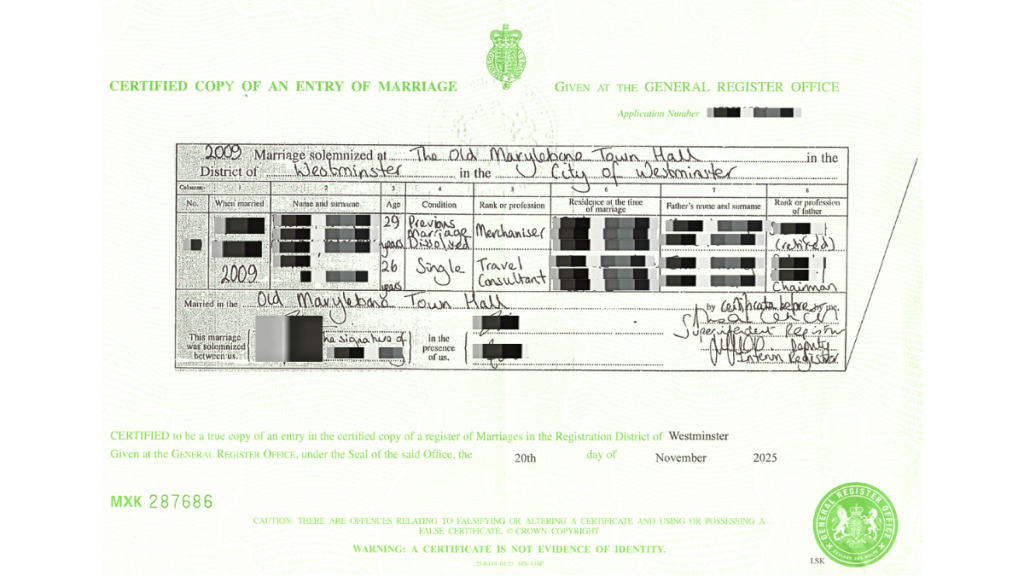
- Marriage certificate
- Birth certificate(s) of dependant children
The correct legal order (critical)
Most problems occur because documents are apostilled too early or certified incorrectly.
For UAE employment, the accepted legal order is:
- UK solicitor certification or notarisation
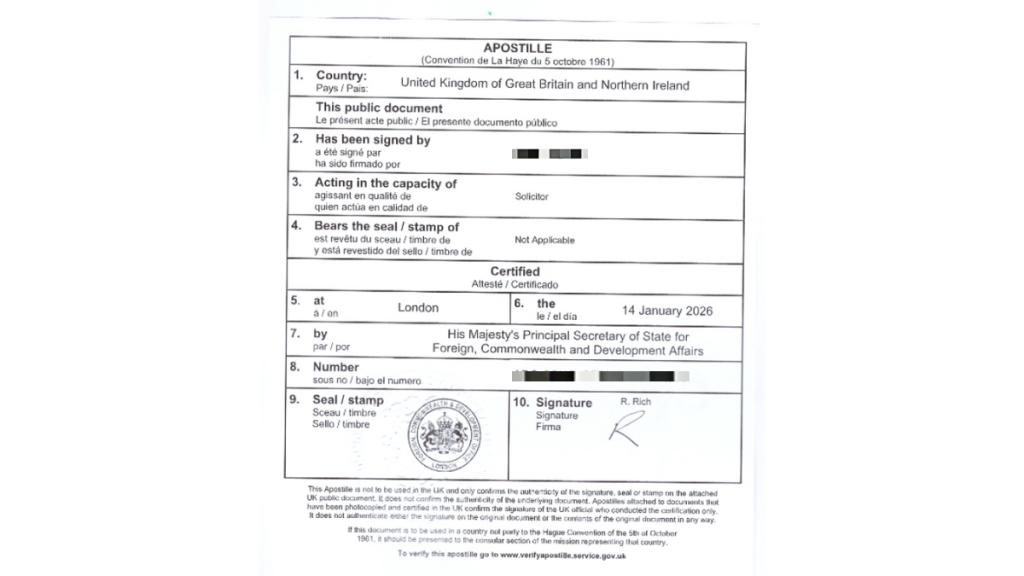
- UK FCDO apostille
- UAE Embassy electronic legalisation
- UAE Ministry of Foreign Affairs (MoFA) attestation
An apostille only confirms the authority of the UK solicitor or notary.
It does not verify your degree, experience, or employment history.
Because of this, applying an apostille before correct certification usually wastes both time and money.
Step-by-step: UK to UAE legalisation explained
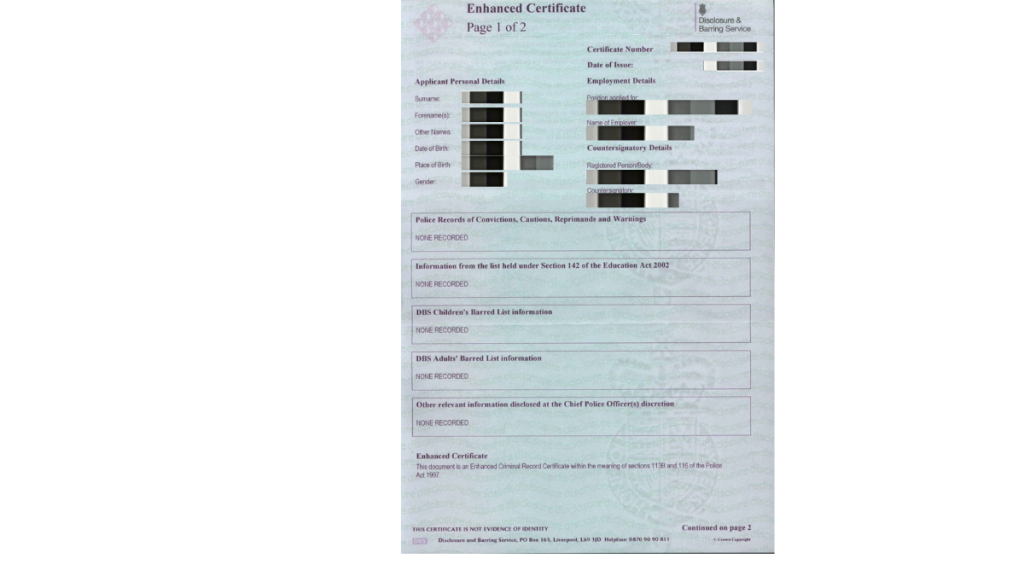
1) UK solicitor authentication and certification or notarisation
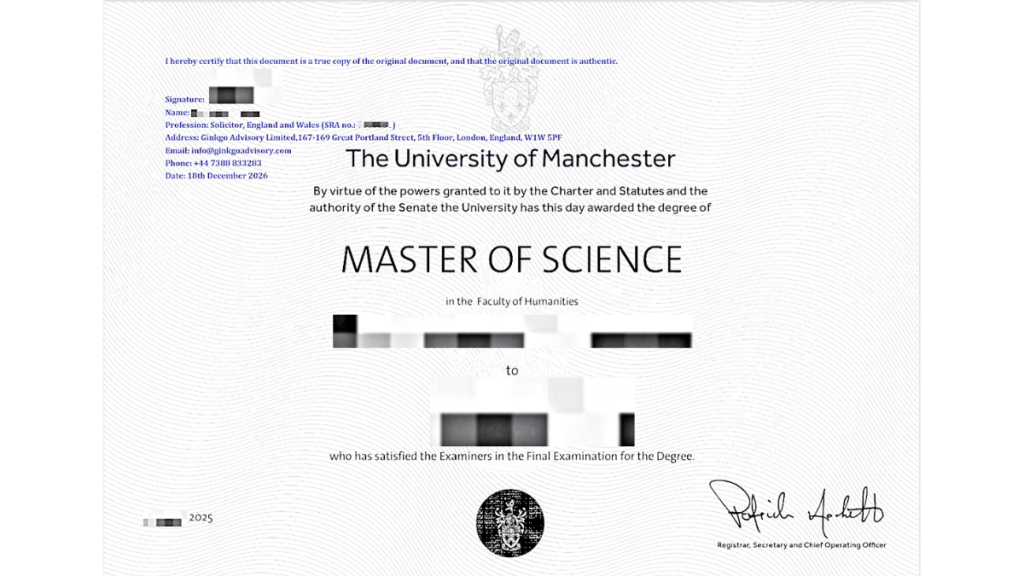
A UK-qualified solicitor or notary public must verify, authenticate and certify documents in the correct legal format.
This step normally applies to:
- Degree certificates
- PGCE or QTS certificates
- TEFL / TOEFL / CELTA / TESOL certificates
- Experience letters and job reference letters
- DBS certificates
In contrast, birth and marriage certificates usually do not require notarisation.
However, they still need apostille and UAE legalisation.
2) UK FCDO apostille
Next, the Foreign, Commonwealth & Development Office (FCDO) issues the apostille.
At this stage, the FCDO confirms the signature and authority of the solicitor or notary.
However, it does not check document content.
For this reason, incorrect certification at the previous stage often leads to rejection later by the UAE Embassy.
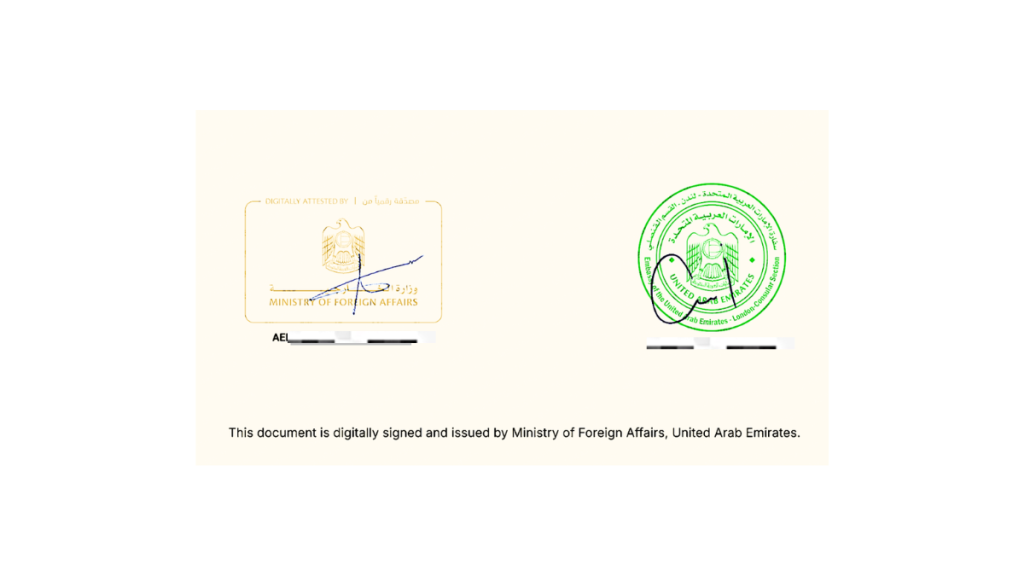
3) UAE Embassy electronic legalisation
The UAE Embassy in London no longer issues paper stamps.
Instead, the Embassy provides:
- a secure electronic PDF
- a unique reference number
- online verification through the MoFA system
Each document must be submitted individually.
If documents are bundled together, the Embassy will usually reject them.
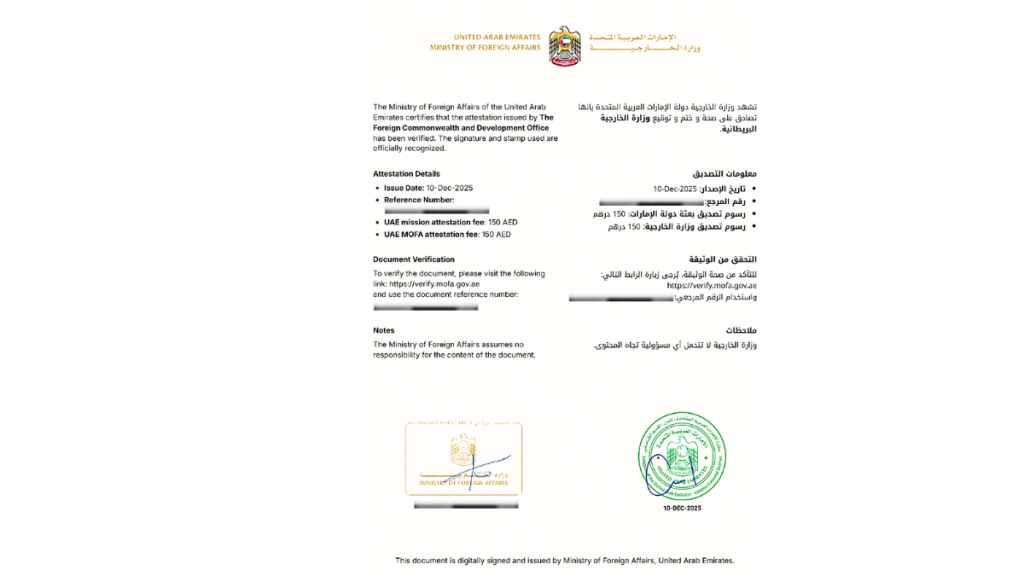
4) UAE MoFA attestation
Finally, the UAE Ministry of Foreign Affairs completes the legalisation process.
At this point, the document becomes valid for:
- Employment
- Visa processing
- HR onboarding
- Family sponsorship
Can you complete the process after moving to the UAE?
In some cases, yes.
However, many employers will not finalise visas, onboarding, or equivalency until they receive fully legalised documents.
Therefore, if your start date is close, completing the UK-side stages early is often the safer option.
We provide remote online UK practising solicitor document verification and certification services.
Do you need to legalise both Bachelor’s and Master’s degrees?
Usually, one degree is sufficient. However, requirements vary by employer, role, and emirate.
Common scenarios include:
- a Bachelor’s degree alone being accepted
- the highest degree being requested
- Teaching roles requiring a degree plus PGCE or QTS
Because requirements differ, always confirm expectations with your school’s HR team.
Experience letters and job reference letters
Experience letters are not always required for visa issuance.
Nevertheless, UAE employers commonly request them for internal compliance.
A clear experience letter should include:
- Employer name
- Job title
- Employment dates
- Description of duties, where relevant
If the employer requires legalisation, the letter must follow the same legal chain as other employment documents.
How Ginkgo Advisory supports UAE job applicants
Ginkgo Advisory supports UK professionals preparing documents for UAE employment with end-to-end handling.
Our services include:
- UK solicitor verification and authentication of all UK documents with issuing authorities
- UK solicitor certification with a valid practising certificate
- UK FCDO apostille
- UAE Embassy electronic legalisation
- UAE MoFA attestation
- Separate handling for employment and family documents
Contact Us



Address
167-169 Great Portland Street, 5/F, London
 English
  Chinese